
Burma Blue Sapphire Gemstone
A Burma sapphire is a sapphire mined in Myanmar, most famously around Mogok, and the finest are known for a rich, saturated blue. Fine Burma sapphires are much scarcer today than sapphires from Sri Lanka, Madagascar or East Africa. At GIOIA we hold a small selection of Burma blue sapphires from about 1 to 3 carats, a handful of them with GRS reports, and we design each ring around the stone you choose.
Burma Blue Sapphire Rings
Burma Blue Sapphire: What to Look For
Mogok is best known for its rubies, but it also produces some of the world’s most admired blue sapphires. The finest show a rich royal blue, and larger fine stones are sought after by collectors around the world.
Colour varies widely, so it helps to know what you are looking at. The tones most people look for are royal blue and cornflower blue, and our blue sapphire guide explains the difference.
Clarity is often the hardest part. Most Burma sapphires contain inclusions, and an unheated stone is not automatically a fine one. A fine, unheated royal blue Burma sapphire with good clarity is genuinely rare, which is why it interests rare gemstone collectors.
On a GRS report, the finest blues can be described as vivid blue (GRS type “royal blue”). Like “pigeon blood” for rubies, it is a laboratory colour term, not a seller’s description, and we go through every report with you at our boutique.
Understanding Burma Sapphire
Where Burma Sapphires Form
Ruby and sapphire are the same mineral, corundum, and Mogok produces both, but not from the same rock. Mogok rubies grew in marble. The blue sapphires often come from different rocks in the same valley, such as syenite and pegmatite, and many are recovered from the gem gravels that local miners call byon. GIA’s field study of the Baw Mar mine describes fine blue sapphire being dug from syenite there.
Silk: The Inclusion That Tells a Story
In GIA’s review of hundreds of Mogok sapphires, the most common inclusions were fine rutile needles, known as silk, and twinning planes. A little fine silk softens the light inside the stone and gives the velvety blue that Burma sapphires are known for. Too much makes a stone look cloudy. Silk also breaks down when a sapphire is heated to high temperatures, so intact silk is one clue that a stone has not been heated, although only a laboratory report can confirm it.
Heated or Unheated?
Most blue sapphires sold today have been heated to improve their colour or clarity. Heating is an accepted, permanent treatment, and a laboratory report should disclose it. A fine sapphire that needed no heating is much scarcer, which is why unheated stones are priced higher. The Burma sapphires we hold are unheated, and our guide to unheated blue sapphire explains how to tell from the report.
Kashmir, Burma and Sri Lanka
Kashmir, Burma and Sri Lanka are the three classic sapphire origins. In the past the trade even used their names as colour words, so “Burma” meant a deep royal blue whatever the stone’s real source. Today origin is a laboratory finding, not a description, and only a report from a laboratory such as GRS, SSEF or Gübelin can state it.
Is a Burma sapphire better than one from Sri Lanka? Burma sapphires are often described as deeper and more velvety, and Sri Lankan sapphires as lighter and brighter. In practice the two overlap, and GIA research shows that colour varies even within Mogok, so we judge each stone on its own rather than by its origin.
Burma Sapphire Rings We Have Made
A Half Bezel Burma Sapphire Ring
This blue sapphire ring is set with an unheated royal blue Burma sapphire in 18K gold. The half bezel protects the edge of the stone while leaving most of it open to the light, so the blue shows from every angle.
Designed From a Sketch
We designed this ring for a client who loved royal blue sapphire. It began as a hand-drawn sketch, and the half bezel came out of those sketches: a modern outline that keeps the attention on the stone. Every piece of customised jewellery we make starts the same way, with the gemstone and the person who will wear it.
A Burma Sapphire Engagement Ring
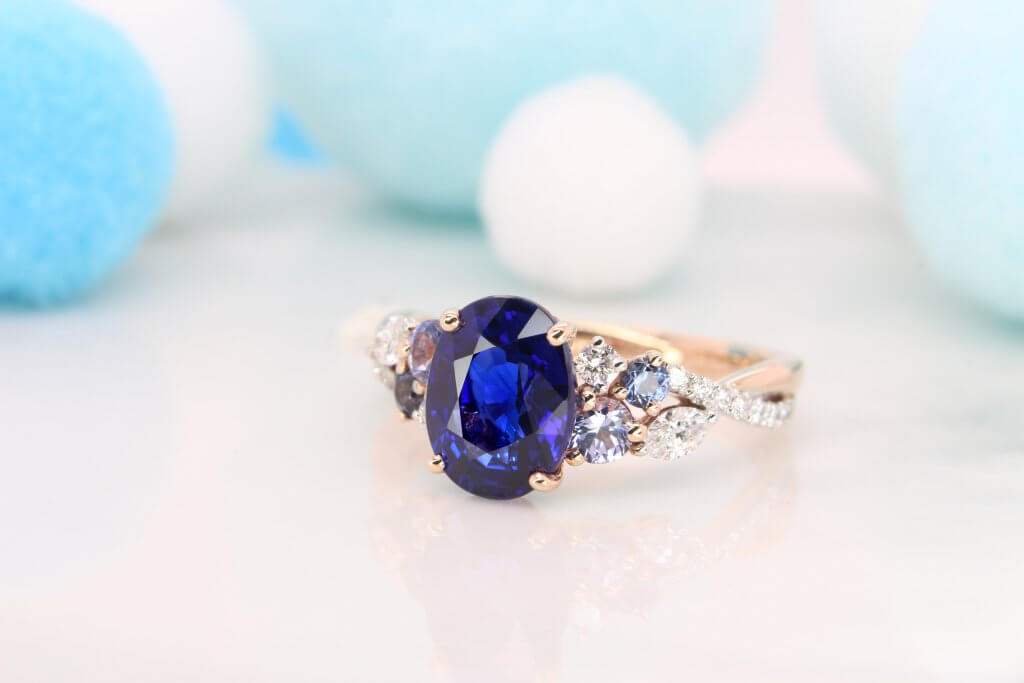
If you are choosing a sapphire for an engagement ring, a Burma sapphire is one of the finest options. Sapphire is 9 on the Mohs hardness scale, and among gemstones used in jewellery only diamond is harder, so it suits a ring worn every day. We hold unheated Burma blue sapphires from about 1 to 3 carats, a handful of them with GRS reports, so you can compare them side by side at our boutique.
The ring above was made for a couple’s engagement. The Burma sapphire sits at the centre of a cluster gemstone ring design, and their birthstones were added around it for a personal touch. If you want a customised engagement ring that is not bought off the shelf, this is the kind of design we work out with you.
Our Burmese Gemstones
Alongside our Burma sapphires we hold Burma spinel. Red spinel can look so close to ruby that for centuries the two were confused: the famous Black Prince’s Ruby in the British Imperial State Crown is in fact a spinel. For Burma rubies, see our Burma ruby ring page.
How We Work With You
We design every piece with you, from the first sketch to the finished ring. Whether it is a single Burma sapphire or a cluster of stones, the design starts from the gemstone you choose.
Clarence Yee checks every gemstone before it is set. Centre stones above about SGD 1,000 come with a report from an independent laboratory, and our finest Burma sapphires carry GRS reports confirming origin and treatment.
A Family Birthstone Ring
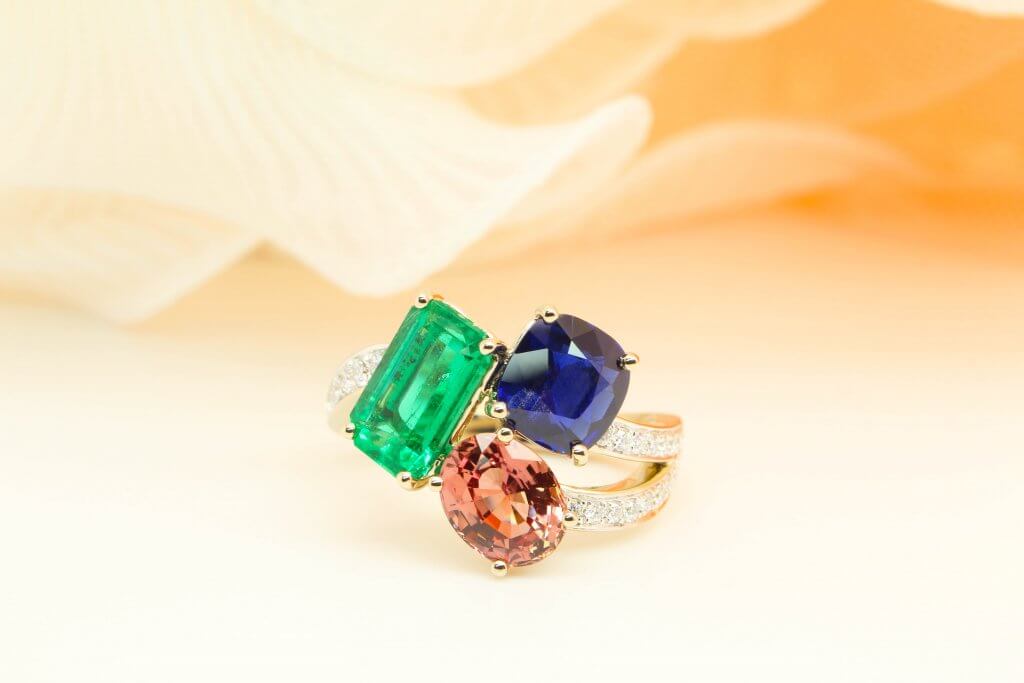
A daughter asked us to make a ring that brings her family together. It combines a vivid no-oil emerald for May, her birth month, with an unheated padparadscha sapphire for one parent and an unheated Burma blue sapphire for the other. The diamond bands that link the stones stand for the bond between her parents and herself. You can see more pieces like this in our family birthstone jewellery.

Frequently Asked Questions
Are Burma sapphires better than Sri Lankan sapphires?
Not automatically. Burma sapphires are often deeper and more velvety, and Sri Lankan sapphires lighter and brighter, but the two overlap. A fine Sri Lankan sapphire can look better than an average Burma one, so we compare stones side by side rather than choosing by origin.
Do you have Burma sapphires with GRS reports?
Yes. We hold Burma blue sapphires from about 1 to 3 carats, and a handful of them carry GRS reports. You can see them side by side at our boutique by appointment.
Are Burma sapphires heated?
Some are and some are not. Most blue sapphires on the market today are heated, and a laboratory report states whether a stone shows signs of it. The Burma sapphires we hold are unheated.
How can you tell if a sapphire is from Burma?
Not by eye. Colour and inclusions give clues, but only a gem laboratory such as GRS, SSEF or Gübelin can determine origin, using microscope work and chemical analysis. Always ask for the laboratory report.
For more sapphire designs, see our sapphire engagement ring collection.