
Customised Ring Setting to Unique Inspired Design
Selecting the perfect gemstone is only the beginning of your bespoke journey. The customised ring setting is the architectural foundation that holds your creation together. More than just a secure mount, the setting dictates the entire personality of your engagement ring. It has the power to amplify a stone’s brilliance, offer sleek modern minimalism, or evoke timeless vintage elegance. Understanding these different setting techniques ensures your final design perfectly reflects your vision and lifestyle.
If you would like to hear from people who have been through the process, GIOIA is rated 5.0 stars across more than 400 Google reviews.
Table of Contents
Claw/Prong Setting
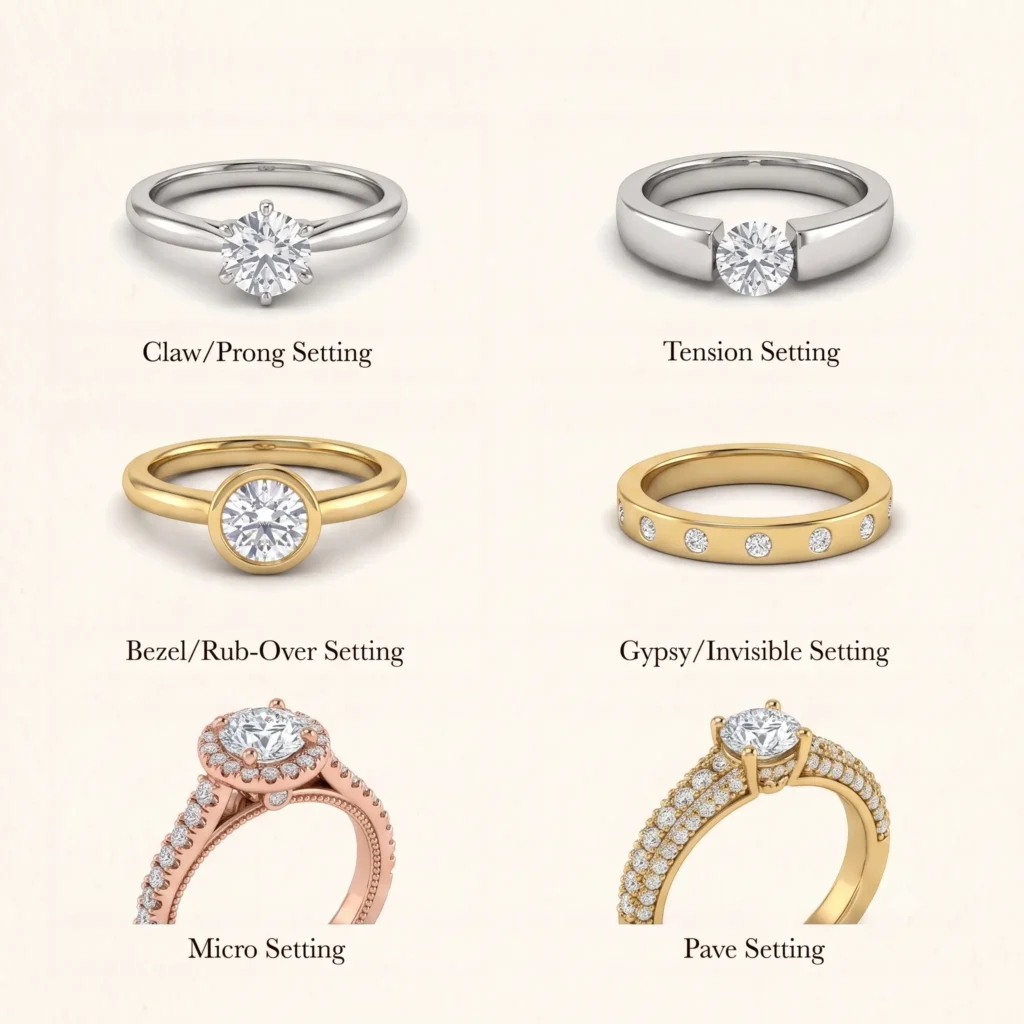
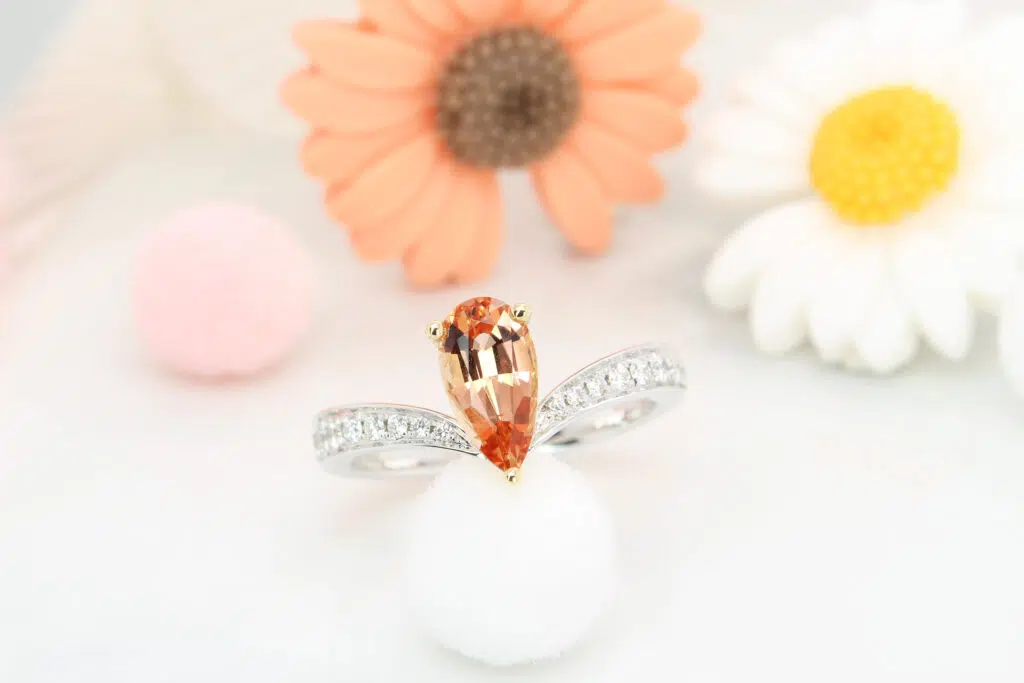
The classic claw or prong setting is universally favored for transparent, faceted stones. By elevating the gem and keeping the surrounding metal to a minimum, this setting allows maximum light to enter from all angles, amplifying the stone’s natural fire. Depending on the size and shape of the centre gem, artisans can tailor the security using three, four, or six prongs. A six-prong design, for example, gives additional security and helps a round gemstone appear perfectly circular.
This customised ring setting offers immense decorative flexibility. You can opt for forked claws, delicate eagle claws, or even set tiny diamonds directly into the prongs themselves. To see how different prong configurations and halo designs influence the aesthetic of a specific gemstone, explore our guide to unique sapphire ring designs.

Tension Setting
A tension setting relies on the structural compression of the ring’s shank to keep the stone firmly in place, utilizing just two points of contact. This creates the breathtaking illusion that the main stone is “floating” in mid-air. Because this method exposes a full view of the gem from girdle to culet, it brings out an unparalleled level of brilliance.
However, because this technique involves applying significant pressure directly onto the main stone, it is exclusively recommended for highly durable gems such as Sapphire, Ruby, and Spinel.
When considering fancy coloured gemstones, tension settings require extreme precision. Coloured gems are often cut and polished to maximize color yield, resulting in slightly irregular rough forms compared to perfectly calibrated diamonds. Therefore, crafting a tension setting to hold a fancy shape securely requires highly specialized skill. It is also important to note that due to the exact measurements required to maintain the tension, resizing these rings in the future can be extremely challenging.
Bezel/Rub-Over Setting
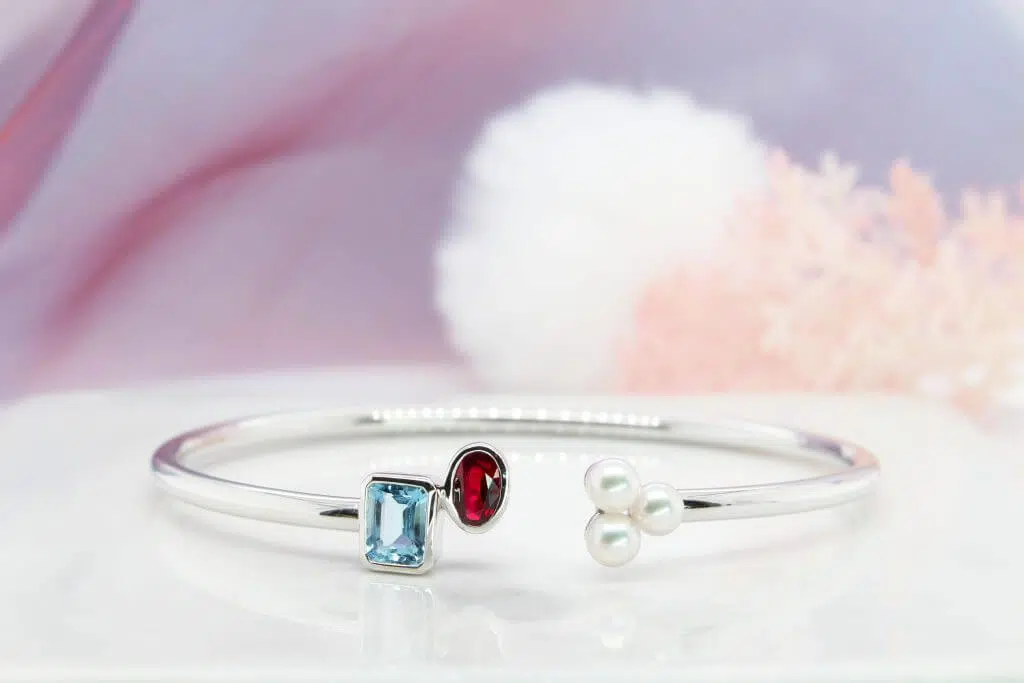
The bezel (or rub-over) setting is one of the most secure mounting methods available, suitable for both faceted gemstones and smooth cabochons. By completely encircling the stone with a thin rim of precious metal, it offers unmatched protection. If you live an active lifestyle, this is a phenomenal choice because it does not snag on clothing and offers a sleek, modern appearance.
However, this security comes with structural trade-offs. Because the metal encompasses the sides of the stone, it restricts light entry, which can subtly diminish the gemstone’s overall sparkle. Furthermore, securing a gem into a bezel requires applying direct, sustained pressure, placing more stress on the stone than a prong setting.
It is also crucial to consider the future: if you ever intend to reset the stone as a family heirloom, removing a gem from a bezel carries a significantly higher risk of damage compared to simply opening a prong. Because of this stress, we strictly advise against using a bezel setting for gems with lower hardness, such as Tanzanite.
Gypsy/Invisible Ring Setting
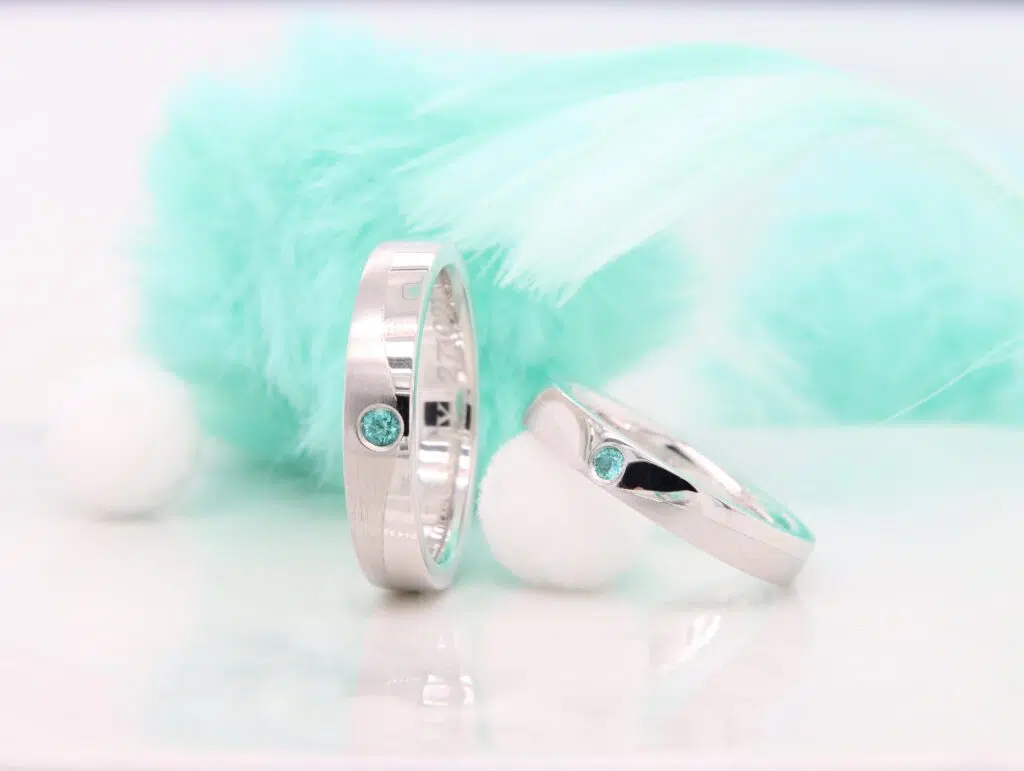
The Gypsy setting is incredibly popular for customised wedding bands due to its clean, minimalist aesthetic. In this technique, faceted gemstones or diamonds are sunk directly into the ring band. The artisan flushes the girdle with the surface and then burnishes the metal tightly over the stone’s edge. While commonly used for side stones, it can absolutely be utilized for the main centrepiece.
Jewellery settings are often pigeonholed into strictly “classic” or “modern” categories, but at GIOIA Fine Jewellery, there are no rigid rules. By incorporating tailored elements, such as a tapered ring band to magnify the size of the main stone, we can merge different setting styles into a single, cohesive masterpiece. Exploring these diverse techniques is an integral part of our customised jewellery experience.
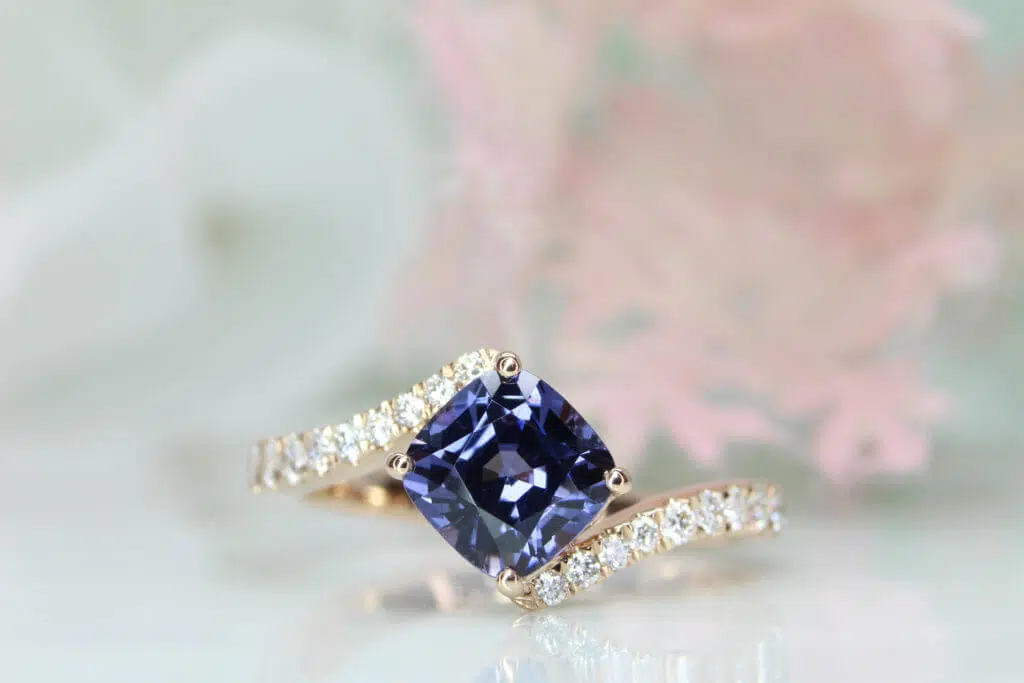
Micro-Pavé Setting: The Essence of Delicate Brilliance
Micro-Pavé settings are renowned for their delicate, precise arrangement of extremely small diamonds, meticulously set to create a continuous, almost liquid sparkle. This customised ring setting employs tiny diamonds, often weighing less than 0.01 carats, held securely in place by microscopic beads of metal.
The precision required for this method results in a seamless surface of diamonds that enhances the ring’s radiance with virtually zero visible metal. This technique is perfect for those who adore subtle elegance and want their central gem encircled by a soft halo of shimmering light, amplifying its beauty without overwhelming the piece.
Pavé Setting: Vintage Charm Meets Contemporary Style
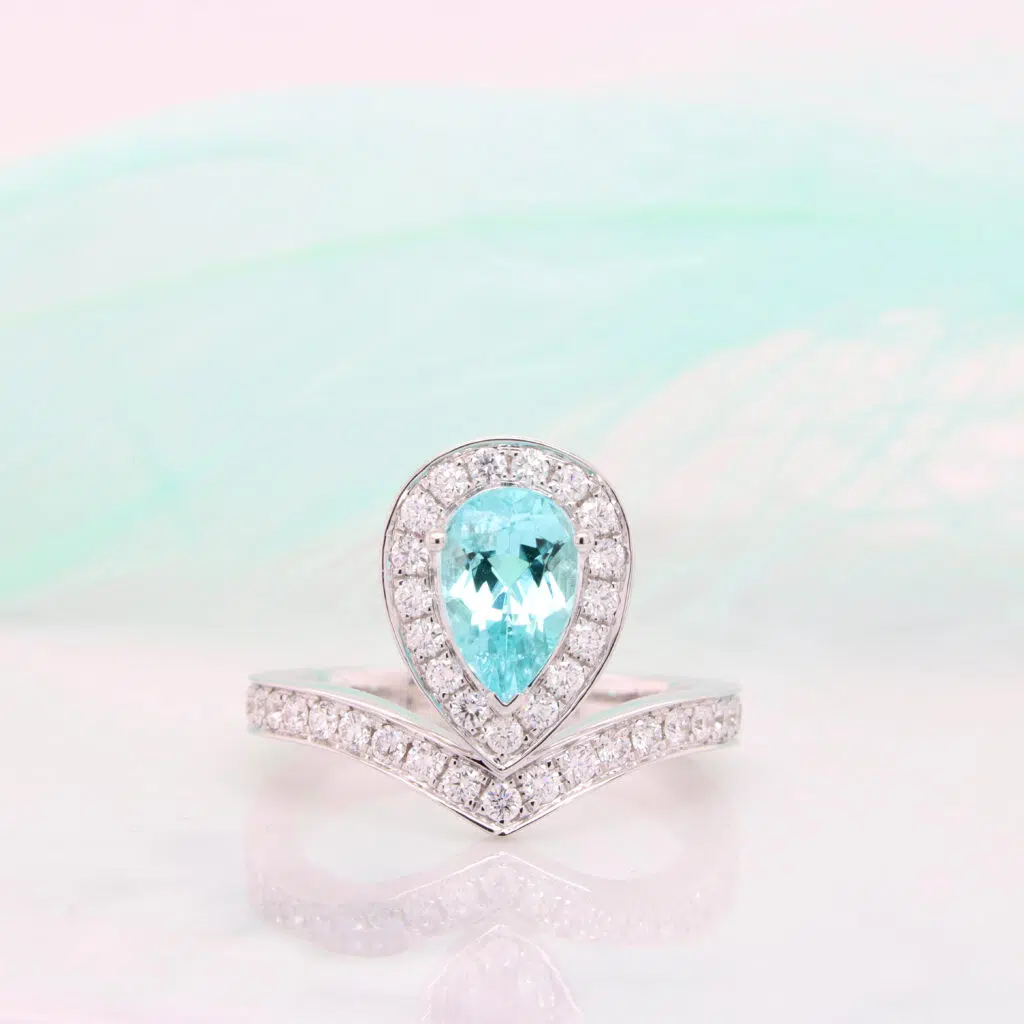
The standard Pavé setting is characterized by its use of slightly larger diamonds compared to Micro-Pavé. Designed to cover the surface of the ring with closely set diamonds, it offers a dazzling, cobblestone effect. The diamonds are secured with small metal beads that create a series of tiny domes holding each stone.
Because this method allows slightly more metal to be seen between the diamonds, it gives the customised ring a more pronounced texture and a distinctly vintage, Art Deco aesthetic. It is an ideal choice for those who appreciate the blend of old-world charm with contemporary design, offering a sophisticated sparkle that feels both timeless and bold.
Artistic Harmony of Micro-Pavé and Pavé Settings
Both Micro-Pavé and Pavé settings can be incorporated into various designs to perfectly complement your central gemstone, whether it is a cushion-cut royal blue spinel or an electric Paraiba tourmaline. The choice ultimately comes down to your personal preference for texture and aesthetic. While Micro-Pavé offers a highly refined, delicate look, standard Pavé settings provide a bolder sparkle reminiscent of vintage glamour.
The fusion of these detailed settings with a personalised design allows for genuinely one of a kind pieces. Selecting the right setting is a core step in every bespoke commission we build, and it is worth getting right before any metal is cast.
How to Choose the Right Setting for You
Most people choose a setting from photos alone, then find out later it does not really suit how they live. A setting is not just decoration. It decides how much daily wear your stone can take, how much light reaches it, and how safe it is at the gym, in the kitchen, or just getting through an ordinary day.
If you are often using your hands, whether that is cooking, gardening, or simply forgetting to take a ring off before doing something physical, a bezel or gypsy setting protects the stone far better than a prong ever will. The trade off is some loss of brilliance, since more metal sits around the stone and less light gets in.
If sparkle matters more to you than daily protection, a claw or prong setting lets in the most light, which is why it remains the default for classic engagement rings. Six prongs hold a round stone more securely than three or four, worth asking for if you tend to be harder on your jewellery than most people.
Combining styles is common too. We often set a centre stone in a secure claw or bezel mount, then finish the band with pavé or micro-pavé diamonds, so you get protection where it matters and sparkle everywhere else. There is no rule that says a ring can only use one technique.
Frequently Asked Questions
Which setting is most durable for everyday wear?
Bezel and gypsy settings hold up best against daily knocks, since the metal wraps around or sits flush with the stone instead of leaving it exposed. If you wear your ring every day without taking it off, either is worth considering over a classic prong.
Does the setting affect how big my gemstone looks?
Yes, more than most people expect. A claw or prong setting exposes almost the whole stone, so it tends to look larger and brighter. A bezel setting covers the edge with metal, which can make the same size gem read slightly smaller, though it gains real security in return.
Can I combine two different setting styles in one ring?
Regularly. A common approach is a secure bezel or claw setting for the centre stone, paired with micro-pavé diamonds along the band. You are not limited to one technique for the whole piece.
Which setting suits an active lifestyle best?
Bezel and gypsy settings sit closest to the band with the least stone exposed, so they catch on far less during sport, gym sessions, or manual work. If your hands stay busy most days, we would steer you toward one of these over a raised prong.
How do I know which setting is right for my engagement ring?
It comes down to how you actually live day to day, weighed against how much brilliance matters to you. We talk through both at the consultation, with the real gemstone in hand, so the decision is based on your stone and your habits rather than a photo.
Ready to start? Book a consultation and we will go through your options with the actual gemstone in hand, not just a photo.