
Sapphire: The Gemstone That Chooses You
There is a reason sapphires have sat at the centre of royal jewellery collections for centuries. Hard enough at 9 on the Mohs scale to survive daily wear for generations, yet varied enough in colour to feel entirely personal, the sapphire is the rare gemstone that manages to be both a practical and a deeply emotional choice. Most people picture blue when they hear the word sapphire. The truth is the corundum family produces some of the most extraordinary colours in the natural world, from the lotus pink of a padparadscha to the shifting blue-violet of a colour change stone. At GIOIA Fine Jewellery, we source exclusively from the finest unheated specimens in each colour, because we believe a sapphire should be exactly what nature intended it to be.
Explore GIOIA’s Sapphire Collection
Every sapphire variety carries its own character, origin story, and rarity. Use this guide to find the stone that speaks to you.
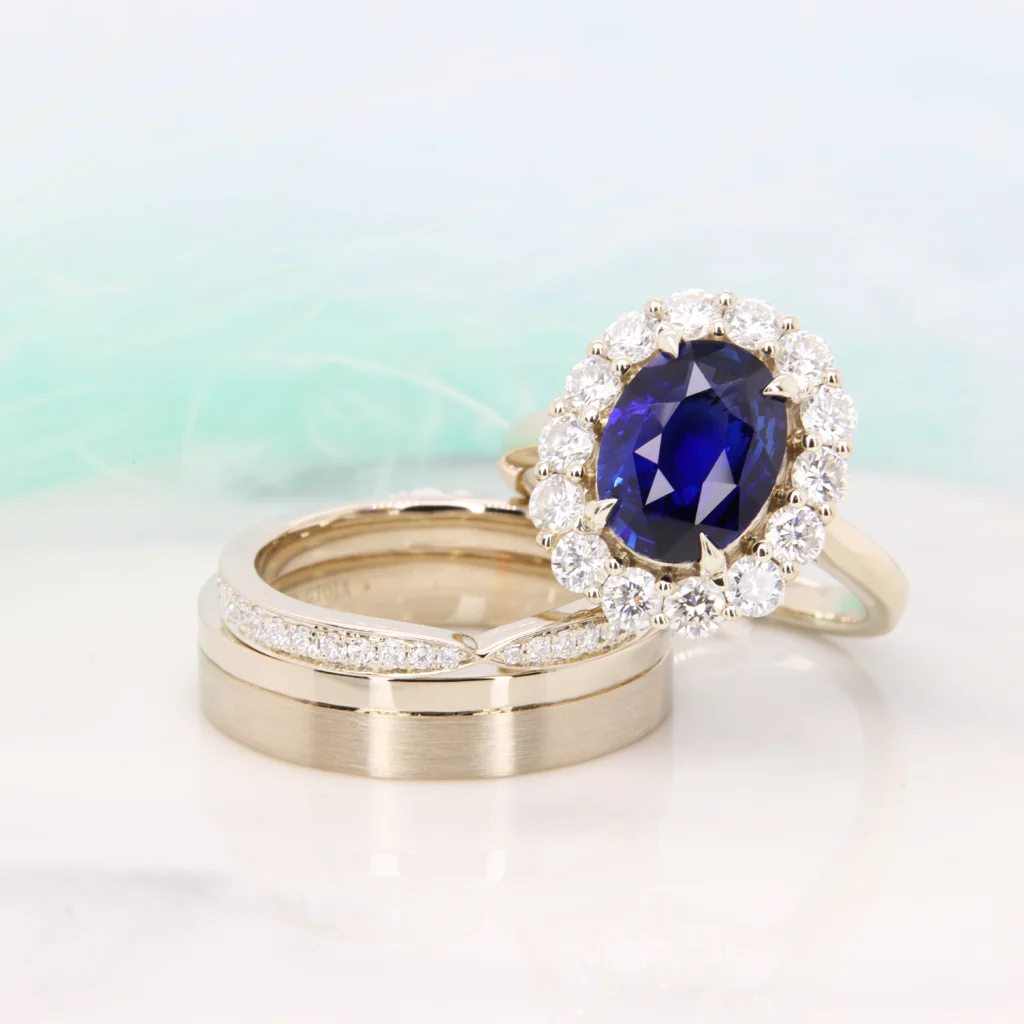
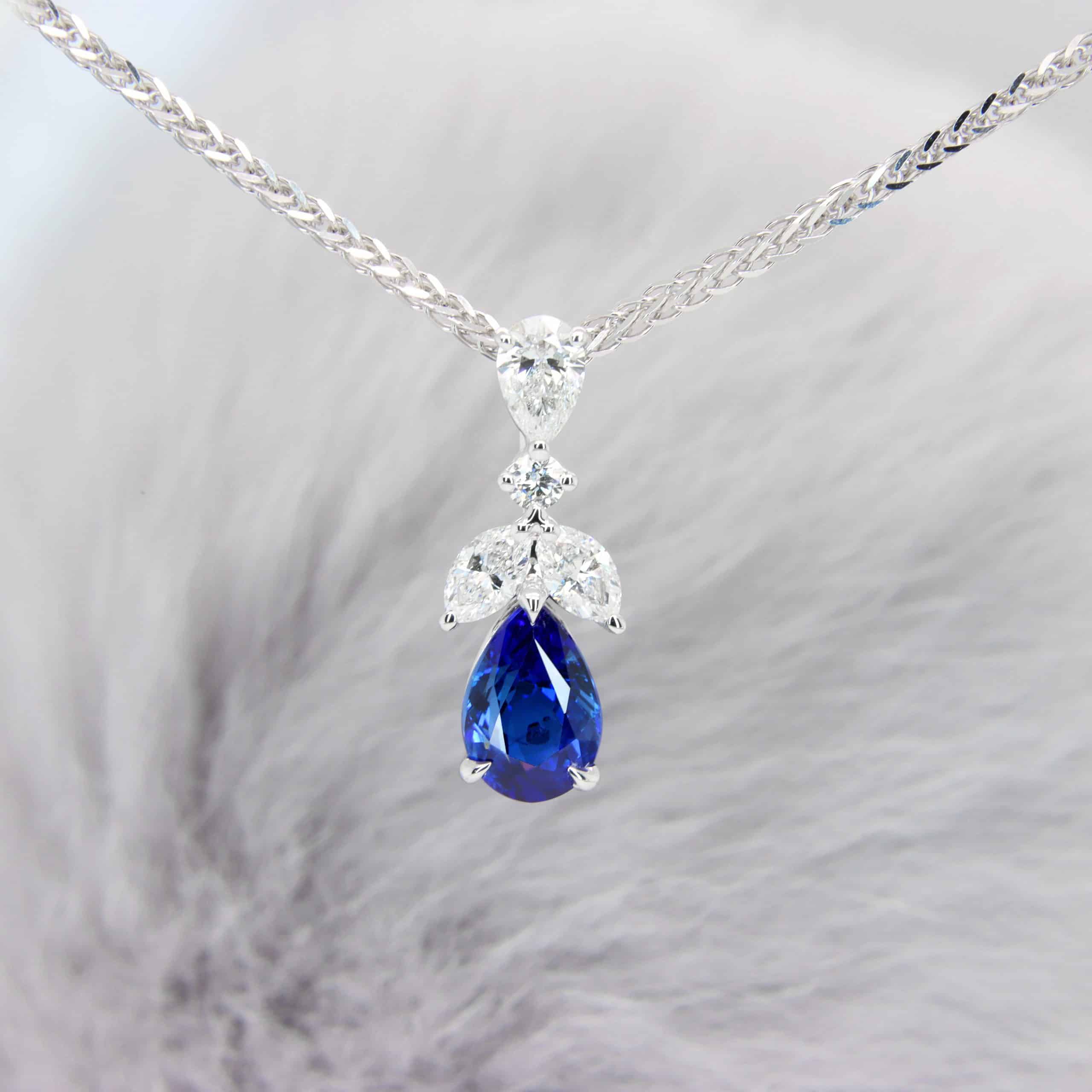
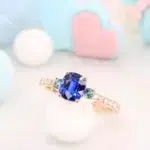
Blue Sapphire, Royal blue and cornflower blue. The most iconic of all sapphire hues, prized by collectors and couples alike for its velvety depth and exceptional durability.
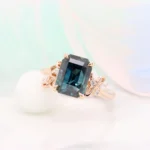
Teal Sapphire, A modern favourite that shifts between deep oceanic blue and lush forest green depending on the light. No two teal sapphires are identical.
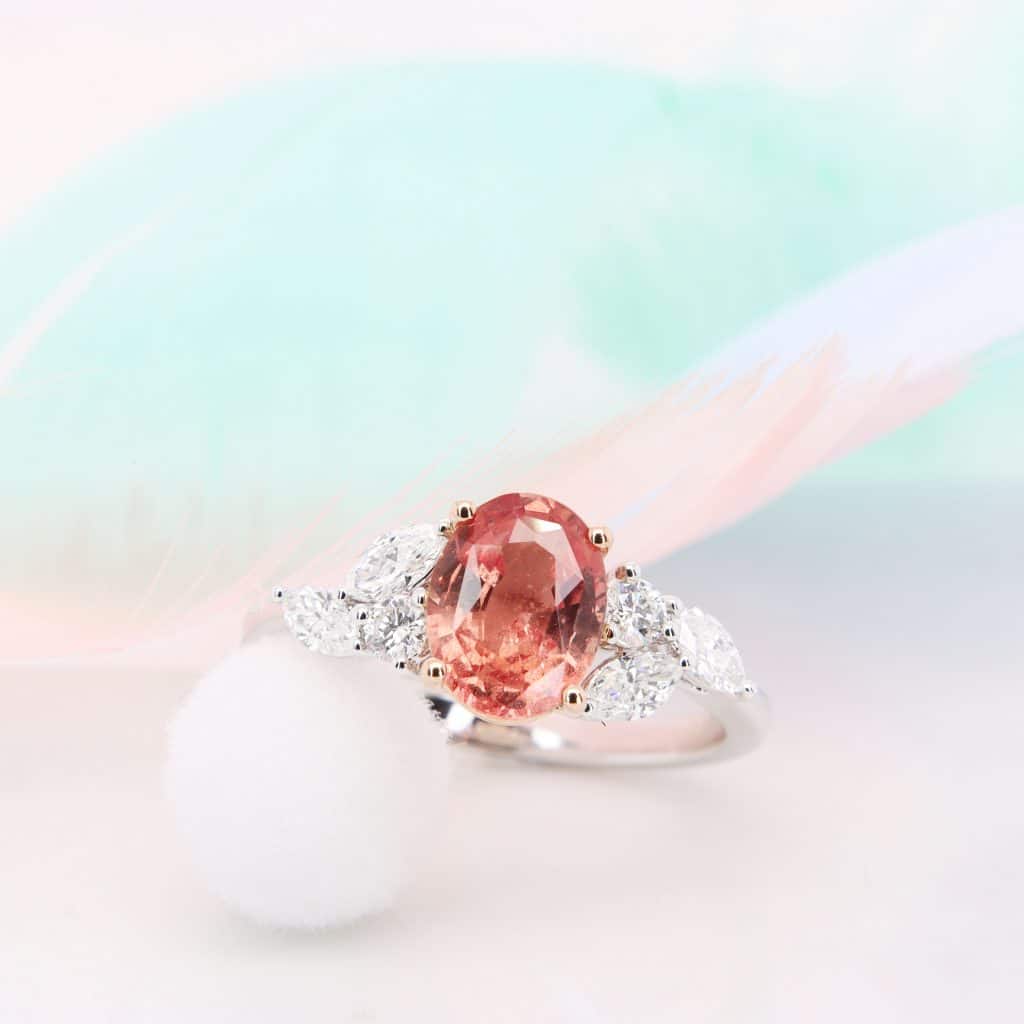
Padparadscha Sapphire, The rarest sapphire in existence. A delicate blend of pink and orange that occurs perhaps once in every twenty high-quality blue sapphire parcels.
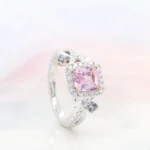
Pink Sapphire, From soft Sakura cherry blossom pastels to vivid, deeply saturated hot pinks. A distinctly feminine and personal choice for a proposal ring.
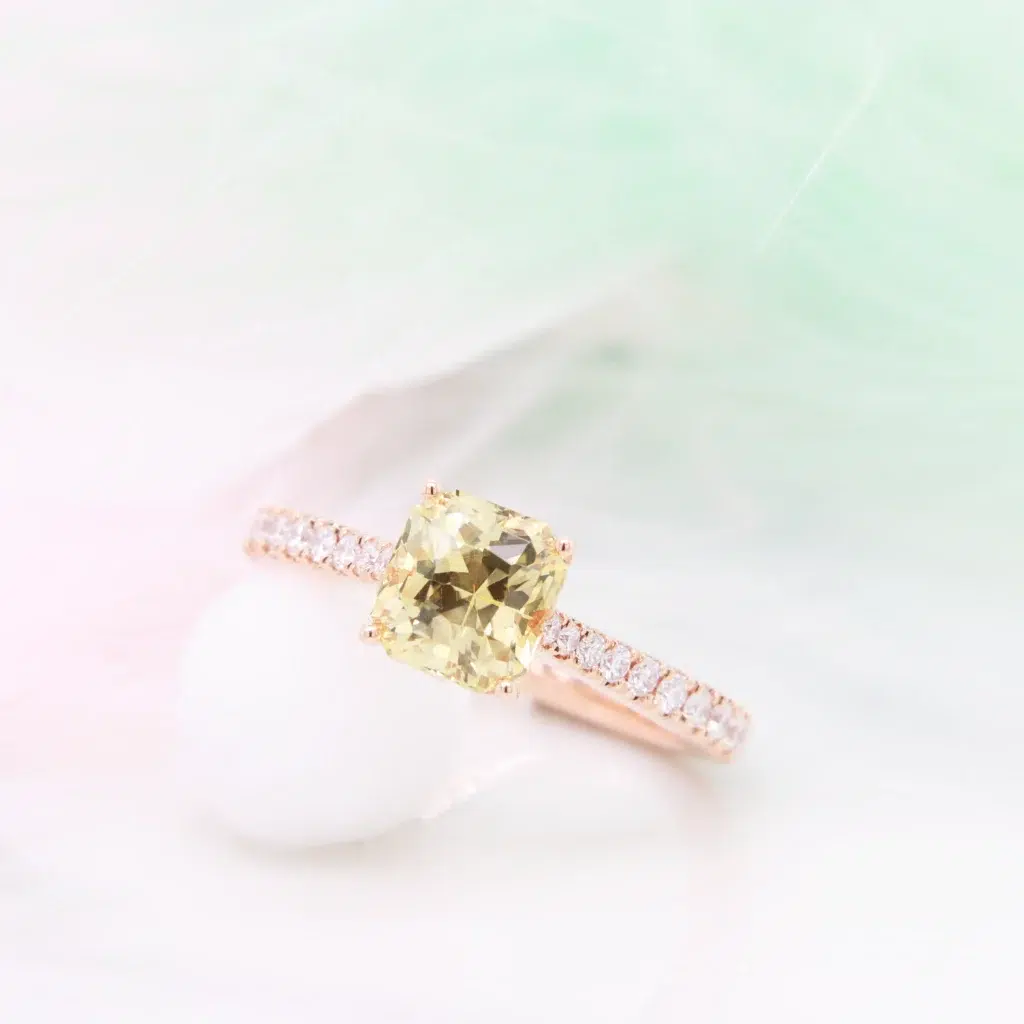
Yellow Sapphire, Brilliant fire, exceptional clarity, and outstanding value. Yellow sapphires offer a warm, luminous alternative to the classic blue.
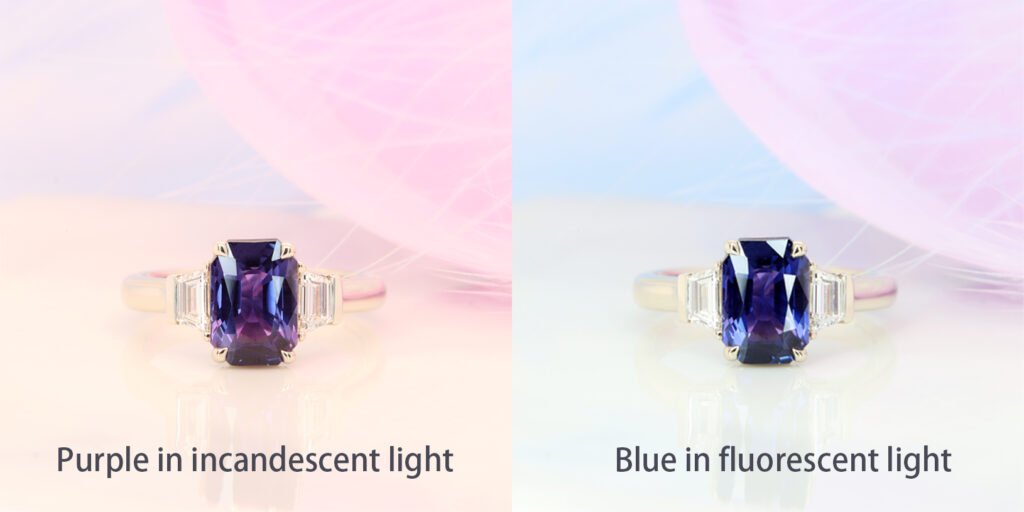
Colour Change Sapphire, One stone, two personalities. Blue-purple in natural daylight, violet under incandescent light. Genuinely one of nature’s most compelling tricks.
Unheated Sapphires: What You Need to Know, Why treatment history defines a sapphire’s true value, and how to verify exactly what you are buying before you commit.
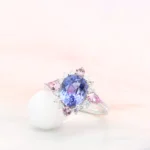
Violet Sapphire, A rare purple hue ranging from soft lavender to deep regal violet, especially striking set within a diamond halo.
Burma Blue Sapphire, Origin carries real weight in sapphire, and Burmese stones are prized for a saturation distinct from Ceylon material.
Ruby Sapphire, Ruby and sapphire are the same mineral family in different colours, combined here in one custom heirloom design.
Blue Sapphire Diamond Ring, A full price guide built around a real 4.0ct oval royal blue sapphire set with kite shaped diamonds.
Vintage Floral Sapphire Ring, For clients who want antique inspired detailing rather than a minimalist mount.
A Spectrum of Colours: Beyond the Classic Blue
In the trade, an unqualified “sapphire” refers to the blue variety. But corundum produces almost every colour imaginable, excluding red which belongs exclusively to ruby. Pink, yellow, teal, violet, orange-pink padparadscha, and the remarkable colour change variety are all sapphires. Each colour has its own sourcing story, rarity level, and price trajectory. If you are specifically looking for royal blue or cornflower blue stones for a ring or engagement piece, our dedicated guide covers pricing, origins, and custom design in full detail.
Expert Note: If you are specifically looking to explore deep blue hues (like Royal or Cornflower), pricing, and custom settings for a proposal piece, we highly recommend reading our dedicated master guide to the blue sapphire ring.
Certification Standards
Every sapphire we offer as a centre stone carries independent certification from GRS Swisslab, GIA (Gemological Institute of America) or NGI. We do not accept in-house certifications, which carry an inherent conflict of interest. If a stone cannot be verified by a third party, it does not enter our collection.
Understanding Heat Treatment
Approximately 90% of sapphires on the market have been heat treated to improve their colour and clarity. That is the industry norm, not the exception. What is genuinely rare is a sapphire that achieves vivid, even colour and strong clarity entirely on its own, without any enhancement whatsoever. Those are the stones GIOIA is built around. For a full explanation of what heat treatment is, how laboratories detect it, and why unheated stones command a significant premium, read our complete guide.
Colour diffusion
Colour diffusion is a different matter entirely from heat treatment and considerably more damaging to a stone’s value. This process introduces artificial chemicals beneath a sapphire’s surface to alter its colour, and while it can produce a vivid, attractive result, the colour is not the stone’s own. A certification stating “natural” does not rule out colour diffusion. It only confirms the stone was not grown in a laboratory. Always check that your certificate explicitly states no indication of colour enhancement. GIOIA does not carry any diffusion-treated stones.
Untreated might not guarantee it is unheated; it could be enhanced by other methods. Always consult with your jeweller to understand their definition of ‘untreated’ fully. The artificially enhanced colour may look brilliant and intense, but the gem will often be worthless.
Evaluating Top Grade Quality
Top grade sapphires are assessed on colour saturation, treatment history, clarity, carat weight, and geographic origin. Historically, Kashmir stones command the highest auction premiums. Today, the most sought-after stones come from Burma’s Mogok Valley and Sri Lanka’s Ceylon deposits. For a detailed breakdown of how these factors affect pricing, visit our blue sapphire guide.
Colour Change Varieties
Colour change sapphires shift from a blue-purple tone in natural daylight to a warmer violet under incandescent light. The effect is caused by how the stone absorbs different wavelengths of light, and the most prized specimens show a clean, dramatic shift rather than a muddy blending of tones. If you have never seen one in person, they genuinely stop people mid-sentence.
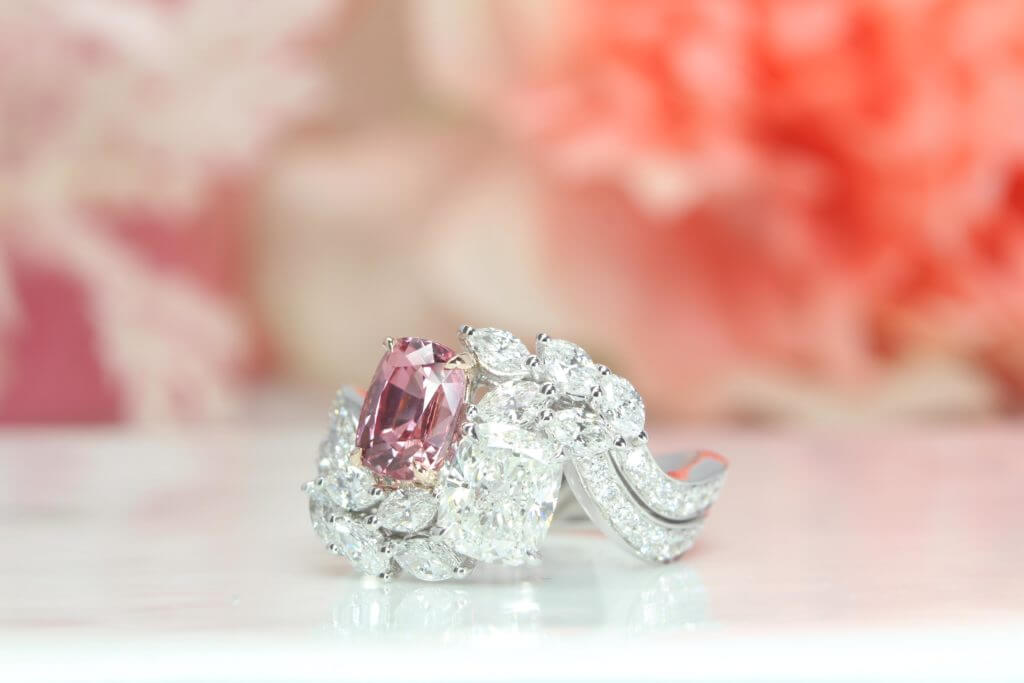
Padparadscha, The Rarest Sapphire of Them All
With a customised Padparadscha ring, you can capture a beautiful shared love for eternity!
Pronounced “pad-pah-raj-ah,” the padparadscha is the rarest variety in the entire sapphire family. Its colour sits in a precise zone between pink and orange, evoking a lotus blossom at sunrise, and it occurs with that delicate balance perhaps once in every twenty parcels of high-quality blue sapphire rough. GRS and GIA both have strict grading criteria for what qualifies as a true padparadscha, and stones outside that range are typically classified as pink or orange sapphire instead. If you are curious about what makes a padparadscha genuine and what to look for when buying one, our dedicated page covers it properly.
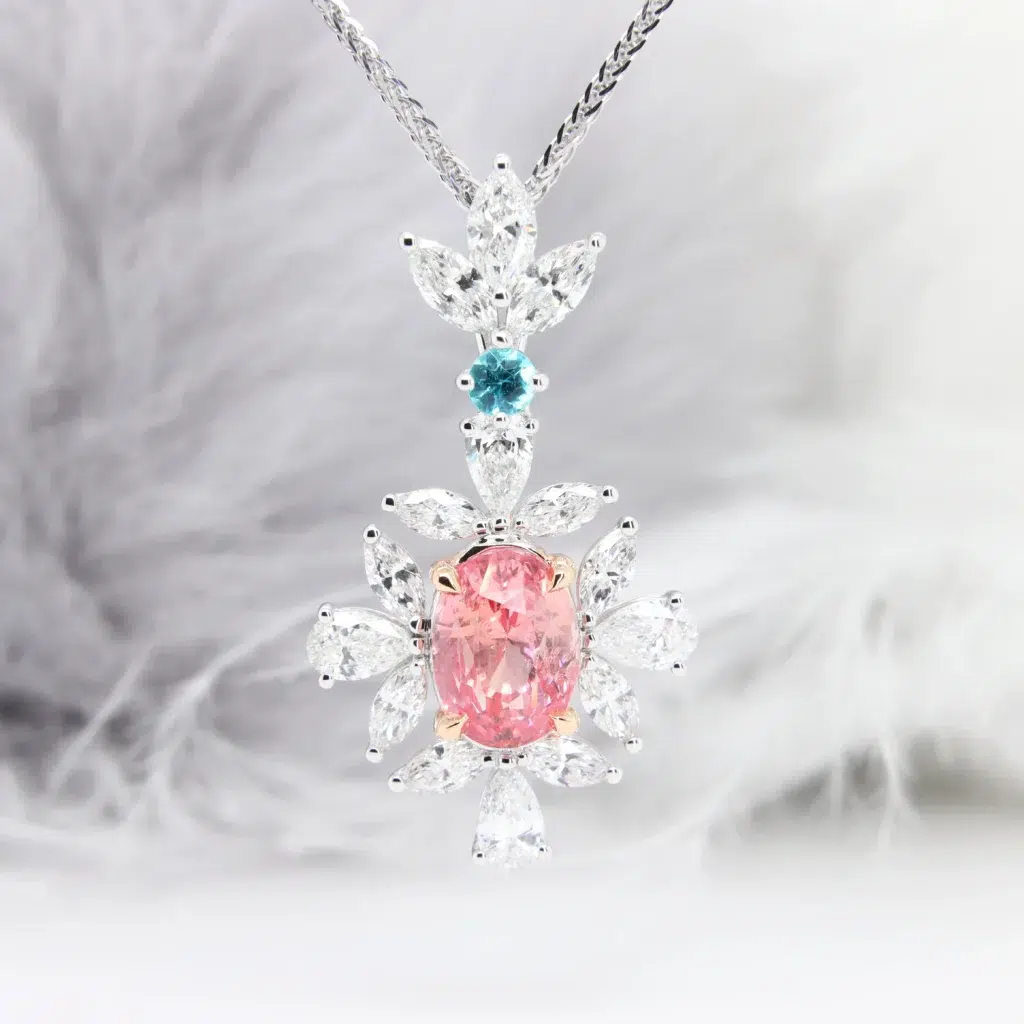
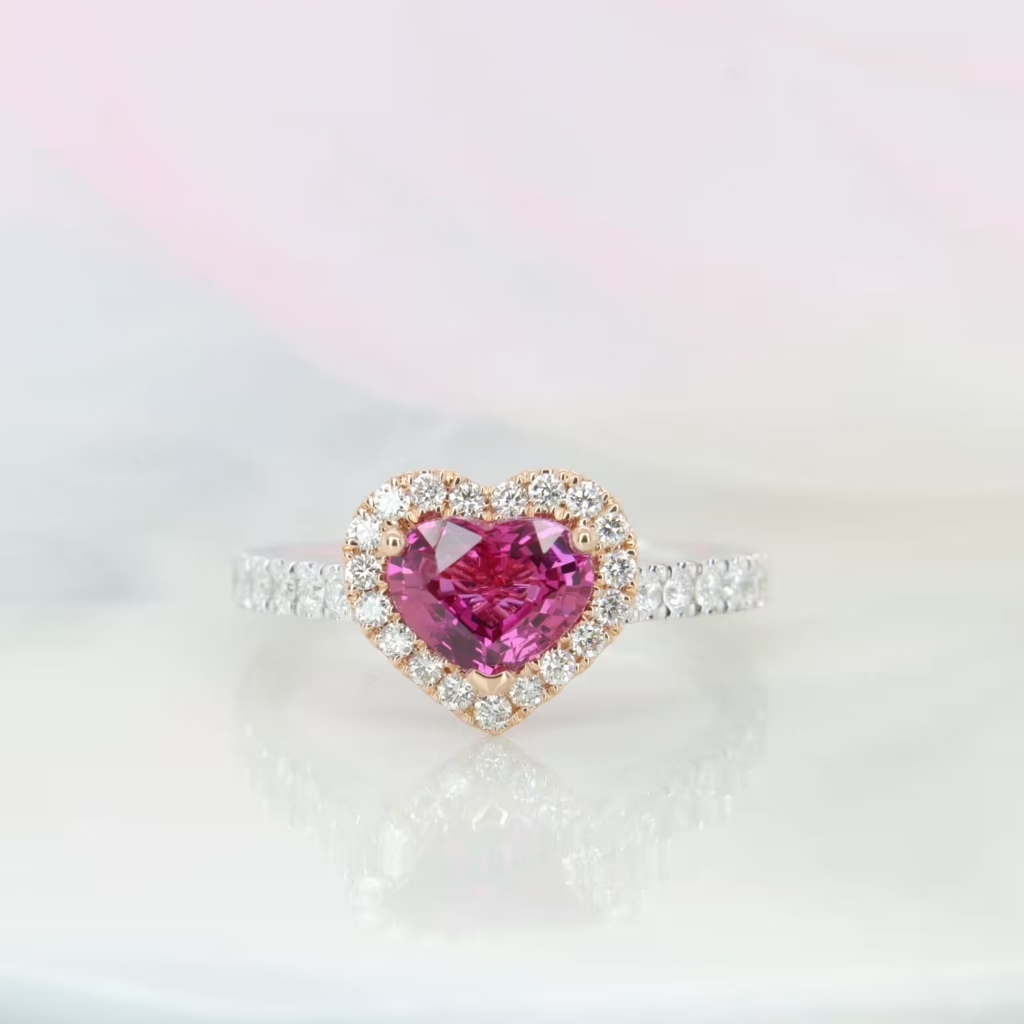
Custom Sapphire Jewellery
Sapphires lend themselves to almost any design direction precisely because of their structural properties. With no cleavage planes and a hardness of 9, a sapphire can be set in complex architectural designs that would risk a softer stone. At GIOIA, we build every setting around the specific dimensions of the chosen stone rather than forcing the gem into a standard mount. The result is a ring, pendant, or piece of jewellery that fits the stone as though it was always meant to be there.
From classic solitaires to intricate architectural designs, explore how we transform these rare, unheated gemstones into the perfect bespoke sapphire engagement ring.

Frequently Asked Questions
Find answers to commonly asked questions about our sapphire gemstone jewellery.
Is a Sapphire gemstone better than a diamond?
Fine sapphires are considerably rarer than diamonds of comparable quality. In our experience, prices for fine unheated blue sapphires have risen over the past decade, while lab-grown diamonds have pushed down the market value of natural diamonds. Beyond value, sapphires offer a breadth of colour options that diamonds simply cannot match.
Are all unheated sapphires pastel or light in colour?
Not at all. Heat treatment is commonly used to boost colour saturation in weaker rough, which creates the misconception that vivid colour requires treatment. Unheated sapphires can and do display rich, deep hues with excellent saturation. They are simply rarer and command a significant premium because of it.
Does carat weight matter for sapphire gemstones?
Carat weight affects size but does not determine value on its own. A 1.5 carat unheated Burmese sapphire with vivid royal blue colour and clean clarity will be worth considerably more than a 3 carat heated stone with a greyish modifier. Colour, treatment history, and origin drive value far more than weight alone.
Difference between carat weight and size in Sapphire vs Diamond?
Sapphire is denser than diamond, so a sapphire and a diamond of identical carat weight will not look the same size face-up. The sapphire will typically appear slightly smaller. Cut depth also matters. A deeply cut stone will look smaller than a shallowly cut stone of the same weight, which is one reason cut quality is worth paying attention to in coloured gemstones.
How can you tell if a sapphire gemstone is real?
Natural sapphires contain inclusions, colour zoning, and other internal characteristics that laboratories identify under magnification. A loupe examination gives an experienced gemologist significant information about a stone’s natural origin. For certainty, independent certification from GRS or GIA is the only reliable confirmation. We recommend never buying a significant sapphire without it.
Where to find Sapphire Gemstone?
GIOIA Fine Jewellery carries one of the widest selections of unheated sapphires in Singapore, from vivid royal blue and cornflower blue Ceylon stones to padparadscha, teal, pink, yellow, and colour change varieties. Every centre stone in our collection is independently certified and hand-selected by Clarence and Cheryl. Visit us at International Plaza or reach out to arrange a private viewing.
Every sapphire in this collection is colour-assessed by Clarence Yee, GIOIA’s co-founder and gemstone specialist, before it is designed into a piece by Cheryl Woon.
Have a question on sapphire gemstone?
If you have any other queries, feel free to reach out to us. Our GIOIA team is here to help!
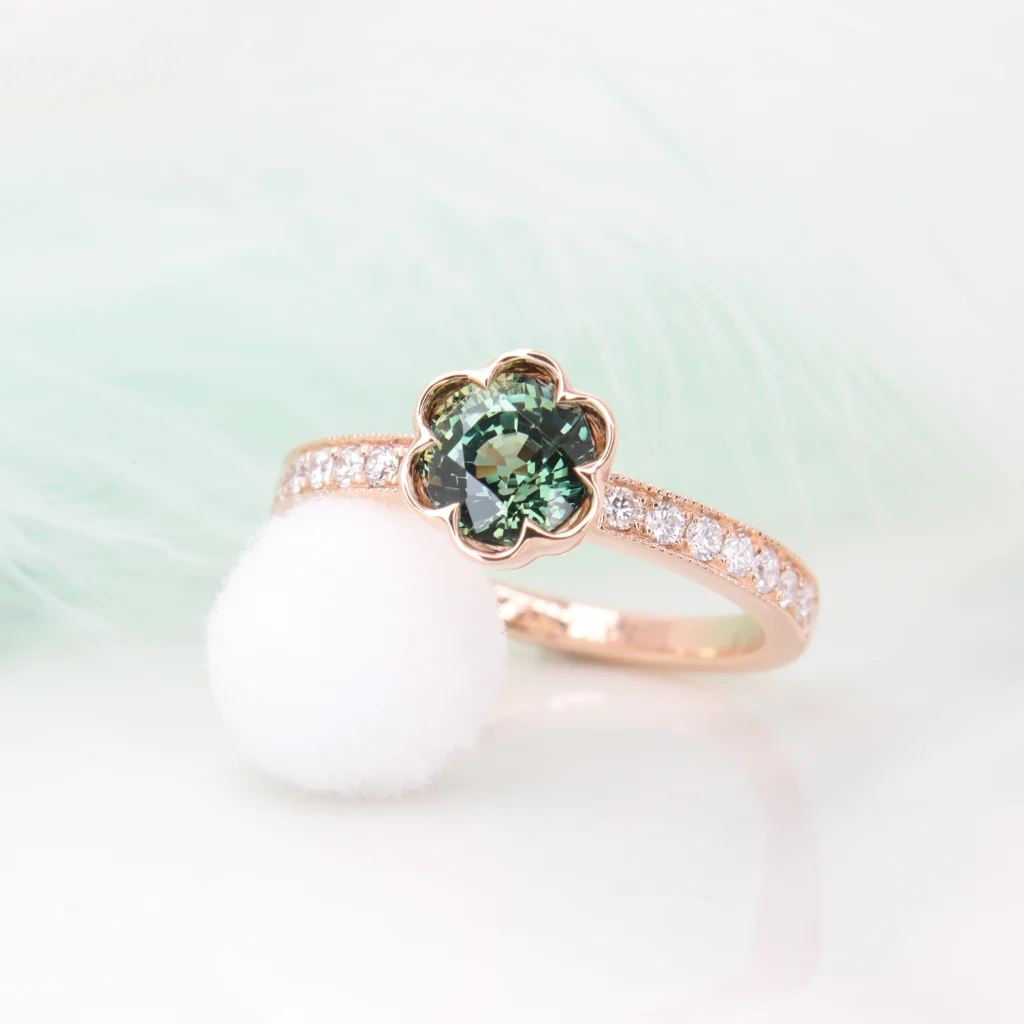
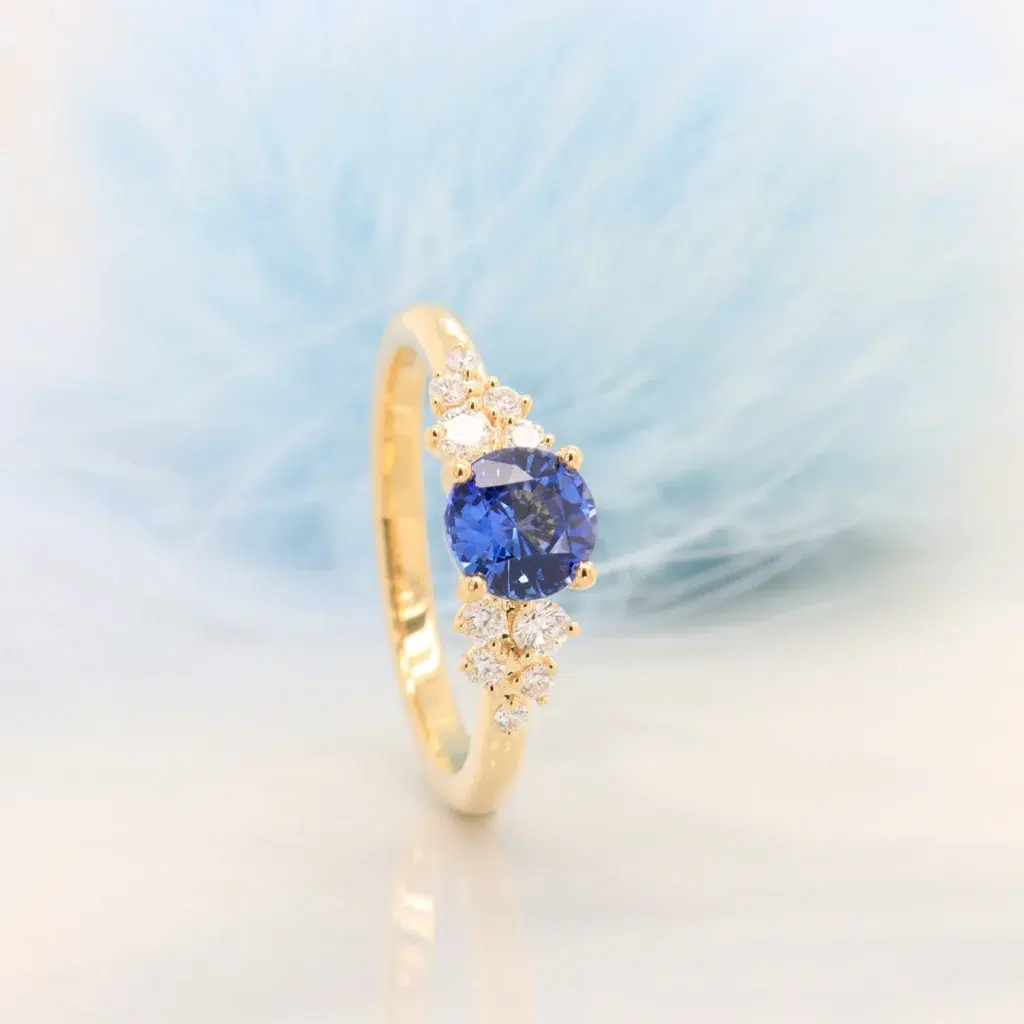
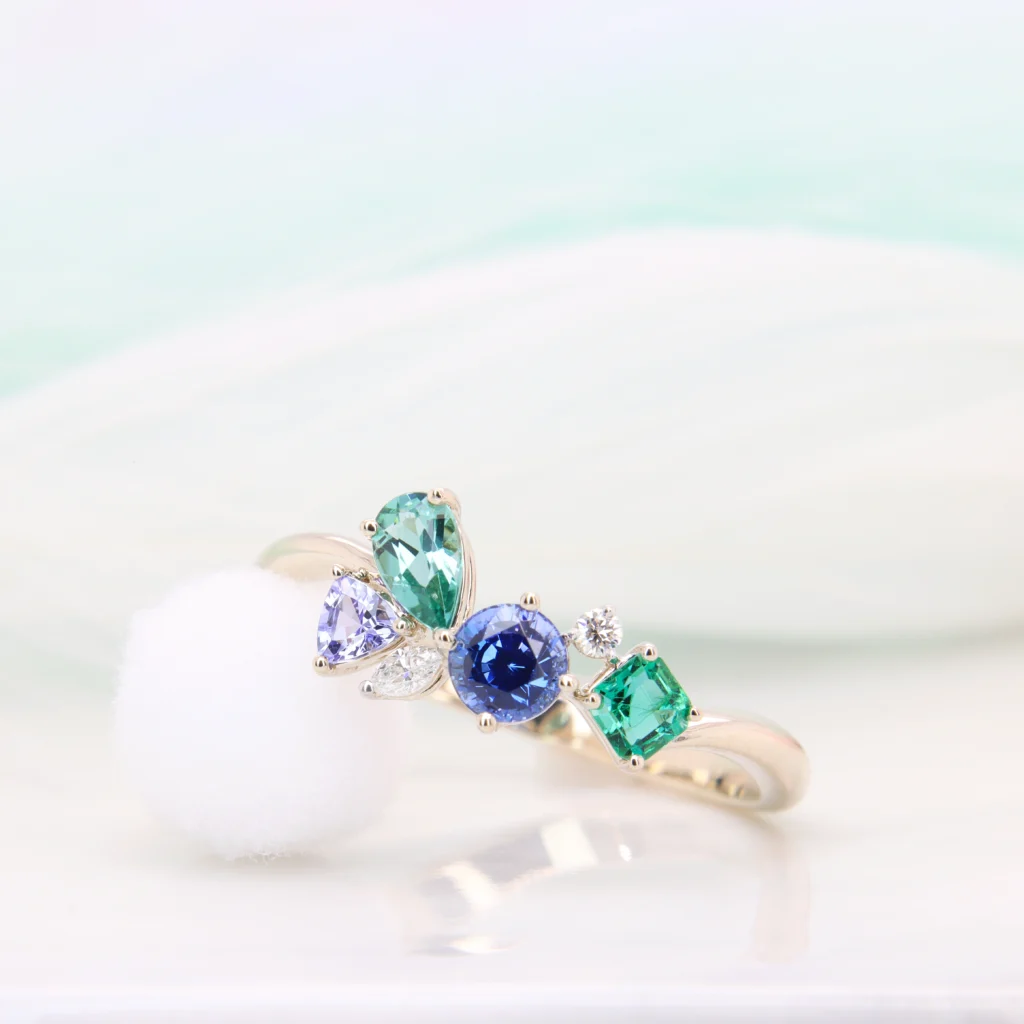
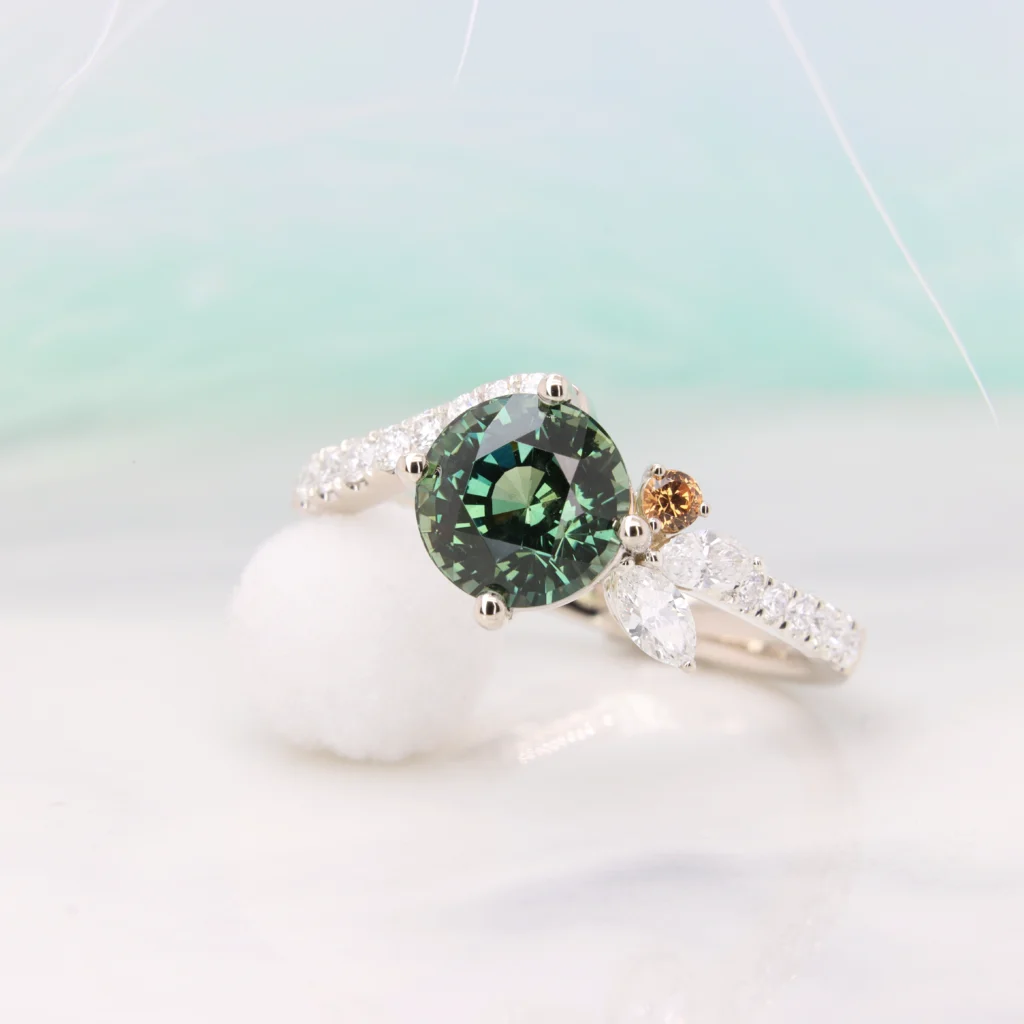
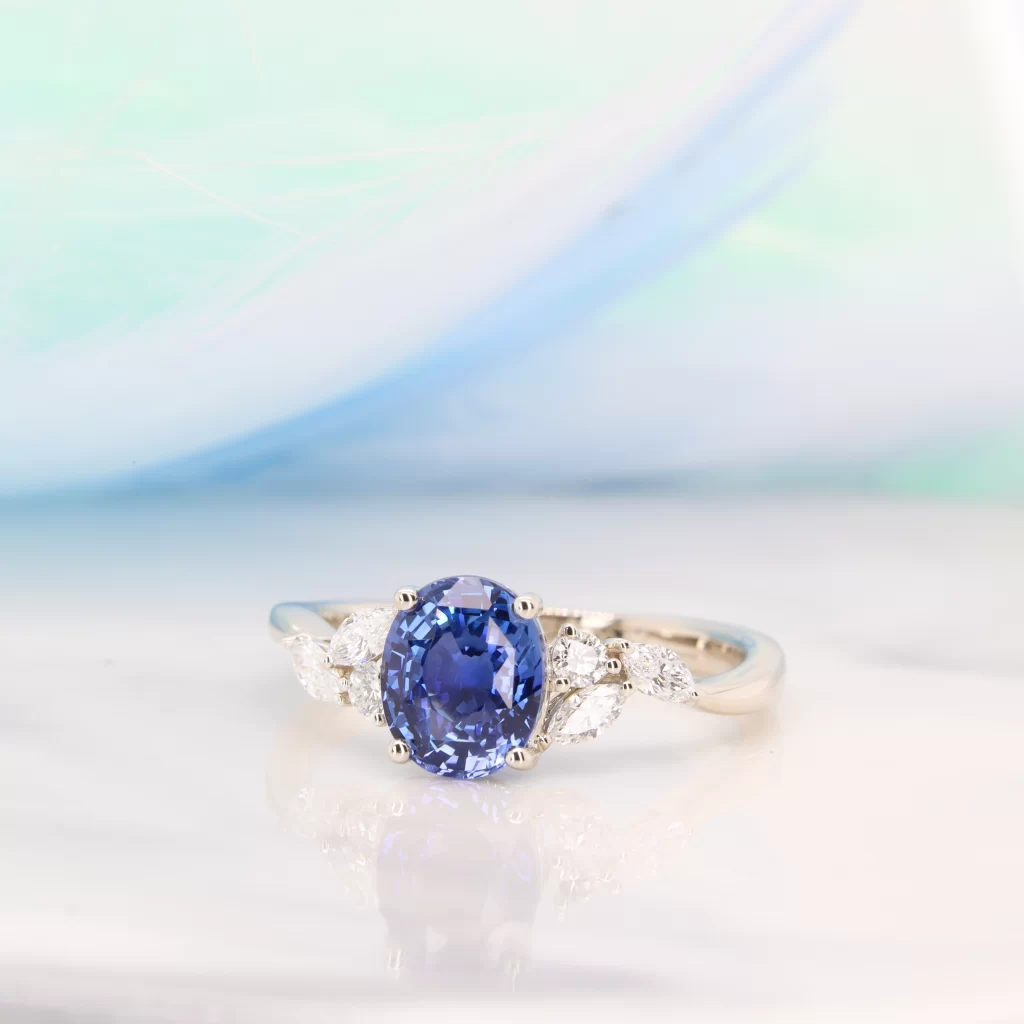
Sapphire is just one of the stones we work with for a coloured gemstone engagement ring.
A few more of our sapphire pieces from past commissions: the Blue Sapphire Anniversary Ring, a Blue Sapphire Cross Pendant, our Royal Blue & Cornflower Blue sapphire rings, Cornflower Sapphire Wedding Rings, the Eiffel Tower Sapphire Ring, a Sapphire Halo Diamond design, and a Stackable Sapphire Diamond Ring.
And two more sapphire commissions: Sapphire Wedding Bands Singapore and a Colour Change Sapphire Ring.
Custom Sapphire Rings We've Created
Every sapphire has its own character, and these are some of the bespoke pieces we've built around that.
- Teal Sapphire Leaves Diamond Ring
- Teal Sapphire Icy Peaks Diamond Ring
- Yellow Sapphire Diamond Twisted Ring
- Blue Sapphire Cluster Gemstone Ring
- Unheated Blue Sapphire Side Diamond Ring
- Unheated Violet Purple Sapphire Anime Wings Ring
- Unheated Pink Sapphire Heart Shape Ring
- Sapphire Diamond Eternity Band
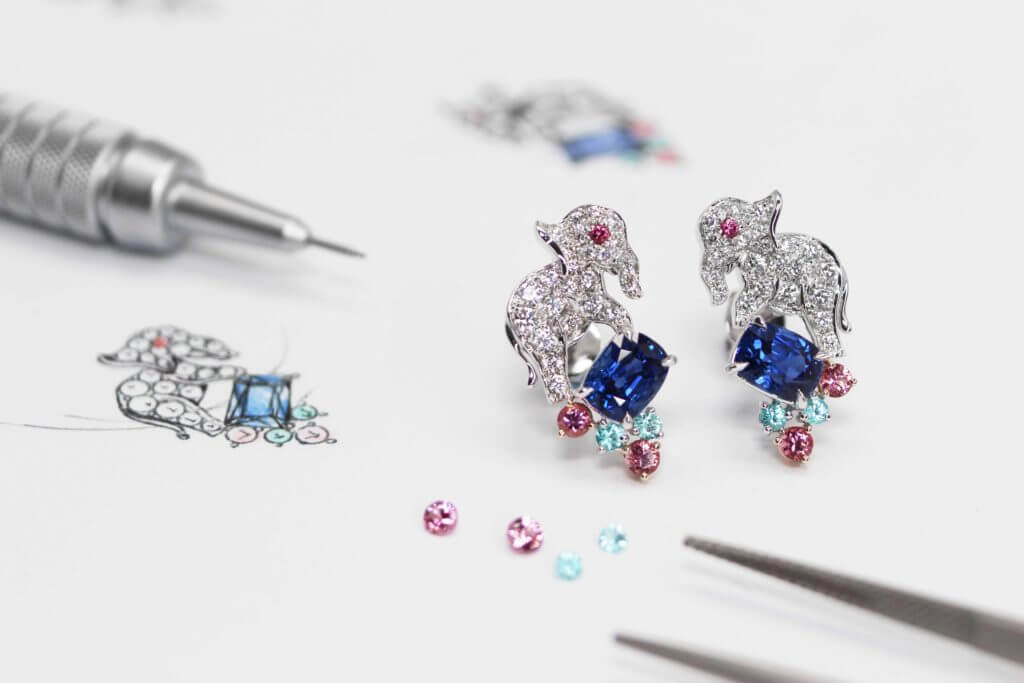
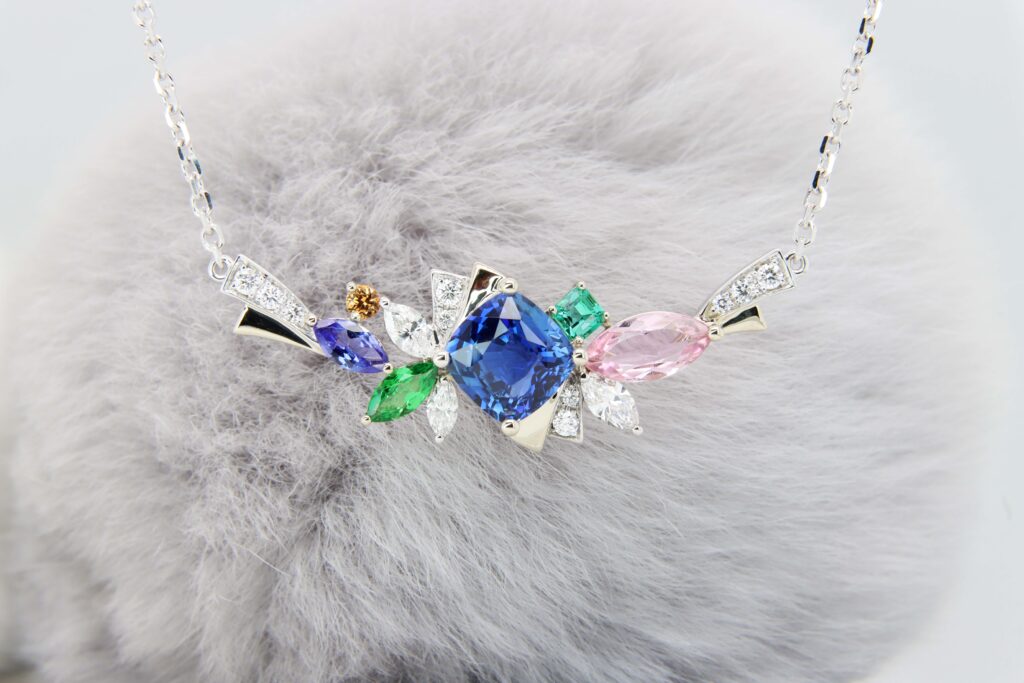
- Multi-Coloured Sapphire Cluster Earring
- Teal Sapphire Halo Diamond Ring