
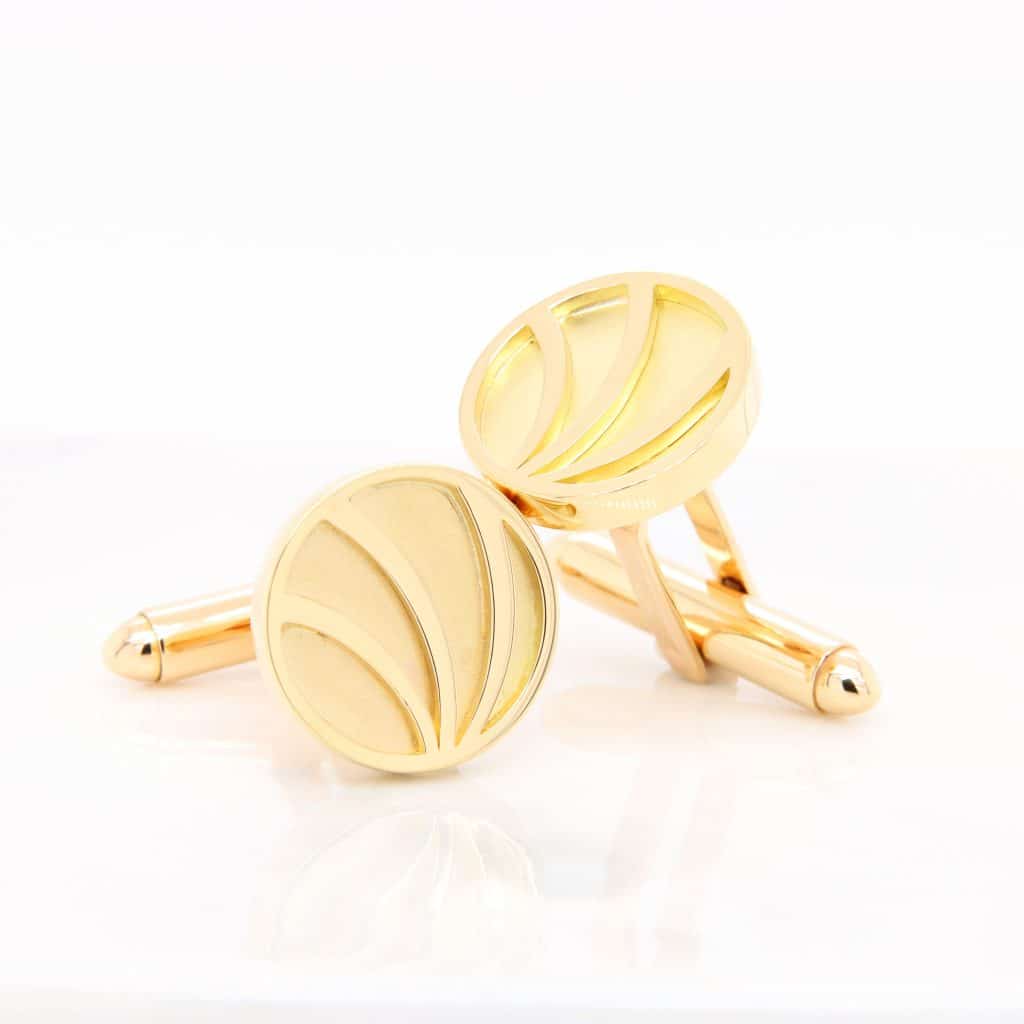
A watch is usually the only jewellery a man wears to work. A pair of cufflinks, a signet ring, a tie bar or a lapel pin is a quieter way to make a formal outfit look considered rather than default. We make all four to order in Singapore, in 18k yellow, white or rose gold or in platinum, engraved or set with a small coloured stone if you want one.
Gold Cufflinks
Cufflinks sit at the edge of the sleeve, so they are seen every time a hand moves. We tend to keep them simple: a round or oval face, a clean bevel, an engraved initial or a fine guilloché pattern, on a swivel bar that is easy to put on one-handed. A dark suit in navy, charcoal or grey gives very little away about the person wearing it, and a considered pair of cufflinks is one of the few places to add something personal.
For a wedding or a milestone gift we often set a birthstone or a small rare stone into the face, a spinel, a sapphire or a paraiba tourmaline offcut from another commission, so the pair carries a date or a colour that means something. Monograms, coordinates and short dates all engrave cleanly at this size.
Signet Rings

The signet ring is the oldest piece of men’s jewellery still in regular use. It was a working object, a seal pressed into wax to sign a document, and it is traditionally worn on the little finger of the non-dominant hand. Most of the signet rings we make now are engraved with initials, a family crest or a short set of letters, cut in reverse so an impression reads correctly, or cut as a normal positive engraving if it is never going to be used as a seal.
A signet can also be set rather than engraved. A flat oval of onyx, bloodstone or a dark sapphire gives a surface for a carved crest, and a flush-set diamond or birthstone in the shoulder keeps it discreet. We cut the profile to sit low so it does not catch, and we weight the band so a pinkie ring does not spin. If you want a gemstone-led men’s ring rather than a seal, our modern men’s ring page covers those.
One recent commission paired a vivid tsavorite garnet in a signet for him with a red spinel version for her, green and red, made as a pair. See the tsavorite signet ring and the red spinel signet ring up close.
Tie Bars

A tie bar has one job, to clip the tie to the shirt placket so it stays flat, and it should be no wider than the tie itself. Ours are usually a plain slim bar in brushed or polished gold, sometimes with a single engraved initial or a fine milgrain edge. It clips about a third of the way down, level with the middle button of the jacket.
It is a small piece and an easy first commission, which makes it a common groomsmen gift, one bar each with the wedding date on the back. We can match the finish to cufflinks or a lapel pin if you want the set to read together.
Lapel Pins
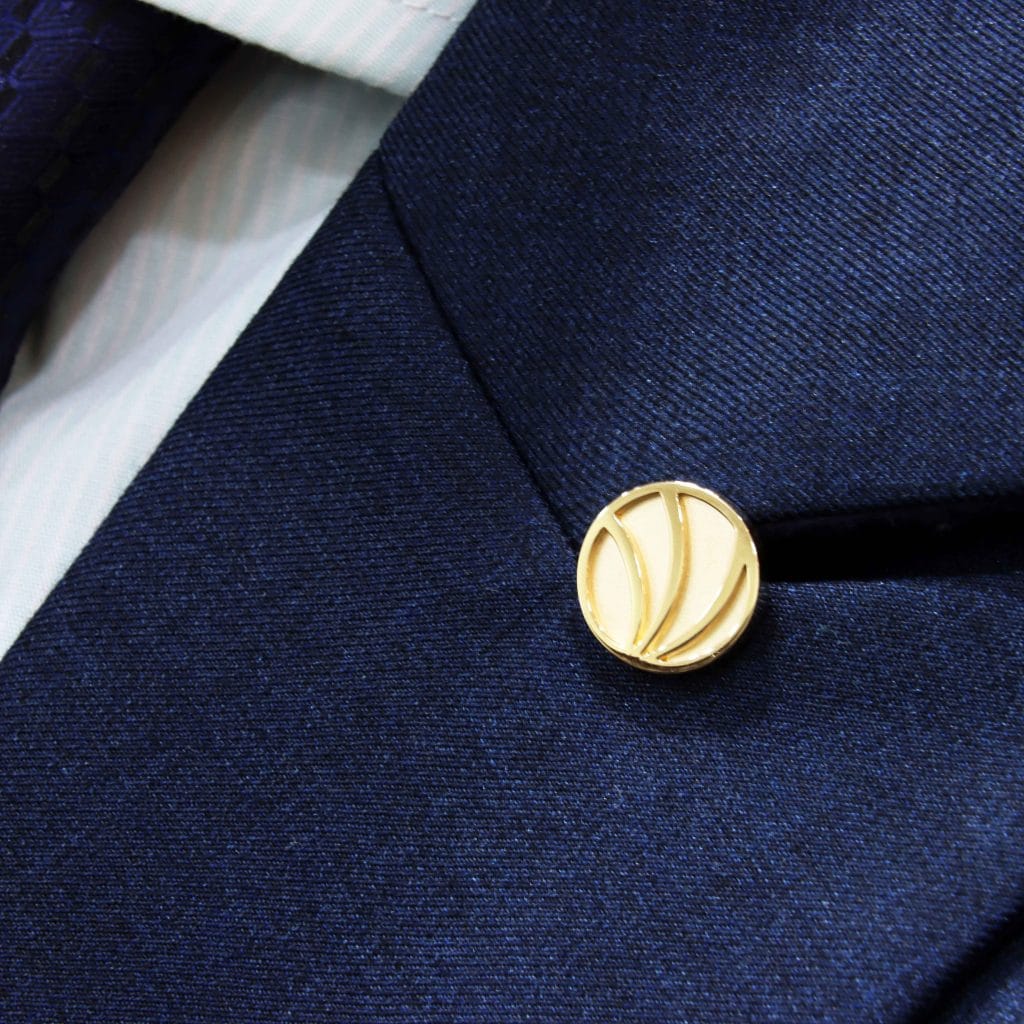
A lapel pin fills the buttonhole on a jacket lapel where a boutonnière would sit. A cast gold pin lasts where a flower does not, and it can carry a motif that means something to the wearer, a monogram, a small animal, a family emblem or a shape lifted from a building or a place. We have made them in 18k yellow gold with a chain and a second bar that tucks behind the lapel to hold it steady.
Like the tie bar, a lapel pin works best kept small and legible. Menswear has moved towards understated gold accessories that sit quietly against a suit rather than competing with it, and a lapel pin is an easy way into that without committing to a ring.
Metal, Finish and Engraving
Yellow gold is the traditional choice for all four pieces and still the most common request, but white gold reads better against a cool grey suit and platinum is worth considering for a signet that will be worn every day, since it holds an engraving longer. Rose gold sits somewhere in between and works well on cufflinks. We usually match the metal to whatever the wearer already owns, a watch, a wedding band, so the pieces do not clash.
Finish changes the character as much as the metal. A high polish looks formal and shows every mark; a brushed or matte finish is more forgiving for daily wear and hides fine scratches. For engraving, block initials and a family crest suit a signet face, while a single letter, a short date or map coordinates work better on the narrow face of a tie bar or the back of a cufflink. Hand engraving costs more than machine engraving but cuts deeper and ages better.
Commissioning a Set
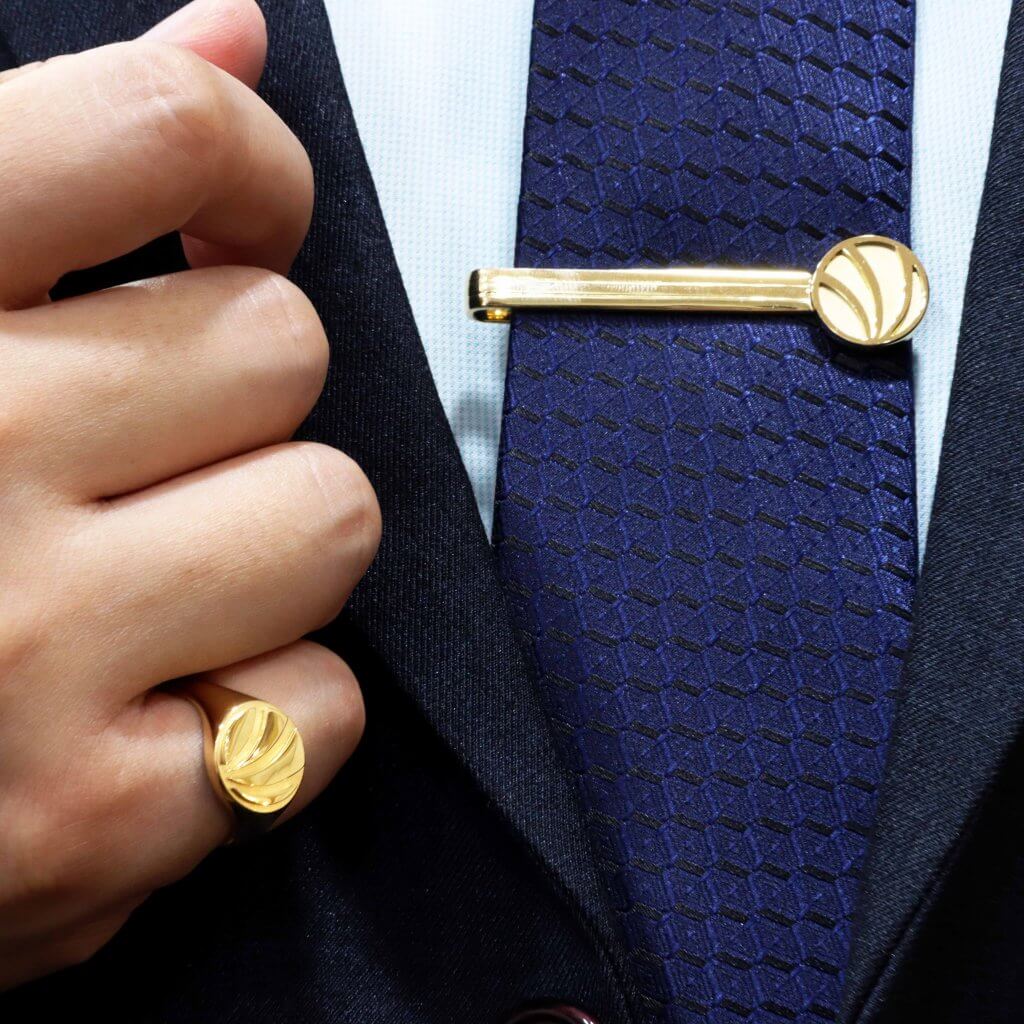
These pieces are often commissioned together, a signet ring with a tie bar, or cufflinks with a matching lapel pin, cut in one finish so they clearly belong to each other. A single piece takes around three to four weeks; a set a little longer. We start from a sketch, agree the metal, the finish and any engraving or stone, then hand it to the bench. If you have an idea for a piece of bespoke men’s jewellery, book a consultation at our Singapore studio.
Common Questions
Which finger does a signet ring go on?
Traditionally the little finger of the non-dominant hand, so the right hand for most people. There is no rule against wearing it elsewhere, but the pinkie keeps it clear of a wedding band and is where a seal ring has always sat.
Should a tie bar match my cufflinks?
It helps if the metal colour matches, yellow with yellow, white with white. The finish and any engraving can match too if you want the set to read as one, but it is not essential. What matters more is that the bar is no wider than the tie.
Can you set a birthstone into cufflinks or a signet ring?
Yes. Cufflink faces take a small flush-set or bezel-set stone well, and a signet shoulder can hold a flush-set diamond or birthstone without changing the shape. We often use small stones left from other commissions, including sapphire, spinel and paraiba tourmaline.