
At a glance
- Every piece is custom designed for one client around a natural gemstone from our collection, most often sapphire, ruby, emerald, spinel or Paraiba tourmaline.
- Centre stones above about SGD 1,000 come with an independent lab report, mainly from GRS or GIA.
- Most of our sapphires and rubies are unheated. Where a stone has been heated, its report says so and we tell you first.
- Bespoke pieces take about 10 to 12 weeks and come with a 12-month warranty plus lifetime cleaning and inspection.
- You can see the pieces and loose stones at our International Plaza boutique by appointment.
Gemstone Jewellery at GIOIA
GIOIA’s gemstone jewellery starts with the stone. Our co-founders choose each sapphire, ruby, emerald and Paraiba tourmaline for its colour first, and we then design the ring, pendant, earrings or bangle around it in our own studio.
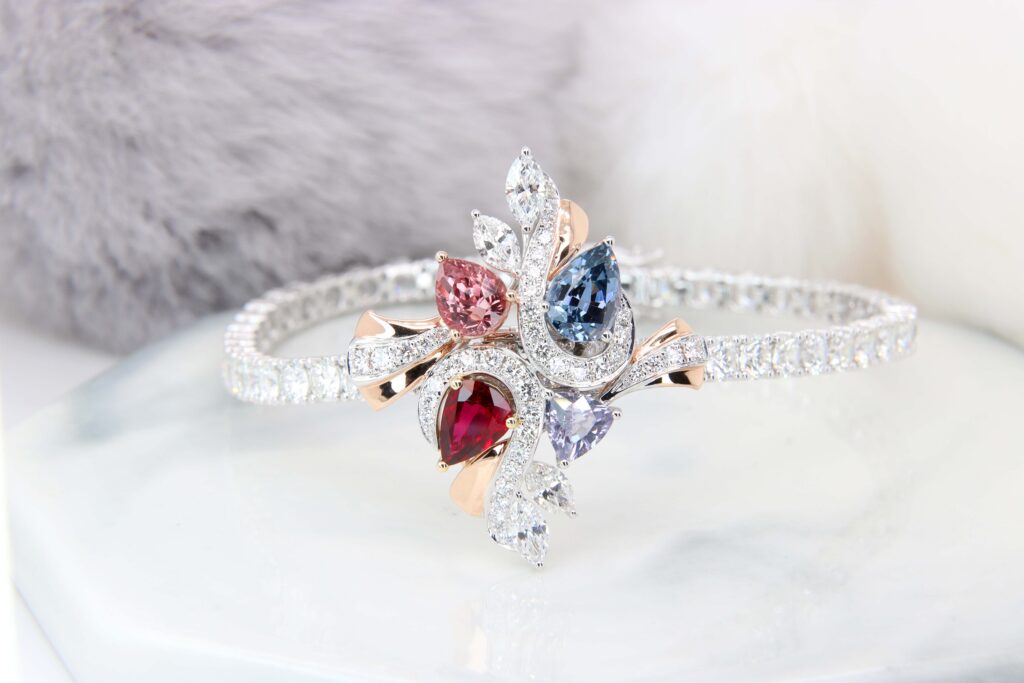
Every piece on this page was designed for one client and made only for them, shaped around their style, the gemstone they fell for and the way they wanted to wear it. None is repeated. They show what we can create around a stone from our collection, and yours would be just as personal.
Fine jewellery, to us, means natural gemstones set in 18K gold or platinum and made to be worn often, not kept in a safe. Many clients first know us for customised engagement rings, and the same care goes into a pendant for everyday wear.
Gemstone Jewellery Guide
Browse Gemstone Jewellery by Piece
- Gemstone rings, our custom ring gallery and gemstone engagement rings
- Gemstone pendants and gemstone necklaces
- Gemstone earrings, such as our parrot earrings and multi-coloured sapphire cluster earrings
- Gemstone bangles
- Family birthstone jewellery
Browse by Gemstone
Our Gemstone Jewellery Collections
The Royal Collection: Ruby and Sapphire
These heirloom rings are set with pigeon blood rubies and royal blue sapphires. The stones are unheated, so the colour you see is the colour they formed with, and each centre stone has an independent lab report that says so.
Most rubies and sapphires on the market have been heated to improve their colour, so unheated stones of this colour make up only a small share of what is offered. We keep these designs simple so the centre stone stays the focus.

The Neon Collection: Paraiba and Spinel
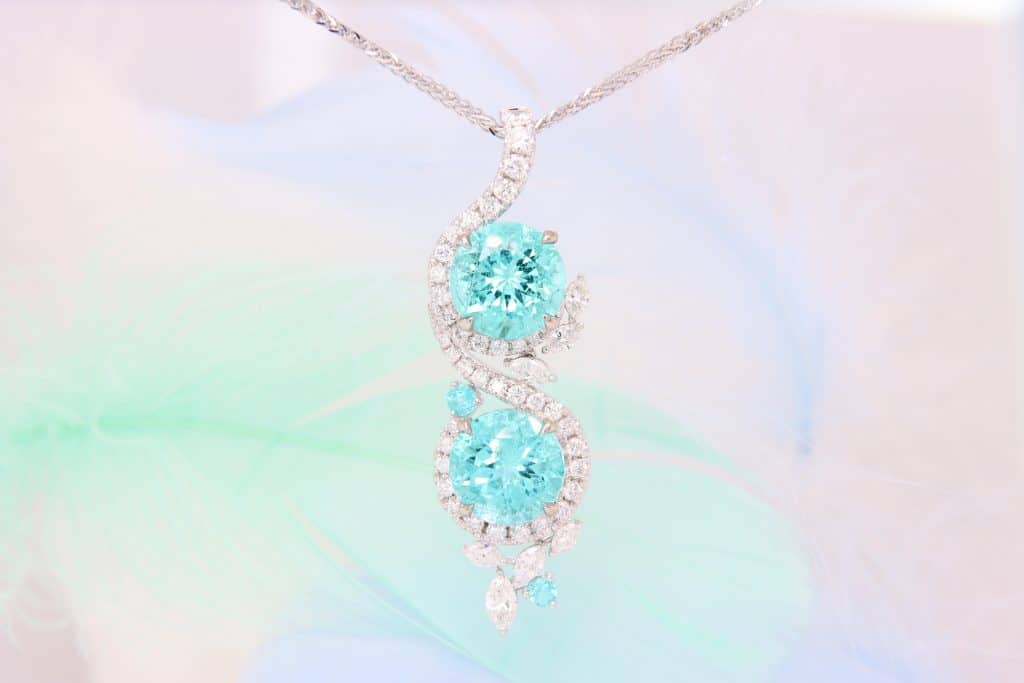
Paraiba tourmaline is found in only a few places: Brazil, Nigeria and Mozambique, with Ethiopia confirmed in 2026. Copper gives it its neon blue to green colour. The collection also includes spinel, which comes in clear reds, pinks and blues and, at 8 on the Mohs scale, wears well in earrings and rings. More of the rarer stones we work with are on their own page.

Parrot Earrings with Paraiba Tourmaline and Tanzanite
These parrot earrings pair unheated tanzanite with Brazilian Paraiba tourmaline. Almost all tanzanite on the market is heated to bring out its blue, so unheated stones like these are rare. The blue-green of the Paraiba sits against the violet blue of the tanzanite, and the design follows the shape of a tropical bird.
Paraiba Tourmaline Fine Jewellery Set
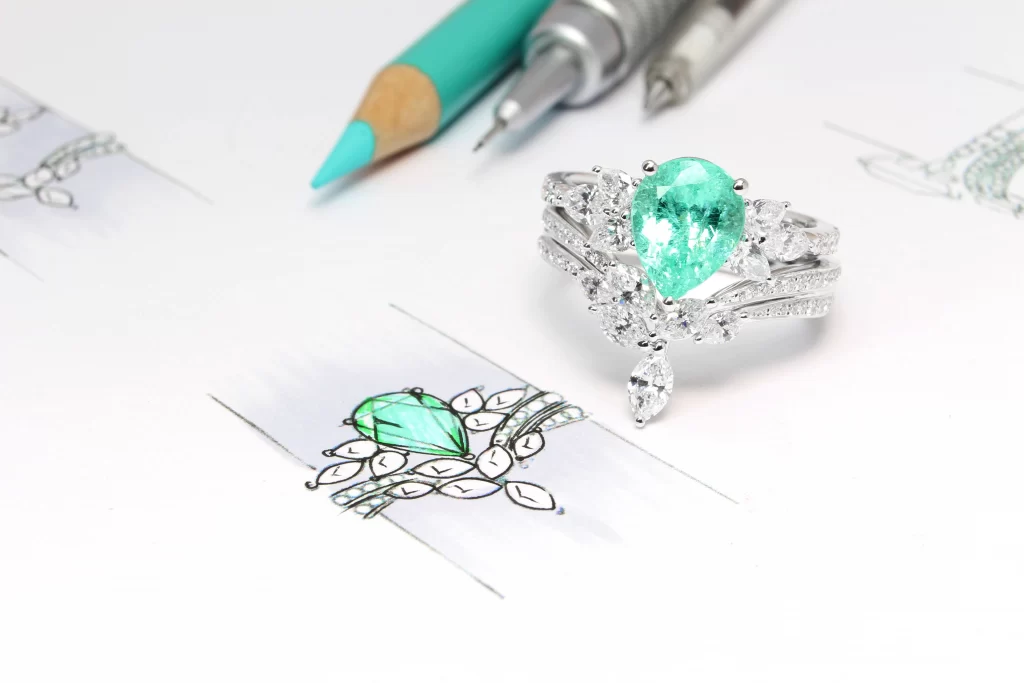
In this set, marquise and pear diamonds surround the centre Paraiba tourmaline and frame its neon colour. For a Brazilian Paraiba set at the centre of diamond petals, see the Paraiba blossom ring we made for a client.
How We Choose the Gemstones
Our rubies come through trade partners who buy at the Gemfields and Fura auctions, and our sapphires through partners in Sri Lanka we have worked with for over ten years. Colour is the first thing we judge, then how lively the stone is, how well it is cut and whether any inclusions show to the eye.
Centre stones above about SGD 1,000 come with a report from an independent laboratory, mainly GRS or GIA, which confirms the stone is natural and states any treatment. The full policy is set out in our gemstone standards.
Natural, Treated or Lab-Grown: Is Your Gemstone Jewellery Real?
Three kinds of stone are sold as gemstone jewellery. A natural stone grew in the earth. A lab-grown stone has the same chemistry but is made in a laboratory and costs far less, while an imitation such as glass only looks similar.
Many natural stones are also treated. Heating is common for sapphire, ruby and Paraiba tourmaline, and most emeralds have oil or resin in their fissures. Treatment is not a problem in itself, but it changes the price, so it should always be disclosed. An independent lab report is how you know which of these you are buying.
The old split into precious and semi-precious stones says little about value. A fine Paraiba tourmaline can cost more per carat than many sapphires, so it is the quality of the individual stone that matters. At GIOIA we use natural gemstones only. Our diamonds are natural too: full cut, with at least F or G colour and VS clarity.
Which Gemstones Suit Everyday Wear?
Hardness tells you how well a stone resists scratches. A stone of 8 or above copes with daily wear in a ring, while softer stones are happier in earrings and pendants or need more care.
| Gemstone | Mohs hardness | Everyday wear |
|---|---|---|
| Sapphire and ruby | 9 | Excellent, suits a ring worn daily |
| Spinel | 8 | Very good |
| Emerald | 7.5 to 8 | Good with care, as inclusions make it more fragile |
| Morganite and aquamarine | 7.5 to 8 | Good |
| Paraiba and other tourmaline | 7 to 7.5 | Good, with some care in rings |
| Tanzanite | 6 to 7 | Better in earrings and pendants |
What Gemstone Jewellery Costs at GIOIA
Price depends mostly on the centre stone. As a guide from our own work, bespoke gemstone pendants and earrings start from about SGD 2,500, necklaces from about SGD 3,000 and rings from about SGD 3,900, while a ruby ring starts from about SGD 5,900. Paraiba tourmaline and our rarest stones are priced individually, and we show them in person.
From Choosing the Stone to Wearing It
- Book an appointment at our International Plaza boutique and tell us what you have in mind.
- Compare loose stones side by side and pick the one you love.
- We design the piece around that stone and agree the design with you before making begins.
- Most pieces take about 10 to 12 weeks to make.
- You collect it with a 12-month warranty against manufacturing defects, and we clean and inspect it for life.
Caring for Your Gemstone Jewellery
Take rings off for the gym, swimming, the beach and housework, and put jewellery on after perfume and lotion. Store each piece in its own pouch so harder stones do not scratch softer ones. Warm water, mild soap and a soft brush are enough at home. Keep emerald, tanzanite and opal away from ultrasonic cleaners. Bring your piece in once a year and we will clean it and check the settings as part of our lifetime cleaning and inspection.
Where to See Gemstone Jewellery in Singapore
Our boutique at International Plaza is open by appointment. GIOIA was founded in 2016 by Clarence Yee, our gemstone specialist, and Cheryl Woon, our designer and an HRD Antwerp certified diamond grader.
Clients rate us 5.0 from more than 400 Google reviews. Honeycombers named GIOIA Silver for Best Luxe Jewellery Brand in its Best in Singapore Awards 2026, and Tatler listed us among its Top 10 Best Local Jewellers in 2019. See our press and awards.

Frequently Asked Questions
Answers to the questions clients ask us most about gemstone jewellery.
Is gemstone jewellery real?
Not always. Some pieces sold as gemstone jewellery use lab-grown stones, or glass that only looks like the real thing. An independent lab report settles it, because it states whether a stone is natural and whether it has been treated. Every gemstone we use is natural, and any centre stone above about SGD 1,000 comes with a report, usually from GRS or GIA.
Where can I buy genuine gemstone jewellery in Singapore?
Look for a jeweller who names the laboratory behind its reports, tells you about any treatment before you pay and lets you compare stones in person. You can view our gemstones and jewellery at our International Plaza boutique by appointment.
Which gemstones can I wear every day?
Sapphire and ruby, at 9 on the Mohs scale, are the safest choice for a ring worn daily, followed by spinel at 8. Emerald and tourmaline wear well with some care, and softer stones such as tanzanite are better kept for earrings and pendants.
How much does gemstone jewellery cost in Singapore?
Fashion pieces with small or lab-grown stones can cost a few hundred dollars. For natural stones with lab reports, our pendants and earrings start from about SGD 2,500 and rings from about SGD 3,900, and the centre stone decides most of the final price.
Is gemstone jewellery a good investment?
We would be careful with that word. Fine unheated rubies and sapphires, and fine Paraiba tourmaline, are scarce, but no future value is guaranteed, and part of what you pay for is design and craftsmanship that you would not get back on resale. Choose a piece because you will love wearing it.
Can I choose the gemstone myself?
Yes. You choose your centre stone from our collection, comparing several side by side, and we design the piece around it.
How long does it take to make a gemstone piece?
Most bespoke pieces take about 10 to 12 weeks, and we give you a date when you commission yours.
What is the difference between fine jewellery and fashion jewellery?
Fine jewellery uses precious metal such as 18K gold or platinum with natural gemstones and diamonds. Ours are full-cut diamonds of at least F or G colour and VS clarity. Fashion jewellery uses plated metal with glass, crystal or synthetic stones. Lab-grown stones sit in between: real gem material, made in a laboratory, at a much lower price.
We also craft personalised cufflinks and signet rings for clients wanting fine jewellery beyond engagement and wedding pieces.