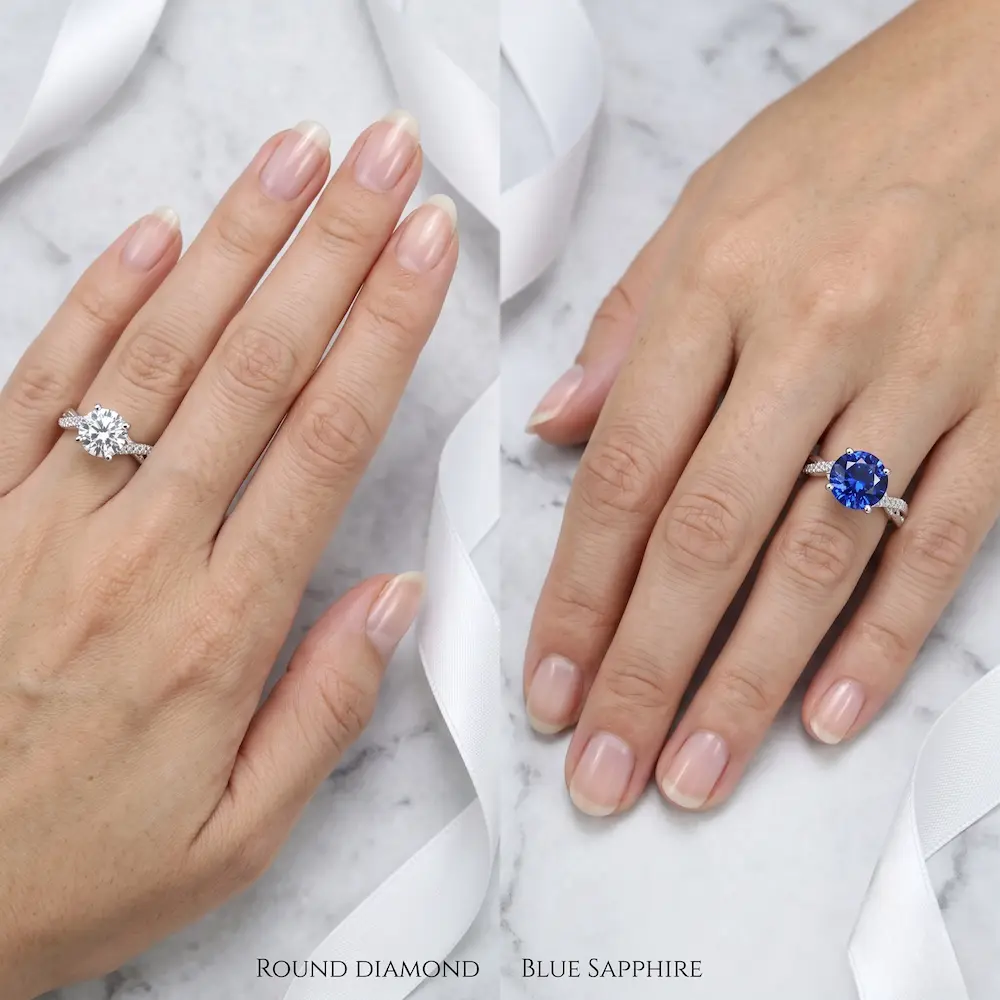

Padparadscha Sapphire in Singapore
Padparadscha is the name given to sapphires that show pink and orange together. It is usually traced to a Sinhalese word for the lotus, and the colour is often compared to the flower. Fine examples are scarce, far scarcer in our buying than fine blue sapphires.
The colour has to hold both tones at once. When one tone takes over, labs report the stone as pink sapphire or orange sapphire instead, however attractive it is. Stability matters as well. GIA only names a stone padparadscha if its colour is still acceptable after a colour stability test, and GRS records the stability result on its reports.
Why Choose Your Padparadscha at GIOIA?
You choose the stone first, in person at our International Plaza boutique, and GIOIA Fine Jewellery then designs a customised engagement ring or bespoke piece around it. We keep unheated padparadscha from about 0.5 carats to just over 2 carats, in shades from softer pink to deeper orange. Every centre stone comes with an international lab report, usually from GRS or GIA.
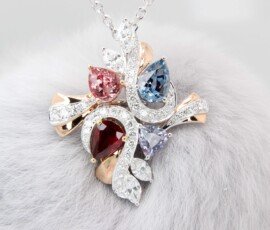
Curated Padparadscha Sapphire Collection (Singapore)
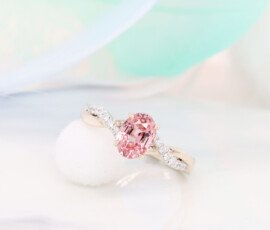
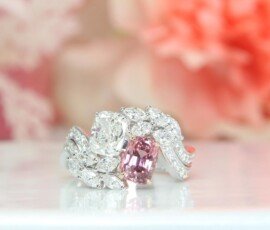
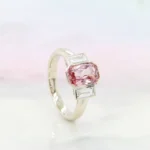
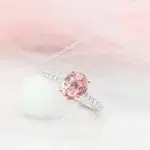
The pieces below are past commissions, shown so you can see how different shades and sizes look once set. Unheated stones you can view today are listed in the next section.
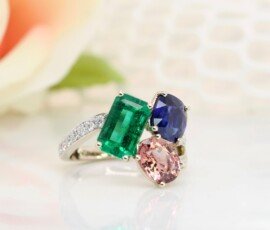
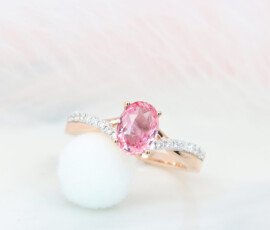
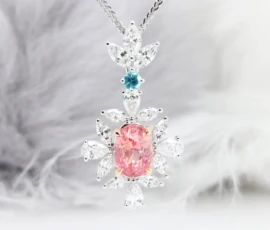
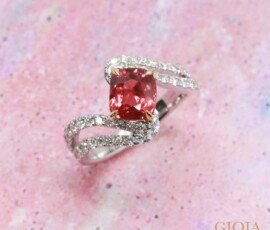
Available Now: Loose Padparadscha Sapphires
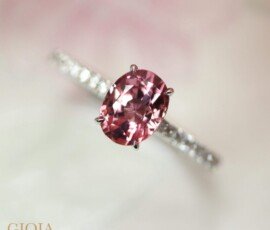
Unlike the private commissions above, these three unheated padparadscha sapphires are currently uncommitted stones held in our Singapore collection, open for a private viewing at International Plaza and ready to be set into a bespoke piece.
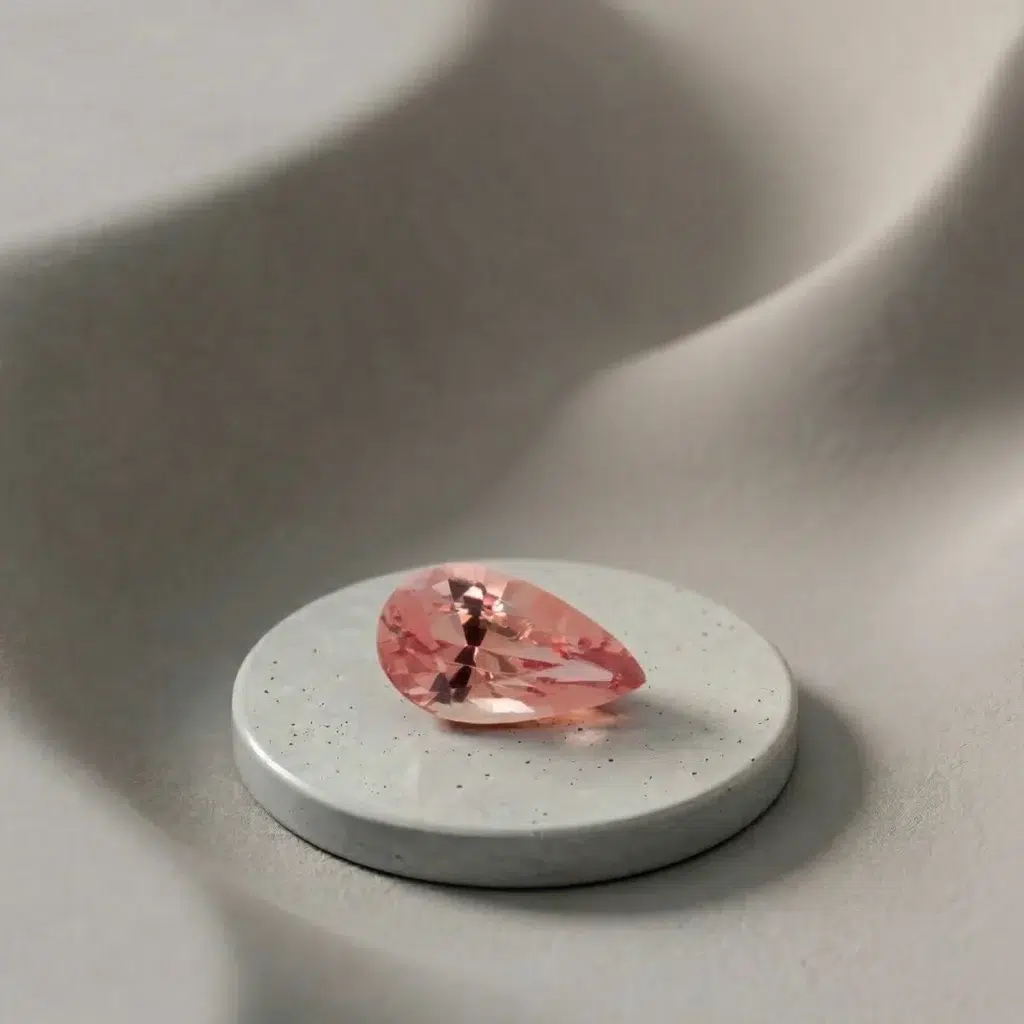
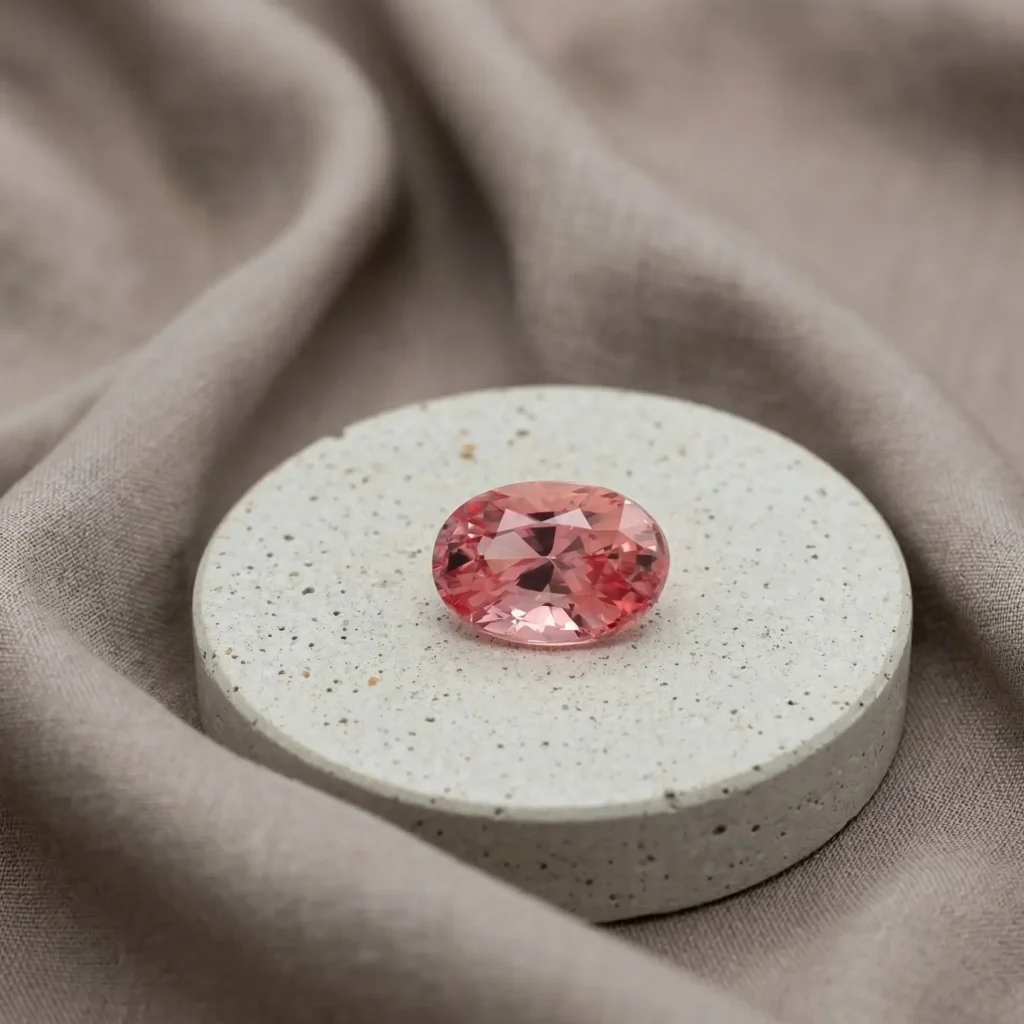
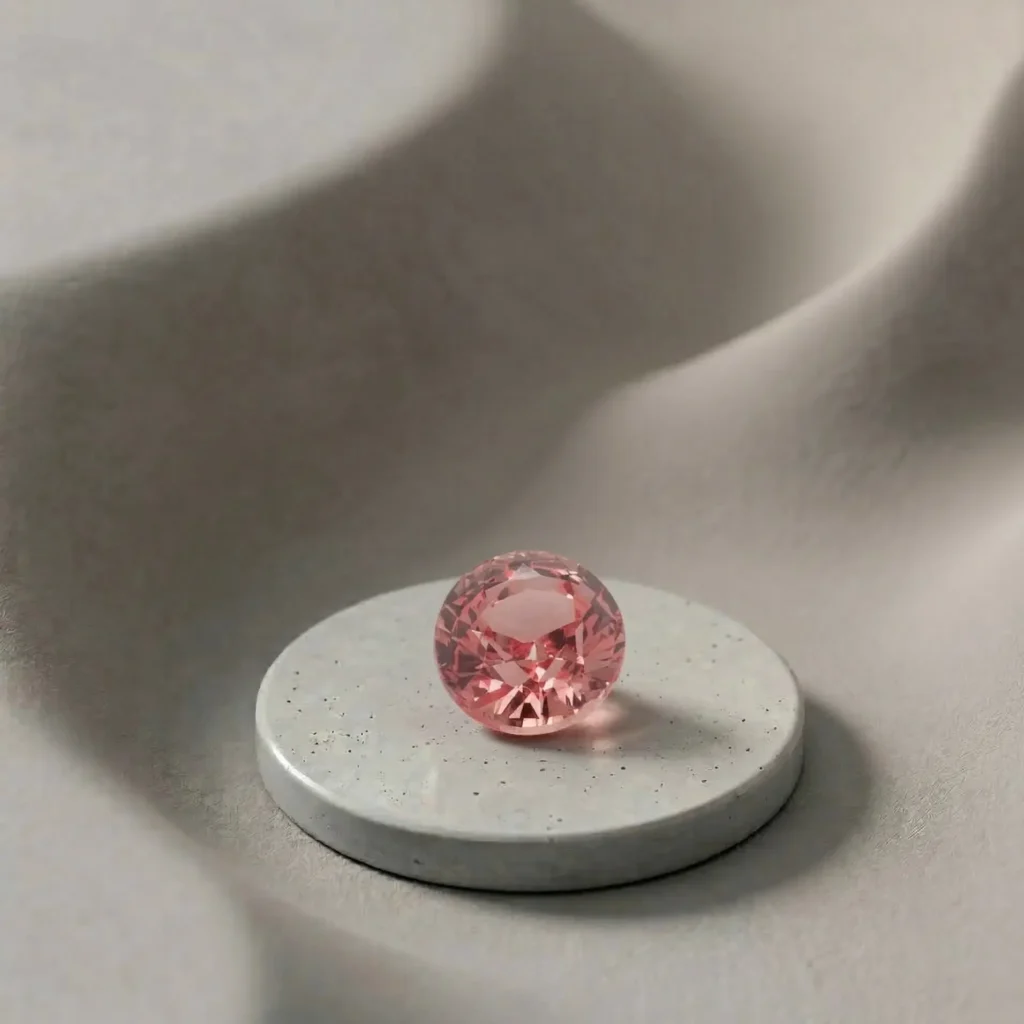
Interested in one of these stones, or looking for a different shape or carat weight? Get in touch to arrange a viewing.
Padparadscha Sapphire Gemstones
Expert Insights into Padparadscha Sapphire
“You can’t capture the brilliance of a sunset, but you can capture the colour with a Padparadscha for eternity.”
At GIOIA Fine Jewellery, we often tell our clients that choosing a Padparadscha is not just about picking a gemstone; it is about choosing a moment in time. It is the ultimate union of two powerful emotions: the Romance and Passion of a Pink Sapphire with the Sunshine and Joy of an Orange Sapphire.
While the technical definition requires a blend of both, the feeling of the stone varies wildly depending on which hue dominates. We categorise our Singapore inventory into two distinct emotional palettes, as defined by the renowned GRS certification:

The “Padparadscha Sunrise” (Dawn)
Defined by a predominantly pink core touched by a delicate hint of orange, this profile evokes the fresh, optimistic light of dawn. It symbolises new beginnings and a gentle, enduring ambition.
Expert Tip: How do you tell a “Sunrise” Padparadscha from a standard Pink Sapphire? Look for purple. A standard pink sapphire often has a cool, purplish undertone. A true Padparadscha must be warm; it should have no trace of purple, only pink and orange.

The “Padparadscha Sunset” (Dusk)
On the other end of the spectrum lies the “Sunset,” celebrating the fiery brilliance of a day’s end. Here, vibrant orange takes the lead with a subtle pink undertone. These specimens radiate warmth, joy, and abundance. A Sunset Padparadscha feels bolder and more grounded, offering a sense of calm contentment and sophisticated strength.
The “Peach” Imposter: A Buyer’s Warning
A Buyer’s Warning Is “Peach” the same as Padparadscha Sapphire?
This is the most common question we receive. It is essential to note that “Peach Sapphire” or “Orange Pink Sapphire” is not an official term in gemology. It is often a marketing label used for stones that fail to meet the strict Padparadscha criteria. If your certification does not explicitly state “Padparadscha,” you are likely buying a standard fancy sapphire at an inflated price.
True Padparadscha is distinguished by a rare, harmonious saturation of pink and orange. A standard peach sapphire often lacks the saturation or the distinct pink modifier required to earn the prestigious title. The difference is not just in beauty, but in value.
Because the “Padparadscha” name commands a high premium, many mass-market jewellers label simple peach sapphires as Padparadscha. At GIOIA, we protect you by ensuring our stones are certified by respected authorities like GIA or GRS, specifically noting the unique “Padparadscha” colour classification on the report. If the report says “Orange-Pink” without the trade name, it is not a true Lotus Gem.
The “Fade Test”: Why Lab Certification is Critical
In laboratory tests, renowned international gem labs such as GIA or GRS do not just assess clarity; they perform a crucial “Colour Stability” test. This advanced analysis determines if exposure to light causes the sapphire’s rare orange hue to fade.
During a stability check, a stone whose orange fades and leaves only pink is not a true padparadscha. In our experience this check is rarely discussed with buyers, yet it is one of the first things we look for on a report. Without it, you could pay a padparadscha price for a stone that later settles to an ordinary pink sapphire.

Value in Padparadscha Sapphire
The value of a Padparadscha sapphire is determined by a delicate balance of size and the perfection of its hue. Because of their light, pastel nature, inclusions are more easily visible than in darker gemstones. At GIOIA, we look for stones with exceptional “life,” avoiding any internal cloudiness that might dull the gem’s natural brilliance. Given their extreme scarcity, finding a stone that meets these standards is a rare feat: for every twenty to thirty fine unheated blue sapphires we handle, only one is a decent padparadscha.
Most of ours come from Madagascar, but colour matters far more to us than origin, so we judge each stone on its colour first.
While a feminine pink sapphire is undeniably beautiful, a fine-quality Padparadscha commands a significant premium. In the current market, an unheated “Sunrise” or “Sunset” specimen can easily exceed twice the cost of a standard pink sapphire. This “Unheated Premium” is vital; a Padparadscha truly loses its soul if its colour is artificially enhanced. We focus on natural, unheated stones that possess that velvety glow naturally, as, in our experience, they hold their value best over time.
As a budgeting guide, heated padparadscha starts from around S$5,800 per carat and unheated from about S$6,800, rising to roughly S$7,800 for a fine Sunrise or Sunset colour at one carat. A two-carat unheated stone of good colour is around S$15,800, and larger stones are priced individually. Colour balance, clarity, origin and certification all move the figure, so we quote each stone on its own merits.
It is important to be cautious of unethical treatments aimed at mimicking this rare colour. While traditional heat enhancement is common, we strongly condemn treatments like beryllium diffusion, which forces colour into inferior stones. To protect yourself, we always recommend requesting certification from a reputable lab such as GIA or GRS. This ensures your gemstone is both authentic and ethically represented, giving you the peace of mind that your heirloom is truly one of a kind.

Custom Padparadscha Jewellery Designs
Our bespoke process is limitless. Whether you prefer a modern twisted pave band that adds a shimmer of sophistication, or a vintage-inspired Art Deco design featuring geometric baguette diamonds and bezel settings, we bring your vision to life.

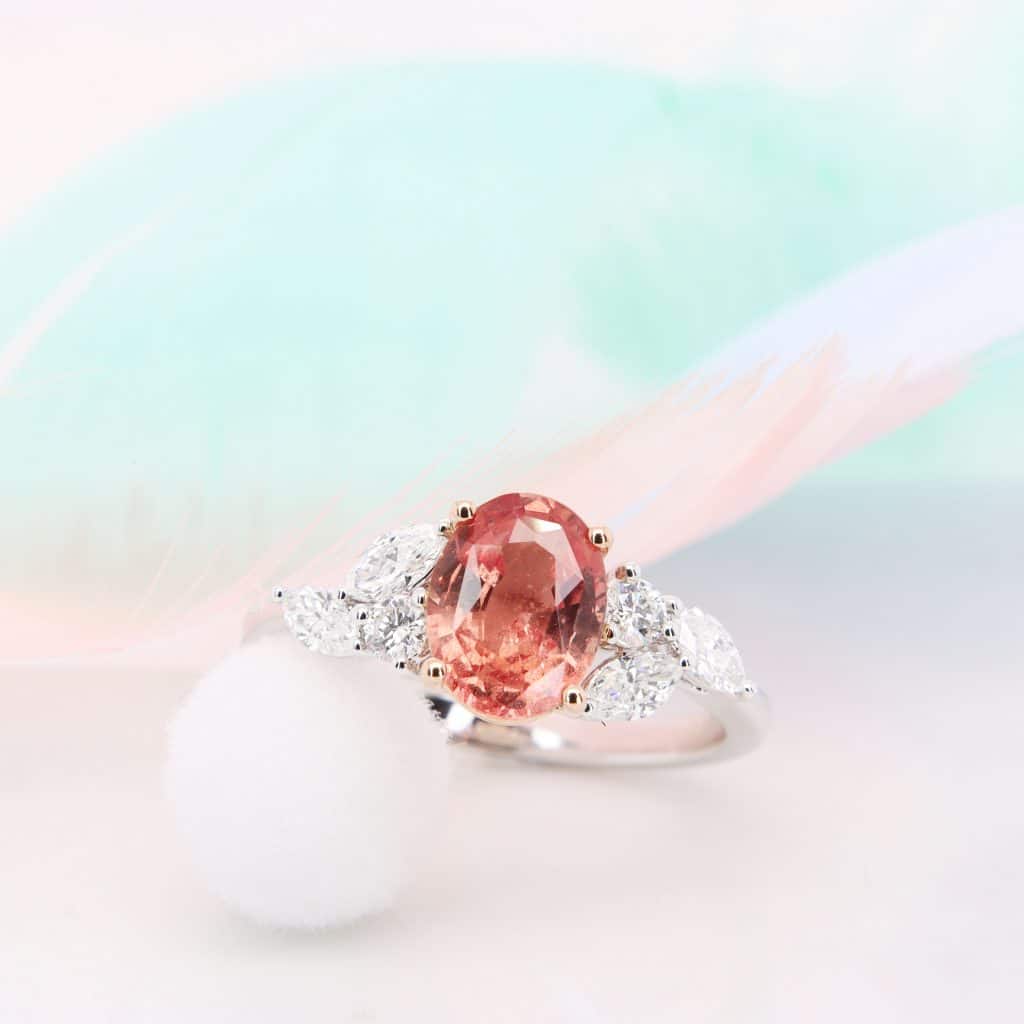
When designing with these rare gems, the metal choice is pivotal. Unlike classic gemstone engagement rings which pair effortlessly with white gold, Padparadscha gems often come alive in Rose Gold or Champagne Gold. The warm metal naturally complements the “sunset” tones of the gem, amplifying its vibrancy.
Our clients often tell us that their finished GIOIA ring “Looks like a purchase from an auction house selling the rarest pieces of fine jewellery.”
Birthstone Jewellery
As the September birthstone, Sapphire is traditionally associated with royal blue. However, the Padparadscha sapphire offers a unique, sophisticated alternative for those celebrating a September birthday. Showcasing a blend of pinkish-orange hues, it represents creativity and passion. Because no two stones are alike, commissioning a bespoke Padparadscha birthstone ring ensures a gift that is truly one-of-a-kind, often set in rose gold to complement its warm, enchanting glow.
Padparadscha Earring Stud
Finding two padparadscha sapphires that match well for earrings is difficult, because of their rarity and colour zoning. One option is a “Yuan Yang” (mismatched) design, pairing a padparadscha with a royal blue or pink sapphire for an asymmetrical look. If you would prefer a matched pair, we look for two stones whose colour sits well together, which can take time. One recent example is this padparadscha sapphire lotus earring pair, a matched 1.05ct and 1.12ct set with the diamond setting worked into a lotus motif.

Buying a Padparadscha Sapphire in Singapore
Padparadscha sits in a narrow colour range, pink and orange at the same time, and that balance is hard to find in nature. Almost every padparadscha in our collection is unheated, and on the few heated stones the report says so plainly. Reports come mainly from GRS and GIA, which apply set colour parameters to decide whether a stone is a padparadscha or simply a pink or orange sapphire. That distinction matters for both value and authenticity.
Whether you are planning a padparadscha ring for a proposal, a pair of earrings or a pendant, the conversation starts with the loose stone itself. You are welcome to view the stones in person at International Plaza, Singapore, before we design the piece around the one you choose.
There is no obligation when you visit. As a husband and wife team, we would rather help you understand the stone than push for a sale, and the choice stays yours.


Frequently Asked Questions
Find answers to commonly asked questions about Padparadscha Sapphire Gemstone.
What colour should a padparadscha sapphire be?

The ideal colour of a padparadscha sapphire is a balance of pink and orange, often described as “lotus pink” or “salmon pink.” Additionally the more vivid and well-balanced the colour, the more valuable the gemstone.
Does the orange colour in Padparadscha sapphire fade?

It can, which is why lab testing matters. Some pink and orange sapphires carry an unstable orange tone that fades under strong light and leaves the stone pink. GIA tests for this before using the padparadscha name, and GRS notes the result on its reports. Every padparadscha centre stone we set comes with an international lab report, usually from GRS or GIA.
Can padparadscha sapphire be used in engagement rings?

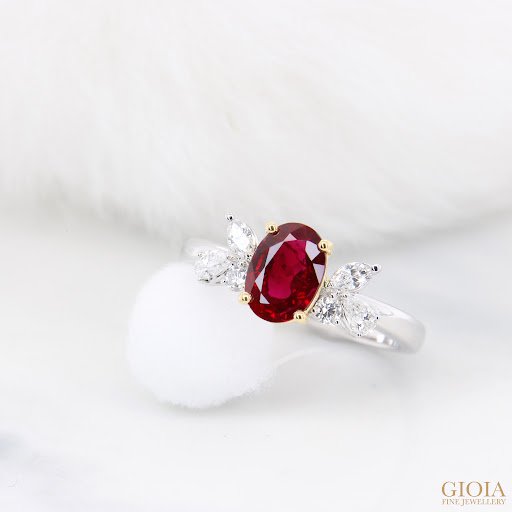
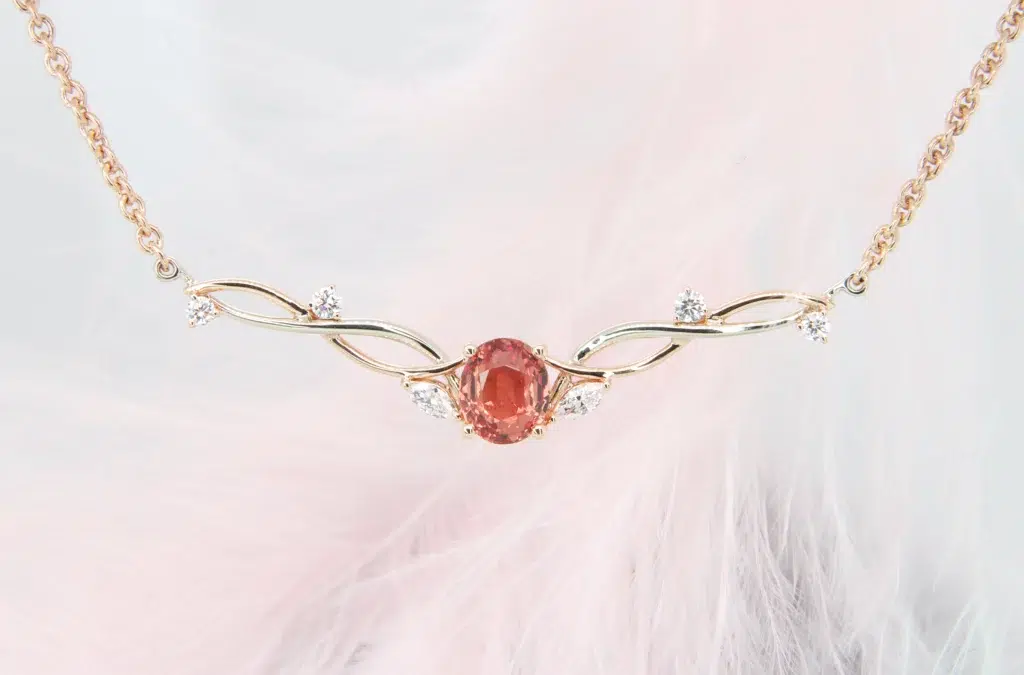
Yes. Its blend of pink and orange gives an engagement ring a look of its own, and we have designed a number of padparadscha engagement rings, several of which you can see in the collection above.
How much does a padparadscha sapphire cost?

The price of a Padparadscha Sapphire depends on factors such as size, colour quality, and origin. As a rough guide, a 0.5ct unheated stone starts from around S$3,800. At 1.0ct you are looking at roughly S$5,800 and up if heated, or from about S$6,800 unheated, rising to around S$7,800 for a fine, well-balanced Sunrise or Sunset colour. A 2.0ct unheated stone of good colour is around S$15,800, and above that size each stone is priced individually. Unheated padparadscha sapphires generally cost up to 50% more than unheated blue sapphires of a similar size, given their rarity and distinctive colour.
What to look out for when buying a padparadscha sapphire gemstone?

Due to the rarity and high value of padparadscha sapphires, it is common to see poorly proportioned cuts. Some cutters and jewellers prioritise the carat weight, rather than focusing on the optimal proportions for colour and brilliance.
What colour of gold best suits a padparadscha sapphire jewellery?

The best gold colour to complement a padparadscha jewellery is typically rose gold or champagne gold.
Rose gold: Beautifully enhances the warm, pink-orange hues of the Padparadscha, creating a romantic feel that complements this unique colour.
Champagne gold: This neutral tone enhances the delicate balance of pink and orange, adding a touch of elegance without overpowering the stone.
Can padparadscha sapphire jewellery be worn for daily wear?

Yes. It is second only to diamond in hardness (Mohs 9), making it excellent for daily wear. Its unique colour makes for a bespoke engagement ring that stands out from the traditional blue sapphire.
Care Tip: While durable, we highly recommend removing your ring when going to the gym, swimming, or sleeping to protect the setting and the stone’s lustre over a lifetime.
What is a padparadscha sapphire?

A padparadscha sapphire is a rare variety of corundum that shows pink and orange together in one stone. The name is usually traced to the Sinhalese padma raga, meaning lotus colour, after the soft salmon tone of the lotus flower. Apart from ruby, it is the only colour of corundum with its own trade name, and a lab will only give it when the pink and orange are in balance.
How rare is a padparadscha sapphire?
Padparadscha is one of the rarest sapphires. For every twenty to thirty fine unheated blue sapphires we handle, only one is a decent padparadscha. Most of ours come from Madagascar. That scarcity, together with the narrow pink-and-orange colour window a stone must sit in to qualify, is why a fine padparadscha is priced above a blue sapphire of similar size.
Is a padparadscha sapphire more expensive than a diamond?
It depends on the grade of each. A fine unheated padparadscha with a well-saturated Sunrise or Sunset colour will usually carry a higher price per carat than a normal-grade diamond of G or H colour. Against a top-colour, high-clarity diamond, the diamond generally still costs more. Padparadscha is valued on colour and rarity rather than a fixed grading scale, so the two overlap at the fine-quality end.
Do padparadscha sapphires hold their value?
In our experience, yes. We buy fine unheated padparadscha and other rare coloured gemstones ourselves every year, so we feel the price movements first hand, and on a conservative estimate the prices we pay for comparable stones have risen by roughly 10 to 20% a year since 2018, more than doubling over that time. Supply is set by geology, not manufacturing, which is why rare natural stones behave differently. This is our own experience rather than a guarantee, and in the unlikely event that prices fall, you still have a rare, beautiful gemstone that suits daily wear and can be passed down as heirloom jewellery. Value always depends on colour, size, origin and a GRS or GIA report.
Have a question on padparadscha sapphire gemstone?
If you have any other queries, feel free to reach out to us. Our GIOIA team is here to help!

Considering a padparadscha for your proposal? See how it’s set in our sapphire engagement ring designs.