
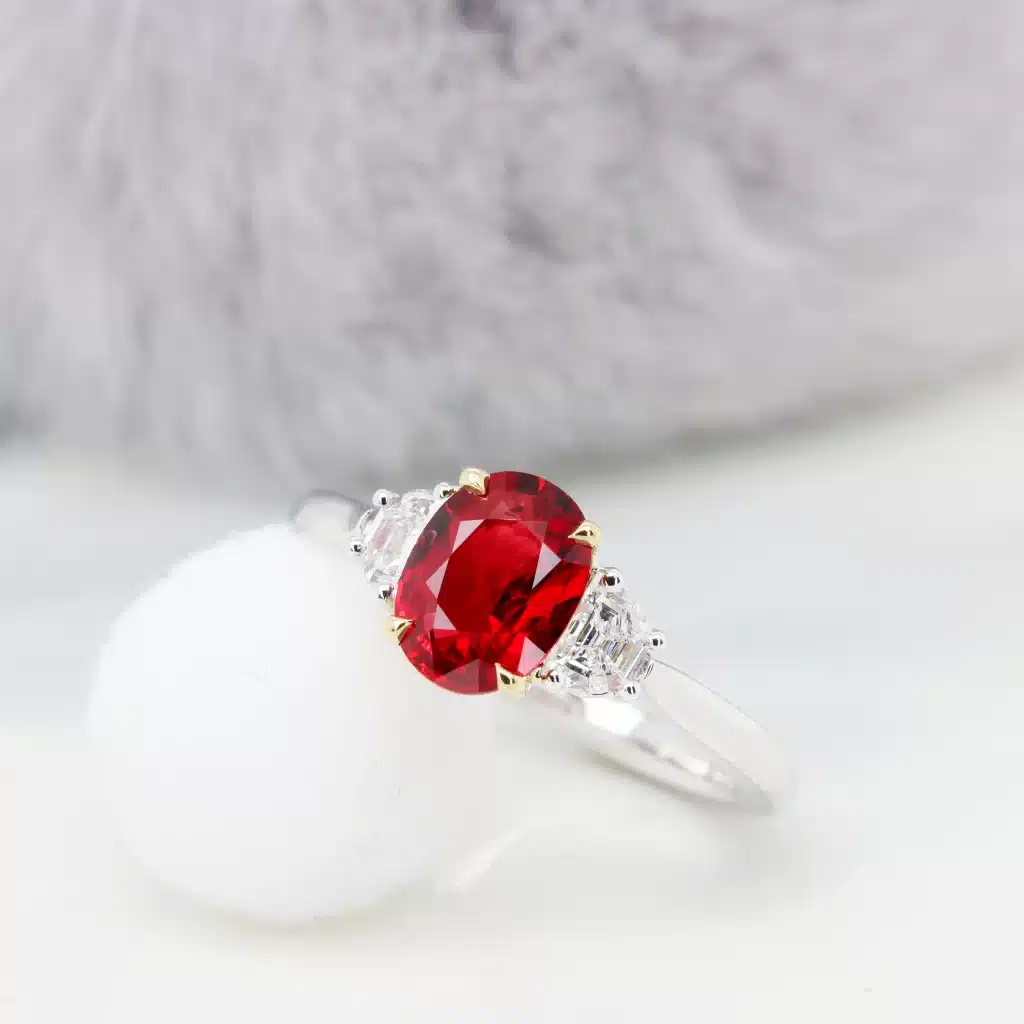
Ruby: The King of Gemstones (Unheated & Pigeon Blood)
In the ancient Sanskrit language, the ruby is known as Ratnaraj, translating to “King of Precious Stones.” This title is not merely poetic; it is earned through physics and rarity. Unlike diamonds, which rely on light reflection, a fine quality ruby possesses a unique natural fluorescence. This phenomenon causes the stone to absorb ultraviolet light and emit a fiery red glow, making it appear to burn from within, a trait that has symbolised power, passion, and protection for centuries.
However, the modern “King” is defined by its purity. While the market is flooded with treated stones, true rarity lies in the unheated ruby. A fine, unheated pigeon blood ruby above three carats is one of the rarest gems in the trade, far scarcer than a diamond of similar size. Whether you are commissioning a bespoke piece of jewellery or looking for a ruby engagement ring, every ruby we offer is natural and independently certified, most of them by GRS, and our speciality is unheated stones.
Last updated 24 September 2026. Reviewed by Clarence Yee, gemstone specialist and co-founder of GIOIA Fine Jewellery, who personally assesses every ruby we offer.
Curated Pigeon Blood Ruby Collection (Singapore)
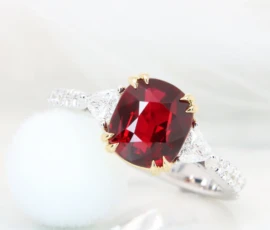
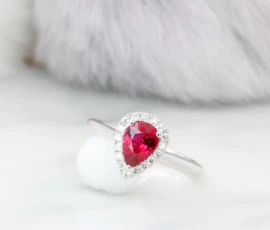
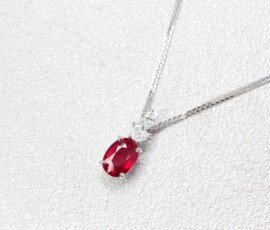
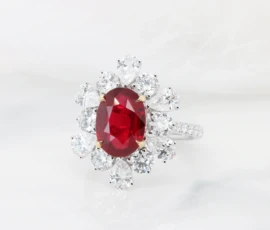
Our inventory is strictly curated. Below is a selection of Unheated Pigeon Blood Rubies (1.0ct – 3.0ct+) sourced directly from Madagascar, Mozambique and Burma (Myanmar) . While many are private commissions, we hold a private collection of loose certified rubies available for viewing.
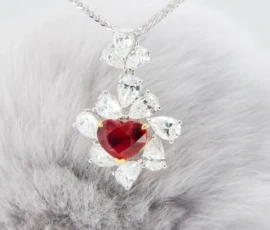
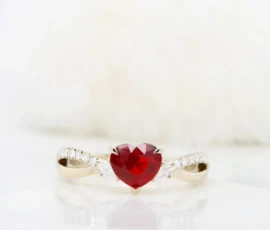
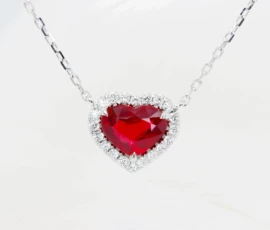
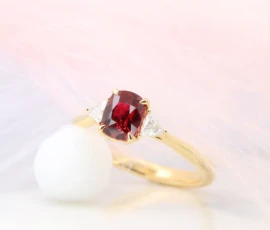
Did you know that Ruby and Sapphire are actually the same mineral? Both are varieties of Corundum, sharing the same exceptional hardness of 9.0 on the Mohs scale, second only to diamond. Chromium content also determines the strength and colour intensity of the gemstone. Sapphires typically have less than 0.5% chromium, while rubies usually contain more than 0.9%.
Both gemstones have excellent durability, making them ideal for daily jewellery such as rings or pendants. However, only the vivid, saturated red colour of a ruby is known as ‘Pigeon Blood Ruby‘.
The Pigeon Blood Ruby’s vivid red hue is without equal, setting it apart from other red gemstones. While some red spinels may resemble rubies in colour, they often have darker hues with orange or pink undertones. This makes the Pigeon Blood Ruby a premium and genuinely rare gemstone.
Complete Guide to Ruby Jewellery
Origins and Sources of Fine Ruby Gemstones
Traditionally, fine quality ruby was sourced almost entirely from Burma’s Mogok Valley, and for centuries the trade treated Burmese origin as synonymous with quality itself. That monopoly on the finest material has shifted considerably. Mozambique’s Montepuez deposit came into commercial production around 2009 and rapidly became the world’s leading source of ruby by volume, offering stones in sizes and quantities that Mogok’s declining production could no longer supply consistently.
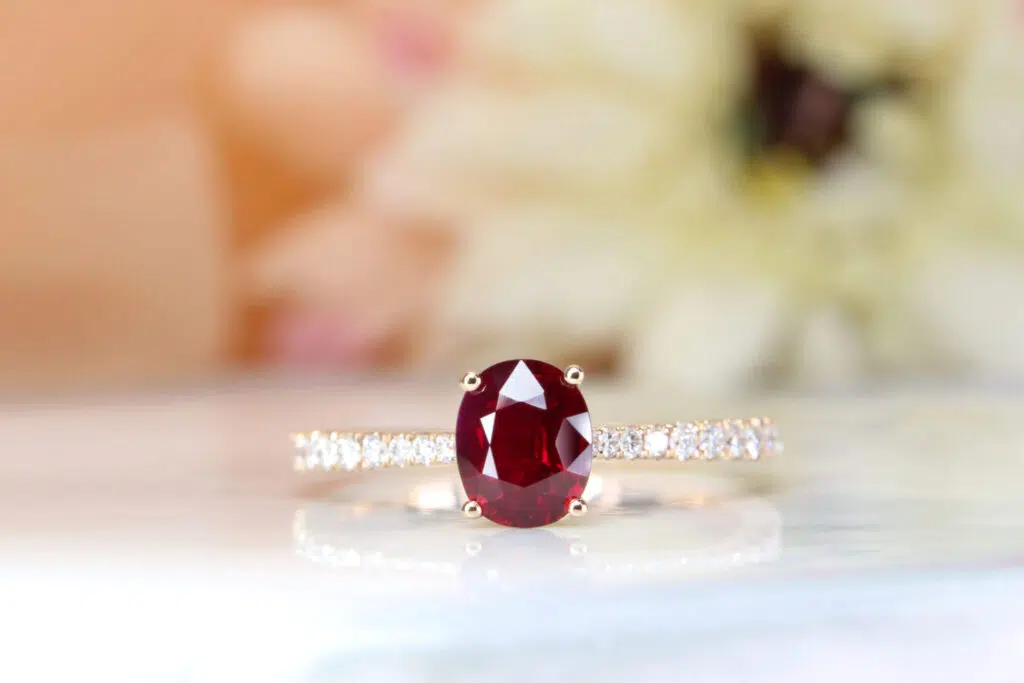
Today the active producing regions are Mozambique, Madagascar, and Tanzania, with smaller quantities still emerging from Burma and occasional fine material from Vietnam and Tajikistan. For serious buyers, origin remains a meaningful factor in valuation, an unheated pigeon blood ruby from Burma still commands a significant premium over a comparable Mozambican stone, typically more than double at the 1 carat level and considerably more above 2 carats. You can see a 0.83ct Burmese pigeon blood ruby set as an engagement ring on our Burma ruby ring page.
However the supply picture at the fine quality end is tightening across both major origins, which is part of why certified material at this grade is so sought after. For a detailed breakdown of how Burma and Mozambique compare, and why origin alone does not determine quality, visit our dedicated page on Burma ruby gemstone.
Understanding Heat Treatment
Heat treatment is standard practice across the ruby trade. The overwhelming majority of rubies sold globally, including many beautiful and valuable ones, have been heated to improve colour saturation and reduce the visibility of inclusions. The process involves bringing the rough stone to temperatures approaching its melting point, which dissolves secondary colour modifiers, clears certain inclusion types, and in many cases produces a visibly more vivid red. The treatment is widely accepted, openly disclosed on laboratory reports, and has been practised in the gem trade for centuries.
At GIOIA Fine Jewellery, we specialise in unheated rubies. Understanding why that distinction matters, beyond the marketing language, requires knowing what heat treatment actually removes from a stone.
When ruby rough is subjected to high temperatures, the rutile silk dissolves. That silk, the fine needlelike inclusions of titanium dioxide that form naturally inside marble-hosted rubies during crystal growth, is responsible for the soft, velvety light scattering that experienced buyers describe as the organic, sleepy quality of a fine natural stone. Heat treatment produces a cleaner, more transparent appearance, but also a slightly glassier one. The internal character built over millions of years is gone. What remains is a vivid stone, but a simplified one.
It is also worth knowing that not all treatment involves high temperatures. Many rubies on the market are treated at much lower temperatures, a process that effectively removes blue or green colour components and improves overall saturation without the extreme heat of conventional treatment. This is subtler and harder to spot, but gemological laboratories can detect low-temperature treatment through close observation of the inclusions. It is one of the reasons why purchasing any ruby with certification from a reputable laboratory such as GRS or GIA is not optional if you are making a serious acquisition.
An unheated ruby retains everything the earth put into it. The silk is intact. The fluorescence is unaltered. The colour has never been adjusted by human intervention. For anyone buying a fine ruby, this matters because it is verifiable. A GRS or GIA report stating “no indication of thermal treatment” is a documented declaration of natural integrity, not a marketing claim. That documentation is what gives an unheated ruby its price premium and its standing at auction.
The price difference is real and it scales with carat weight. At 1 carat, a certified unheated pigeon blood ruby trades at a meaningful premium over a heated stone of comparable visible quality. Above 2 carats the gap widens considerably. Above 3 carats with full GRS pigeon blood certification and no treatment, you are in a category where stones surface at Sotheby’s rather than in jewellery showrooms. The premium at that level reflects genuine scarcity of material that has never been altered from its natural state.
For everyday jewellery where the primary purpose is beauty rather than investment, a fine heated ruby remains an excellent choice and we are happy to work with both. For a piece intended to hold value, be passed down, or represent a significant acquisition, understanding the unheated standard before you decide is worth the time.
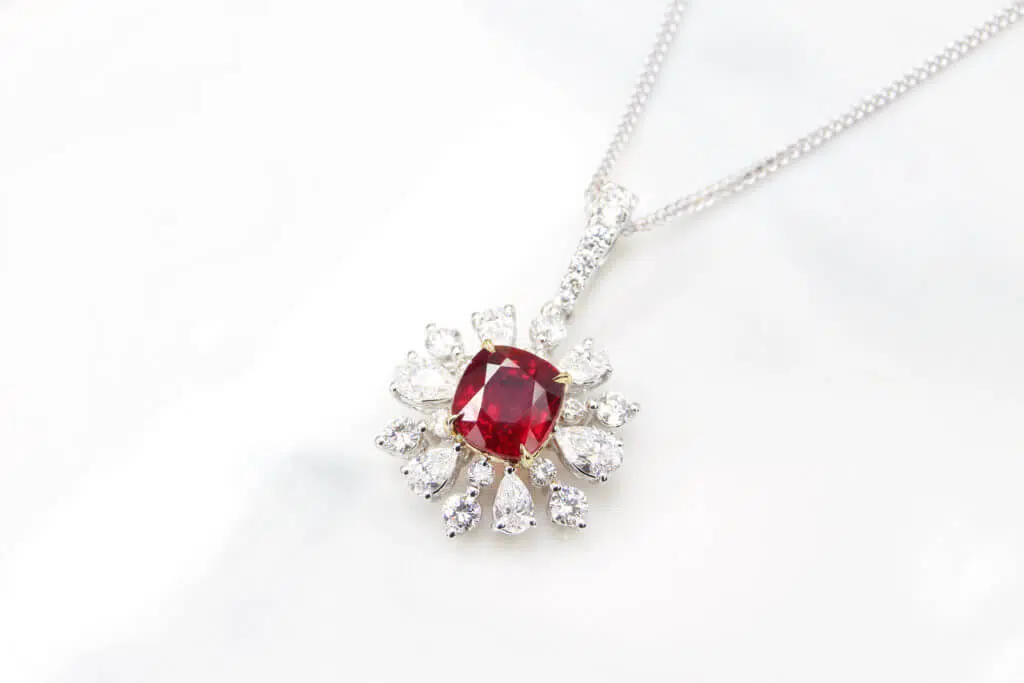
Vivid Red Pigeon Blood Ruby
Why Pigeon Blood is the Best Red Gemstone
Pigeon blood is not a loose marketing term. It is a formal colour designation awarded by gemological laboratories, and it represents the ceiling of what red can be in a ruby. The colour sits in a specific vivid red range, saturated without being dark, pure without veering orange or purple, and in the finest examples it appears to glow from within rather than simply reflect light from its surface. That internal red fire is what separates a true pigeon blood stone from a ruby that is merely red.
A useful rule of thumb: a pigeon blood ruby will always certify as vivid red, but a vivid red ruby will not always certify as pigeon blood.
It is worth knowing that strong vivid red from Mozambique can sit very close to Burma in appearance under daylight. Side by side under natural light, the finest Mozambican stones are genuinely competitive in colour. The difference becomes most apparent under UV light, where Burma’s marble-hosted geology produces a fluorescence response that Mozambican material typically cannot match at the same intensity.
GRS (GemResearch Swisslab) introduced the trade term of Ruby “Pigeon Blood,” Sapphire “Royal Blue” and “Cornflower Blue” in 1996.
For a full explanation of how GRS awards the pigeon blood designation, what the front page certification means versus an appendix comment, and why the distinction matters when you are reading a certificate, visit our dedicated page on Burma ruby gemstone grading.
How to Identify High-Quality Rubies
Buying a ruby well requires understanding what quality actually means in this specific gemstone, because the criteria are meaningfully different from diamonds. With diamonds, the grading system is standardised and the hierarchy is familiar to most buyers. With ruby gemstone, the variables interact in ways that are less intuitive and far easier to get wrong.
Colour: Where Value Begins
Colour is where the conversation starts. The most valuable rubies sit in a vivid, saturated red that is neither too dark nor too light, with no strong secondary modifier pulling it orange or purple. What you are looking for is purity of red, a tone that reads as genuinely red from any angle and in any light. Lower quality material tends to sit in a pinkish or brownish range, and while these stones carry a legitimate ruby classification, they occupy a completely different tier of the market. Chromium content drives colour intensity, which is why rubies with higher chromium concentrations command stronger prices regardless of origin.
Clarity: What the Eye Can See
Clarity matters more than most buyers expect going in. Unlike diamonds where a microscope is needed to assess inclusions, rubies are routinely assessed at normal viewing distance and the presence of heavy inclusions is immediately visible and commercially significant. A crystal inclusion in the centre table, a feather fracture that breaks light transmission, or dense needle inclusions that cloud the interior rather than scatter light softly will all cost a stone brilliance and lustre, and that shows directly in both appearance and value.
Here is something worth knowing: GRS does not award the pigeon blood designation purely on colour. A stone with significant inclusions affecting its lustre and brilliance will not qualify, even if the colour technically meets the grade. The designation requires the complete picture, correct colour, correct transparency, correct light performance. That standard is essentially a quality gate, not just a colour label.
Cut and Proportion
Cut is the third variable and the one most often underweighted by buyers. A poorly proportioned ruby loses light through the bottom of the stone, creating what cutters call a “window”, a pale, washed-out centre where you can see through the gem rather than into it. A well-cut ruby holds light within the stone and returns it evenly across the face. Most Burmese rough is cut to retain maximum carat weight, which sometimes comes at the cost of proportions. Knowing whether a stone has been cut for yield or for beauty is part of what separates an informed purchase from an uninformed one.
This is also why a round ruby is the hardest shape to find well cut. Corundum does not grow in a round form, so a round brilliant has to be cut with deeper, careful proportions to avoid a window. Too shallow or uneven and the centre washes out. Getting it right sacrifices more of the rough, which is the real reason a true round ruby with even colour and no window is so uncommon.
Rarity and Long-Term Value
In our experience, fine rubies have held their value well over time, and the reason is supply rather than beauty alone. Genuinely fine material is limited and continues to decline. Burma’s Mogok production has been falling for decades, and Mozambique’s finest material is now showing supply pressure at the top end, as discussed in our Burma ruby section. Certification matters too. An unheated pigeon blood ruby with a GRS or GIA report is much easier to value and resell, because the report removes doubt about what the stone is. None of this guarantees future prices, so we always suggest choosing a ruby you love first. If you plan to keep one across generations, its certificate is part of what you pass on.
Custom Ruby Jewellery
Beyond its status among collectors, the ruby serves as a versatile centerpiece for high jewellery. Whether crafting an Art Deco-inspired pendant, a pair of vibrant matched earrings, or an anniversary statement piece, our bespoke process allows for limitless creativity. Every commission begins with a conversation, where we translate your personal narrative into a tangible design, ensuring the gemstone’s cut and colour are perfectly matched to the wearer’s style.
Naturally, this gemstone remains the definitive symbol of passion for couples. Whether you are drawn to a ruby as your gemstone engagement ring centrepiece or considering it for a significant anniversary piece, the conversation always starts with the stone.
For those specifically seeking bridal designs, the journey usually starts with our customised engagement ring process, where we work through the stone selection and setting design together from scratch. You can also view completed ruby bridal work in our dedicated Ruby Engagement Rings gallery.
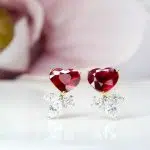
From classic Ovals to romantic cuts, we specialise in rare shapes. View our dedicated Heart Shape Pigeon Blood Collection.
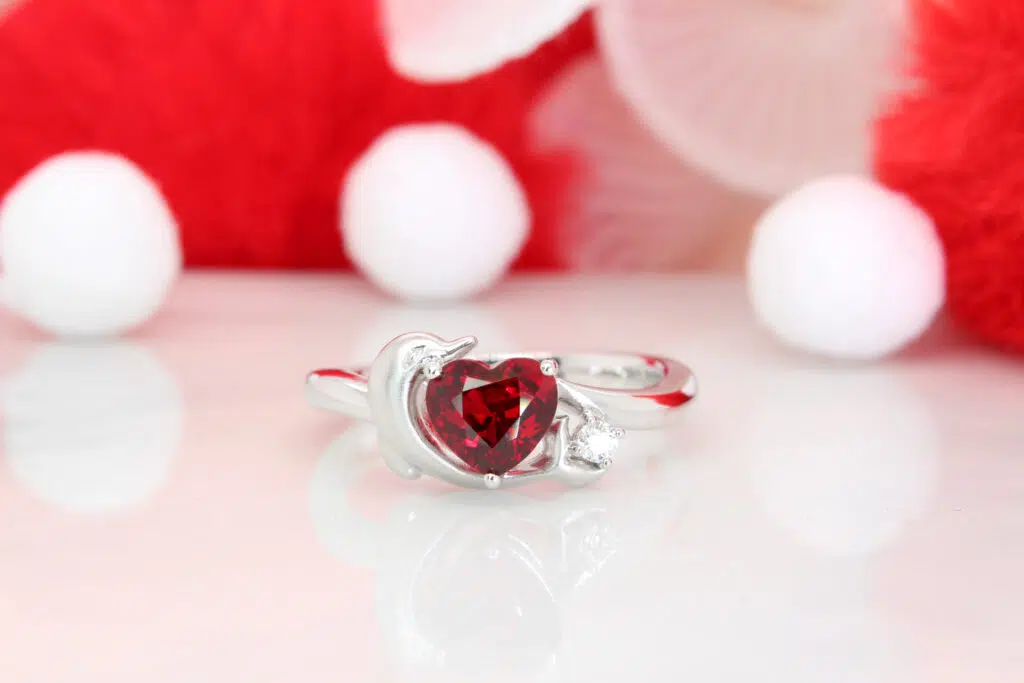
Custom Ocean-Inspired Ruby Jewellery
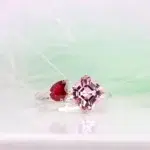
This particular commission was designed for a client who loves the ocean and has a discerning eye for fine rubies. She wanted something that captured both, so we centred the ring around a heart-shaped unheated pigeon blood ruby and built a dolphin leaping over the stone, set in diamonds. It is one of those pieces that makes no attempt to be subtle, and that is exactly what she wanted.
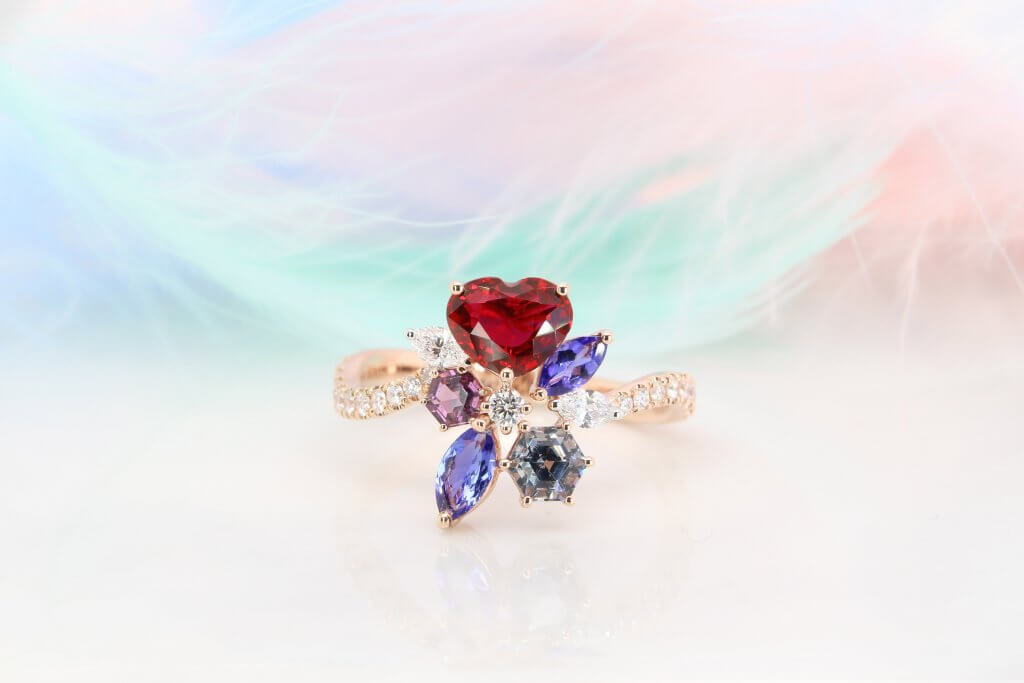
GRS Certified | Status: Private Commission
Bespoke Commission: Floral & Fancy Cut Gemstones
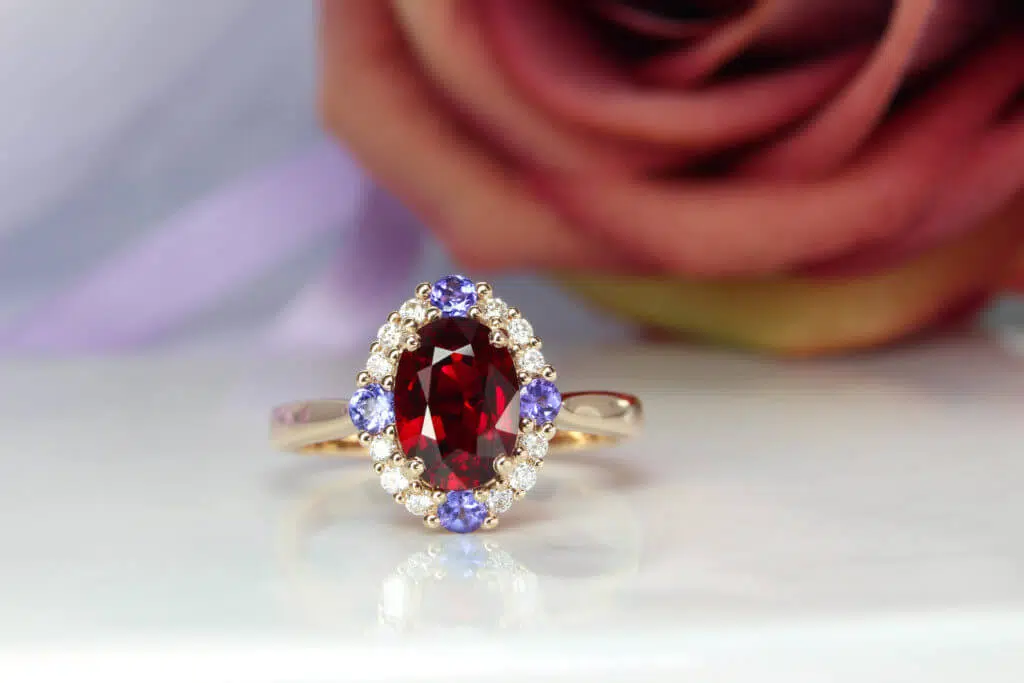
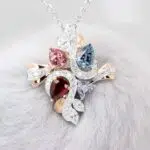
Each stone in this ruby custom ring represents a family member, chosen for meaning rather than just colour. The ruby anchors the piece as July’s birthstone, while the tanzanite and spinel carry their own personal significance for this particular family. It is the kind of commission that gets passed down precisely because it cannot be replicated, the story behind it is part of the object itself. If you are drawn to heart-shaped rubies specifically, our Heart Shape Pigeon Blood Ruby collection has more examples of this cut in different settings.

Frequently Asked Questions
Find answers to commonly asked questions about our ruby gemstone and jewellery.
Is ruby engagement ring better than diamond?
Choosing a ruby for an engagement ring is a fantastic choice. Rubies have a similar hardness to diamonds, making them just as durable for everyday wear. In terms of rarity and scarcity, rubies are much rarer than diamonds, especially the highly sought-after Pigeon Blood Ruby.
From a value perspective, rubies often come at a more reasonable price compared to the inflated pricing of diamonds, making them an excellent option if you are looking for beauty without the premium cost.
Plus, rubies offer an exceptional, passionate colour that symbolises love and eternal commitment, therefore perfect for an engagement ring that stands out and lasts forever.
How can I tell if a ruby gemstone is a Pigeon Blood Ruby?
To accurately identify a Pigeon Blood Ruby, you would typically need a renowned gemologist’s expertise, as they’ll assess the colour intensity, clarity, and origin professionally.
However, it’s important to note that the term “Pigeon Blood Ruby” may sometimes be used loosely by unaccredited gemological laboratories, reflecting an unofficial view or standard.
How does the price of ruby compare to other gemstones like diamonds or sapphires?
Ruby gemstone, especially when it features top-quality stones like Pigeon Blood Rubies, can sometimes surpass the price of diamonds, depending on factors like origin, clarity, lustre and size. While diamonds are typically more expensive on a per-carat basis, high-quality unheated natural rubies can fetch premium prices, especially when they have rare characteristics such as fluorescence. Sapphires, although similarly beautiful, tend to be more affordable than rubies in general, but this can vary based on the quality and origin of the stone.
Can I customise my ruby jewellery with a personal design?
Absolutely! At GIOIA, you’ll never be short of design options for your ruby jewellery. Whether you prefer a vintage-inspired or a modern style, we’re happy to design it either way. Customising a ruby engagement ring allows you to create a piece that’s as unique as your love story. From selecting the perfect ruby to designing a setting that complements it, we’ll ensure your ring is distinct and personal to you.
What is the price of a ruby gemstone?
Pricing spans a wide range depending on treatment, grade and origin. An unheated ruby below one carat starts from around SGD 3,800. Fine unheated rubies of around one carat, including pigeon blood grade, run from roughly SGD 9,000 to 15,000 per carat, and above two carats the price per carat climbs well beyond that. At GIOIA Fine Jewellery, we hold one of Singapore’s largest selections of unheated natural rubies to help you make an informed choice.
What is the difference between a ruby and a garnet?
No, rubies and garnets are not the same. Rubies belong to the corundum family, while garnets are a group of different minerals. Though both can be red, the overall hue and luster of a ruby are distinct, offering a deeper, more vivid colour. If you’re looking for an alternative to ruby, we recommend considering red spinel, which shares a similar rich red colour which is often more affordable.
Are inclusions (silk) in a ruby a bad sign?
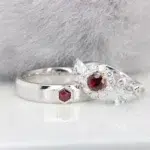
Not necessarily. Unlike diamonds, where flaws are discouraged, microscopic inclusions in a ruby (often called “silk” or rutile needles) serve as a fingerprint of authenticity. They prove the stone is natural and unheated, as heat treatment would melt these needles away. As long as the inclusions do not break the surface or dull the stone’s brilliance, they are accepted as part of the gem’s character.
Can ruby jewellery be worn daily?
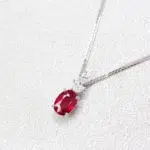
Yes, ruby jewellery is durable and can be worn daily. However, it’s best to avoid wearing it during sports activities or at the beach to prevent scratches. At GIOIA Fine Jewellery, we offer lifetime cleaning and check services for jewellery purchased from us, ensuring your bespoke piece stay in pristine condition.
What is a “Glass-Filled” ruby and why should I avoid it?
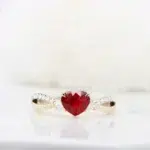
Glass-filling is a controversial treatment where low-grade rubies (full of cracks) are infused with lead glass to improve clarity. These stones are brittle, can be damaged by simple household cleaners like lemon juice, and have virtually zero resale value. GIOIA strictly does not sell glass-filled rubies; we deal only in natural, unheated, or standard heat-treated gems with reputable certification.
Where to buy Ruby Gemstone?
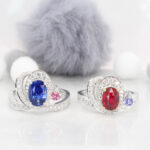
At GIOIA Fine Jewellery, we offer an extensive collection of natural unheated ruby gemstones, including Burmese, Mozambique, Madagascar and some Tanzanian rubies. As a reputable gemstone specialist, all our ruby gemstones come with independent certification, most of them from GRS, and most of our selection is certified pigeon blood quality. Visit us today to explore our premium selection of ruby gemstones.
Have a question on ruby gemstone?
If you have any other queries, feel free to reach out to us. Our GIOIA team is here to help!
A few more ruby pieces worth a look: our Ruby Earring Jewellery, a Ruby Pendant, Ruby Wedding Jewellery, and a Ruby Sapphire Ring combining both gems.
And one more combining both gems: Ruby Sapphire Jewellery.
A Pigeon Blood Ruby Commission
One of our favourite ruby pieces, set in a floral diamond design.
Every ruby that reaches this collection, pigeon blood or otherwise, has already been assessed in person by Clarence Yee, GIOIA’s co-founder and gemstone specialist.