Customised Ruby Engagement Ring: Meaning, Passion & Royalty
A ruby engagement ring puts the colour of love at the centre of your proposal. At GIOIA Fine Jewellery we make each one to order in Singapore, as a custom design built around a natural, unheated ruby that you choose yourself.
We hold one of Singapore’s largest selections of unheated rubies, most of them pigeon blood grade, so you can compare several stones side by side at our International Plaza boutique before any design is drawn. Every ruby comes with an independent laboratory report, most of them from GRS. Ruby rings start from around SGD 5,900 and take 10 to 12 weeks from design confirmation. If you are still deciding between colours, our gemstone engagement ring guide compares ruby with sapphire, emerald and other stones.
Last updated 24 September 2026. Reviewed by Clarence Yee, gemstone specialist and co-founder of GIOIA Fine Jewellery, who personally assesses every ruby we offer.
Table of Contents
Why Choose a Ruby Engagement Ring?
Red is the colour most people connect with love and commitment, and a ruby carries that meaning more directly than any other gemstone. No two rubies share exactly the same shade of red, so we design the setting around the stone rather than the other way round, which is why a ruby is best made as a customised proposal ring.
Ruby vs Diamond: A Changing Landscape
For decades the diamond was the default engagement stone. Lab-grown diamonds have changed that. They are physically identical to mined diamonds and can be grown in a matter of weeks, so more couples are now asking what makes a stone genuinely rare.
While a lab-created stone offers sparkle, it lacks the finite heritage of a gem born from the earth’s mantle over millions of years. This shift has sparked a return to precious coloured gemstones. Discerning individuals are moving away from the standardised ‘white’ aesthetic in search of a gem with a story. A natural, unheated ruby is that story. Unlike diamonds, which are graded on a rigid scale of perfection, no two rubies are identical. Each stone possesses its own ‘silk’ and internal world, ensuring no two proposal rings are ever the same.
Why Our Ruby Engagement Rings Stand Apart
We specialise in natural, unheated rubies, and above all in the pigeon blood grade, the vivid red at the very top of the ruby colour scale. It is also the colour we hold the most of. Because our selection is kept in house, you see the actual stones in front of you rather than choosing from a photo. Many clients tell us this is what surprised them most: sitting down to compare rubies of different shapes, sizes and origins in natural light, until one stands out.
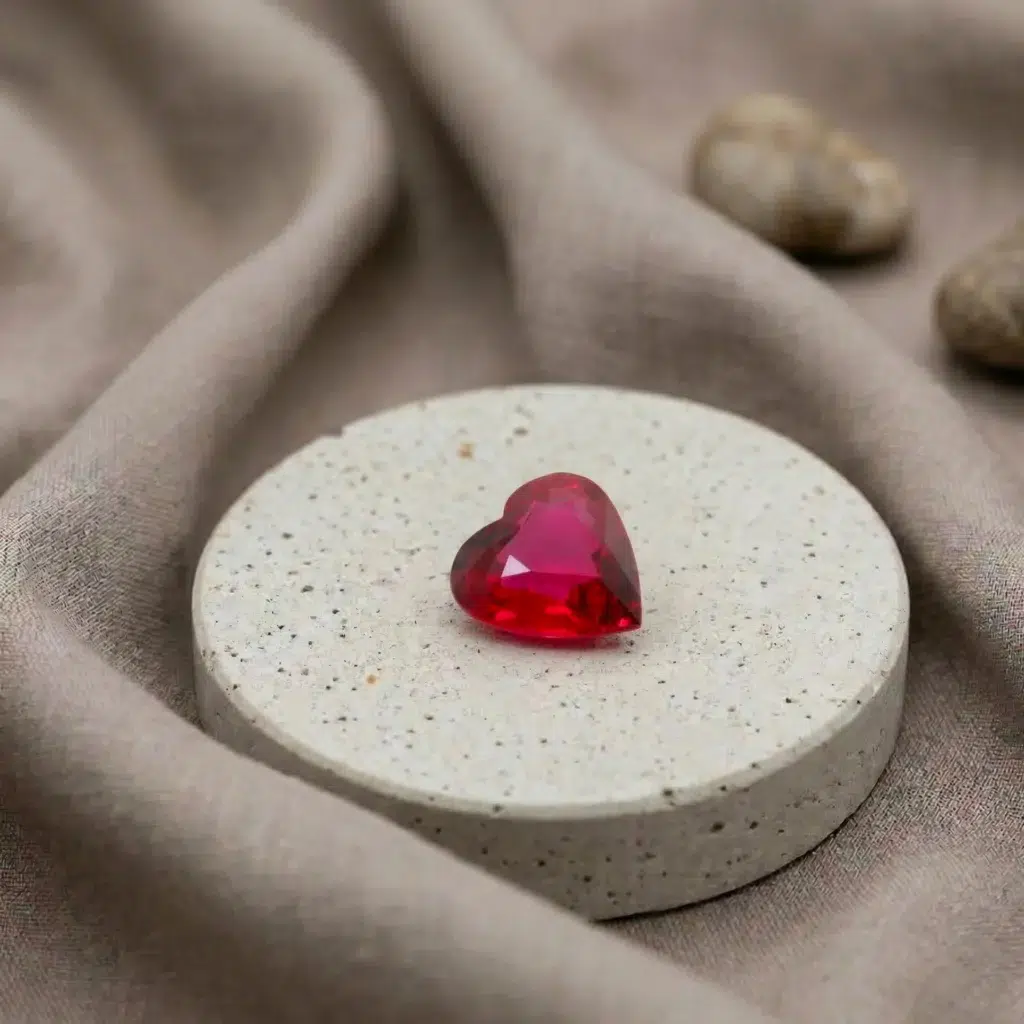
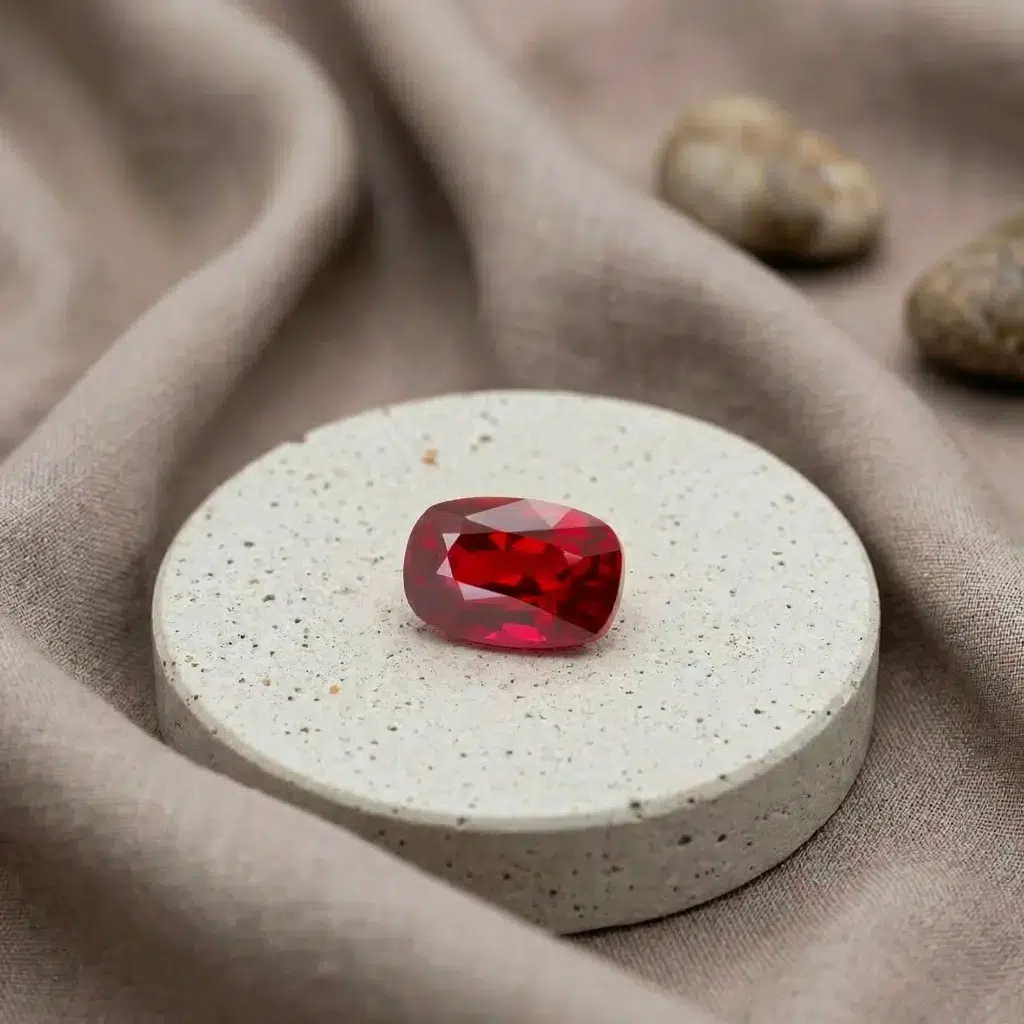
Each stone comes with an independent laboratory report, and most of ours are graded by GRS, the Swiss gemmological laboratory. The report confirms that the ruby is natural, states whether it has been heated, and records the pigeon blood grade where it applies. We go through these reports with you in person at the boutique.
GIOIA was named Silver winner for Best Luxe Jewellery Brand in Singapore in the Honeycombers Best in Singapore Awards 2026.
“My fiancé is enamored with the ruby trilogy ring designed by the GIOIA team… Patient showcase of their wide (& mesmerizing!) range of gems, for my budget.”
From a client’s review of the ruby trilogy proposal ring we designed
For the full gemmology, including how the pigeon blood grade is awarded and how Burma and Mozambique rubies differ, see our ruby gemstone guide.
Which Ruby Shape is Right for You
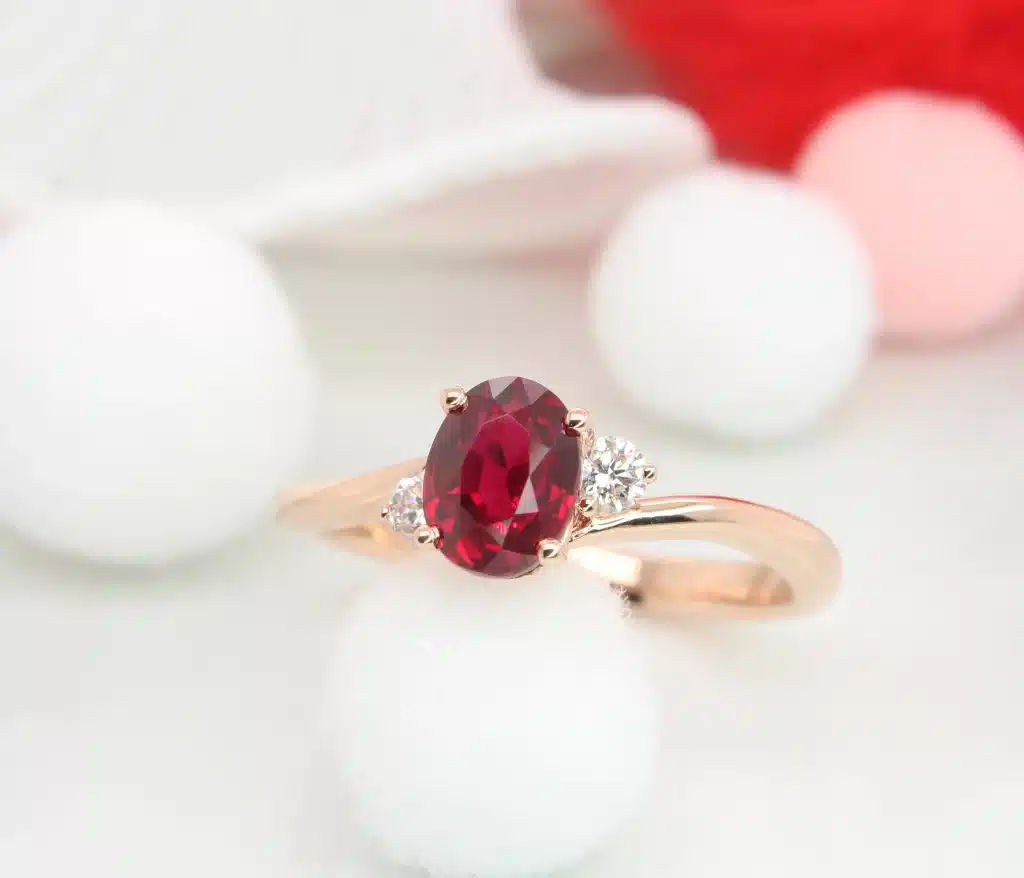
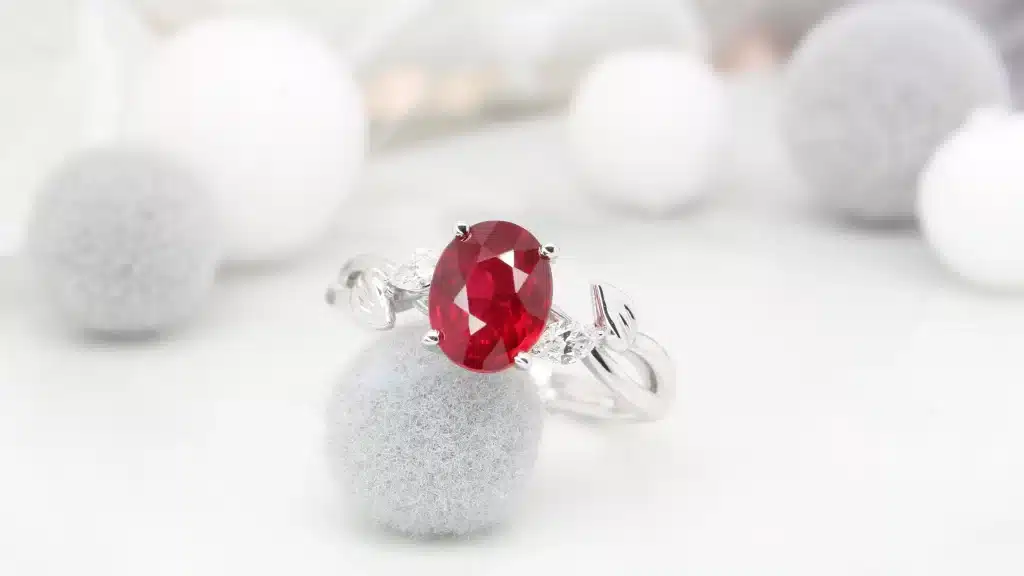
Oval Shape Ruby: Soft, elongated and flattering on the finger, with a generous spread for its carat weight. It suits couples who want the ruby itself to be the star. A classic solitaire puts the full focus on the centre stone, or you can frame it with side micro-pave and pave diamonds. Arranging those side diamonds in uniform sizes gives a clean, even band, while graduating them from larger near the stone to smaller down the shank gives a tapered, more traditional look.
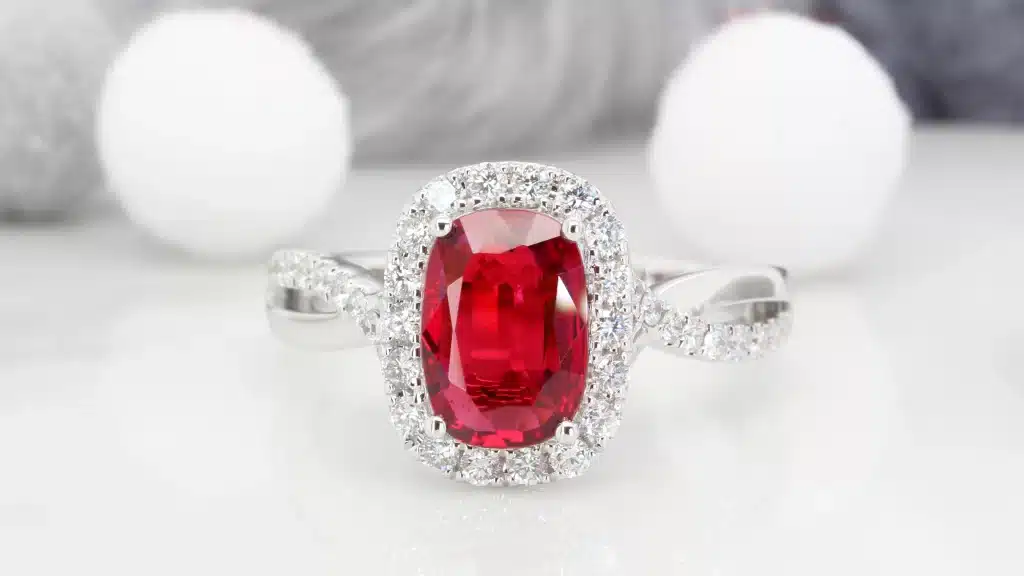
Cushion Shape Ruby: A pillow shape with rounded corners that sits between a structured square and a soft round, so it reads neither as hard-edged as an emerald cut nor as fully curved as an oval. It carries a warm, vintage character and holds a ruby’s colour with real depth. It suits couples drawn to antique-inspired or floral designs, and it pairs naturally with a diamond halo or fancy side stones such as pear or trillion cuts.
Emerald (step cut) Shape Ruby: A clean, geometric, architectural shape with an open table and straight lines. It suits a couple after either a modern, minimalist statement or a vintage heirloom feel, and it is the natural choice for an Art Deco design. It looks its best flanked by emerald-cut or trapeze (trapezoid) side stones, or finished with pave metal detailing along the band. One thing to note for clients: because the open facets draw the eye straight into the stone, an emerald cut rewards a cleaner ruby, so it is worth viewing the loose stone first.
Pear Shape Ruby: A teardrop that combines a point and a curve, lengthening the finger and adding a touch of individuality without losing elegance. The point lends itself to a tiara or crown-inspired halo, which gives the ring a regal silhouette. It also nests beautifully against a contoured wedding band later, so the engagement ring and band sit together as one set rather than two separate pieces.
Heart Shape Ruby: The most openly romantic and personal choice for a proposal, and one we are well placed to offer since we hold a wide selection of heart-shape rubies in stock. Like the pear, it suits a crown or tiara-style halo, and when paired with a shaped wedding band in future it reads as a matching bridal set. For couples who want the symbolism to be unmistakable, nothing else comes close.
Round Shape Ruby: The rarest of the classic shapes in ruby, and a cut designed above all for sparkle. It suits couples who prize sparkle above all. Because fine round rubies are scarce, they are usually framed in a diamond halo to make the most of the centre, or set in a trilogy with round brilliant side diamonds.
Settings for a Ruby Engagement Ring
Once you have chosen your shape, the setting decides how the ruby is held, protected and framed. Here are the styles we work in most often, and who each one suits. For a fuller comparison across gemstones, see how each setting frames a coloured stone.
Solitaire: A single ruby on a clean band, with nothing to distract from the colour. For couples who want the stone to stand alone. Add micro-pave or pave on the shoulders if you want extra light without crowding the centre.
Diamond Halo: A ring of white diamonds around the ruby. The red against white sharpens the colour and makes the stone read larger. It works beautifully with oval, cushion and round, and can extend to a double or floral halo.
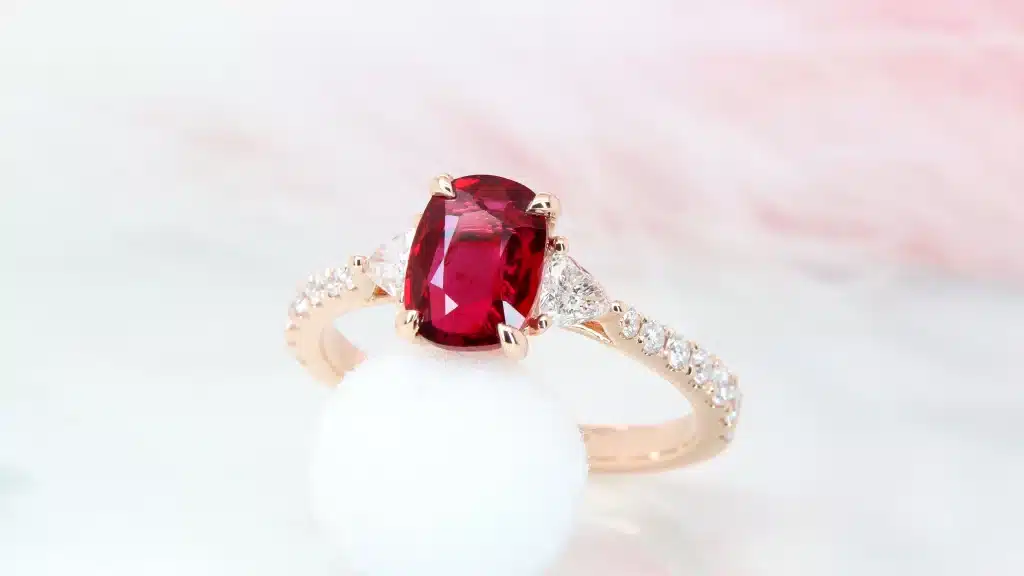
Three-Stone (Trilogy): The ruby flanked by two diamond side stones, symbolising the past, present and future of your relationship. The red against white contrast amplifies the ruby and catches the eye without overcomplicating the ring. Side stones can be round, pear, trillion or half-moon.
Tiara or Crown Halo: A halo shaped to a point or peak, especially flattering for pear and heart rubies, giving a regal, crown-like silhouette. This is also the design that lets a future shaped wedding band nest against the ring so the two read as one set.
Bezel: A rim of metal around the stone, the most protective setting and a sleek, modern look, ideal for an active wearer.
Cluster and Floral: The ruby surrounded by smaller diamonds or gemstones arranged as petals or a botanical motif, our signature flora work, for couples who want something personal and nature-inspired.
Choosing the Metal for Your Ruby Engagement Ring
When you possess an exceptional gemstone, you do not need excessive decoration. The limelight belongs to the ruby itself. The metal you choose is part of the colour decision, not just the style, because it changes how the red reads.
- Yellow and champagne gold: warm metals sit naturally with a ruby’s red for a classic, regal look. Champagne gold softens the contrast for a vintage feel.
- Rose gold: the copper tone flatters ruby and is especially kind to lighter or pinker reds, adding a romantic warmth.
- White gold and platinum: cool white metals give a crisp contrast that makes a vivid red read sharper and more modern, best with a strongly saturated stone that holds its own against the white.
- Two-tone: white around the stone with a warm band gives contrast at the centre and warmth on the finger, a popular middle path.
Whichever setting you choose, we engineer it around your specific stone rather than forcing the ruby into a stock mount.
Customised Ruby Proposal Ring: From Inspiration to Reality
The Symbolism of Structure
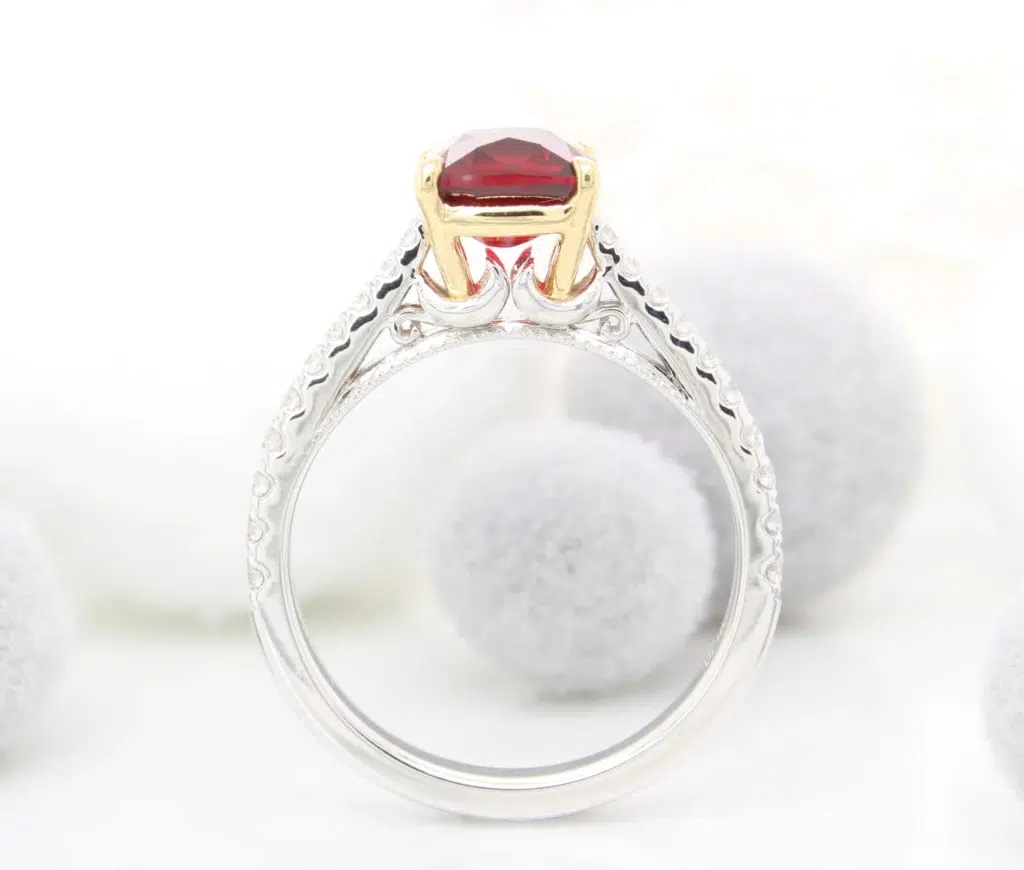
For those seeking deep meaning in modern design, one of our custom ruby proposal rings features a symmetrical square ruby set in a distinctive four-prong setting, crafted in lush yellow gold. This four-prong setting symbolises the four aspects of a balanced relationship: intimacy, passion, devotion, and commitment. Accentuated by micro-set diamonds, the fiery glow of the ruby is protected yet prominently displayed.
GIOIA Insider Tip: How to Quietly Find Out Whether Your Partner Loves Rubies
Proposing with a gemstone is a bold move, but the ‘surprise’ should be in the timing, not the stone. To gauge your partner’s taste without giving the game away:
- The Wardrobe Mirror: Does your partner lean towards warm tones such as gold, deep reds or earthy silks? Rubies naturally complement a palette of warmth and classic elegance.
- The ‘Friend’s Ring’ Strategy: Show your partner a photo of a ruby ring worn by a friend or a celebrity. Whether they are drawn to the colour or remark on how unusual it is, their first reaction usually tells you a lot.
- The Durability Conversation: If your partner values practical, everyday elegance, mention that rubies are the second hardest natural gemstones (Mohs 9), just behind diamonds. For many, knowing a ruby can withstand a lifetime of daily wear is the final green light they need.
Designing Your Future Heirloom
Beyond historical prestige, the true allure of a ruby lies in its ability to be transformed into a personal heirloom. At GIOIA, every bespoke creation begins with a unique inspiration. Many of our most cherished designs are born from nature, like our signature flora-inspired rings. We recently shaped a client’s vision into a finished piece where marquise diamonds resemble delicate leaves, surrounding a heart-shaped unheated ruby set in warm rose gold petals.
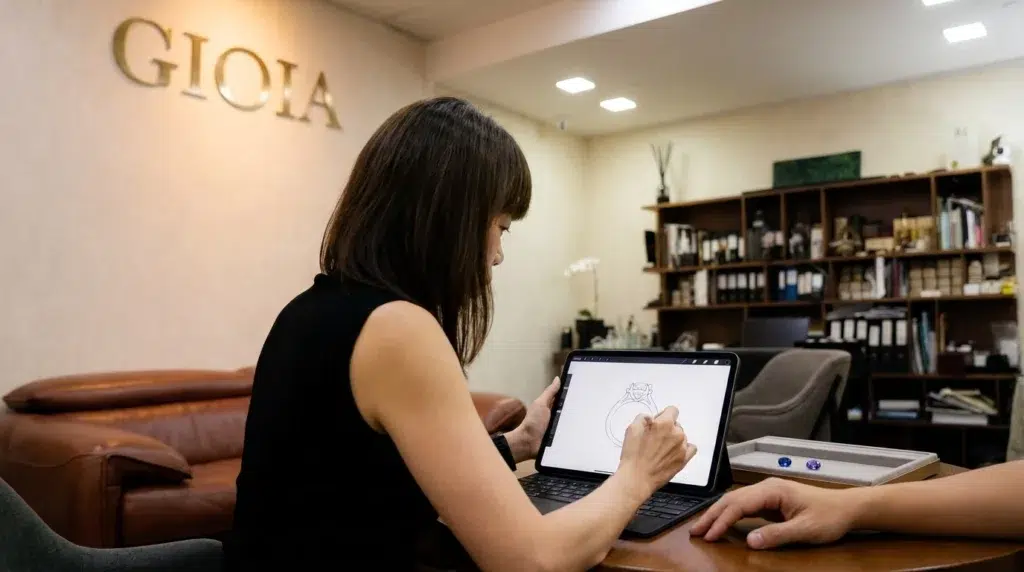
Choosing the right ruby for such a design is a journey of precision. From the initial hand-drawn sketch to professional 3D rendering, we collaborate closely with you to transform your ideas into a beautifully realised vision. By overseeing every step of the craftsmanship, including secure prong settings and micro-set diamonds. We ensure that your ruby engagement ring is not just a beautiful design, but a symbol of eternal love that stands the test of time.
Ruby Engagement Ring Pricing in Singapore
A bespoke ruby engagement ring at GIOIA starts from around SGD 5,900. At that level you would typically have an unheated ruby below one carat, from around SGD 3,800, in a bespoke setting from around SGD 2,100. The ruby is the main variable. Fine unheated rubies of around one carat run from roughly SGD 9,000 to 15,000 per carat, depending on colour, clarity, origin and whether the stone carries a pigeon blood designation. Above two carats, fine stones become far scarcer and the price per carat climbs well beyond that range. A Burmese ruby usually costs more than a Mozambique ruby of the same grade. We guide you to the best stone for your budget before any design work begins. Our 0.83ct Burma ruby engagement ring shows how much presence a fine stone just under one carat can have.
A Lifetime of Joy with Ruby Gemstone
A ruby engagement ring is worn every day for decades, so it should feel like yours from the first time you see it. Whether you are drawn to a regal tiara-inspired halo, a contemporary geometric solitaire, or an intricate vintage heirloom, we invite you to view our gallery of bespoke ruby engagement rings to see how these legendary gemstones are transformed into handcrafted custom rings for our clients.

Frequently Asked Questions
Find answers to commonly asked questions about our ruby gemstone jewellery and ruby rings.
Why should I choose a customised ruby engagement ring over a ready-made one?
Choosing a customised ruby ring offers two critical advantages. First, you are not limited to generic designs; every prong and curve is tailored to your partner’s style. Second, and most importantly, you get to view the loose gemstone before it is set. Ready-made rings often hide inclusions under prongs or bezels. By inspecting the loose ruby at GIOIA, you can check the inclusion map from 360 degrees, ensuring the gem is “eye-clean” and structurally sound before you commit.
Is a ruby ring durable enough for daily wear?
Absolutely. Rubies are a variety of corundum, scoring a 9 on the Mohs Hardness Scale. This makes them the second-hardest natural gemstone, just behind diamonds (10). An unheated ruby is extremely tough and resistant to scratches, making it an ideal choice for an engagement ring intended to be worn every day for a lifetime.
Which metal colour is best for a ruby engagement ring?
This depends on the desired effect. Yellow Gold and Rose Gold are classic choices because they complement the warm, fiery undertones of the ruby. However, Platinum or White Gold creates a stunning modern contrast, making the red hue “pop” vividly against the cool metal. We often use a two-tone setting (yellow prongs with a white band) to get the best of both worlds.
Do ruby engagement rings hold their value like diamonds?
In our experience, fine unheated rubies have held their value well, particularly certified stones from Burma and Mozambique, because the natural supply of top quality material is limited and shrinking. Diamond prices, by contrast, have come under pressure from lab-grown stones. That is not a guarantee of future prices, though, and we always suggest choosing a ruby because you love it rather than as an investment.
Why are Round cut rubies so much rarer than Oval or Cushion cuts?
It comes down to wastage. Ruby rough crystals naturally grow in a flat, tabular shape. Cutting a round brilliant gemstone requires removing a significant amount of this precious rough material, losing noticeably more of the crystal than an oval or cushion would. Because unheated rough is so expensive, cutters prefer Oval or Cushion shapes to maximise the carat weight retention. Finding a high-quality round ruby gemstone is therefore exceptionally rare.
Burma vs. Mozambique Ruby: Which origin is better for my ring?
Both origins produce stunning gems, but they behave differently. Burma (Myanmar) rubies are famous for their high chromium content, giving them a strong fluorescence (glow) in sunlight and the coveted “Pigeon Blood” hue. Mozambique rubies often have higher iron content, which can make the red slightly darker and less fluorescent. Burmese rubies usually cost more at the same grade, while Mozambique offers exceptional clarity and size at a more accessible price.
Will a custom ruby ring sit flush with my wedding band?
This is a key design consideration. Many vintage-style ruby rings have baskets that sit low on the finger, creating a “gap” when worn with a straight wedding band. If you prefer a flush fit (no gap), we will design your engagement ring with a “cathedral” or elevated setting, allowing the wedding band to slide perfectly underneath the centre stone.
Already have the perfect engagement ring? View our collection of matching Ruby Wedding Rings to complete your bridal set.