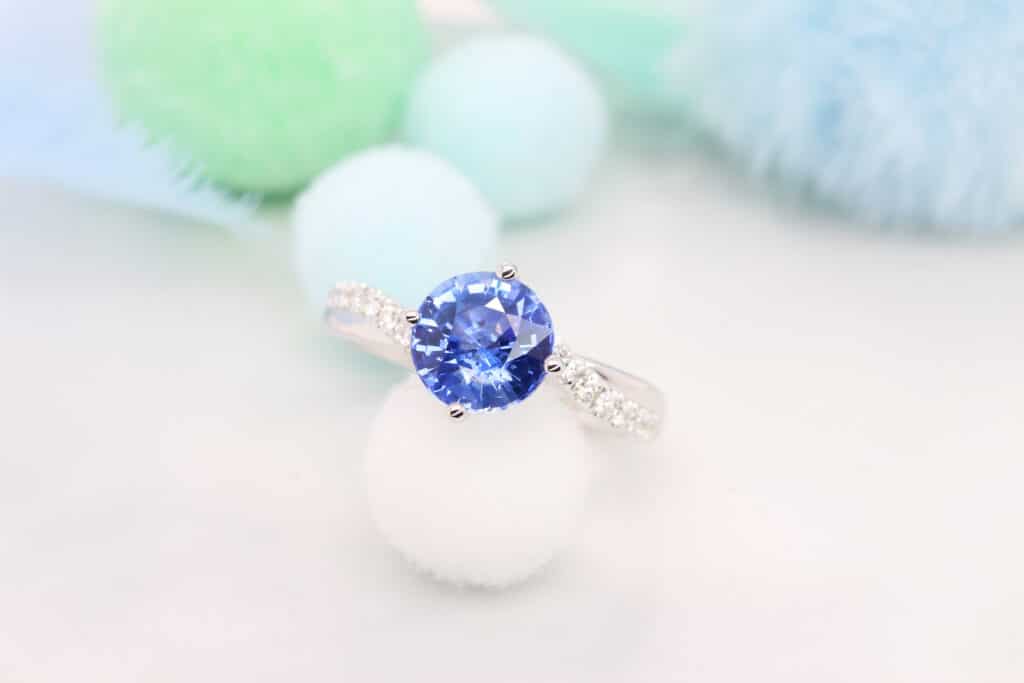
The Blue Gemstone Made for Every Day
A blue sapphire ring is not a compromise on a diamond. It is a deliberate choice for something rarer, more personal, and harder than almost anything else you could put on a finger. Sapphire sits at 9.0 on the Mohs hardness scale, second only to diamond, which means a well-set sapphire will outlast most of the other jewellery a person owns across a lifetime.
At GIOIA Fine Jewellery, recognised among Singapore’s top bespoke jewellers, we work directly with collectors, couples designing a customised engagement ring, and serious buyers who want to understand exactly what they are acquiring before they commit. Whether you are after a bold masculine signet ring, a vibrant cocktail piece, or a top grade unheated stone, we guide you through every step of the process personally.
Guide to Blue Sapphire Rings
The Spectrum of Blue: Royal vs. Cornflower
Choosing a blue sapphire starts with understanding that blue is not a single colour. Within the sapphire family, the two most coveted shades occupy completely different emotional territories. One commands a room. The other stops you mid-sentence. Knowing which one speaks to you is the starting point for everything else.
Royal Blue Sapphire: The Majestic Choice
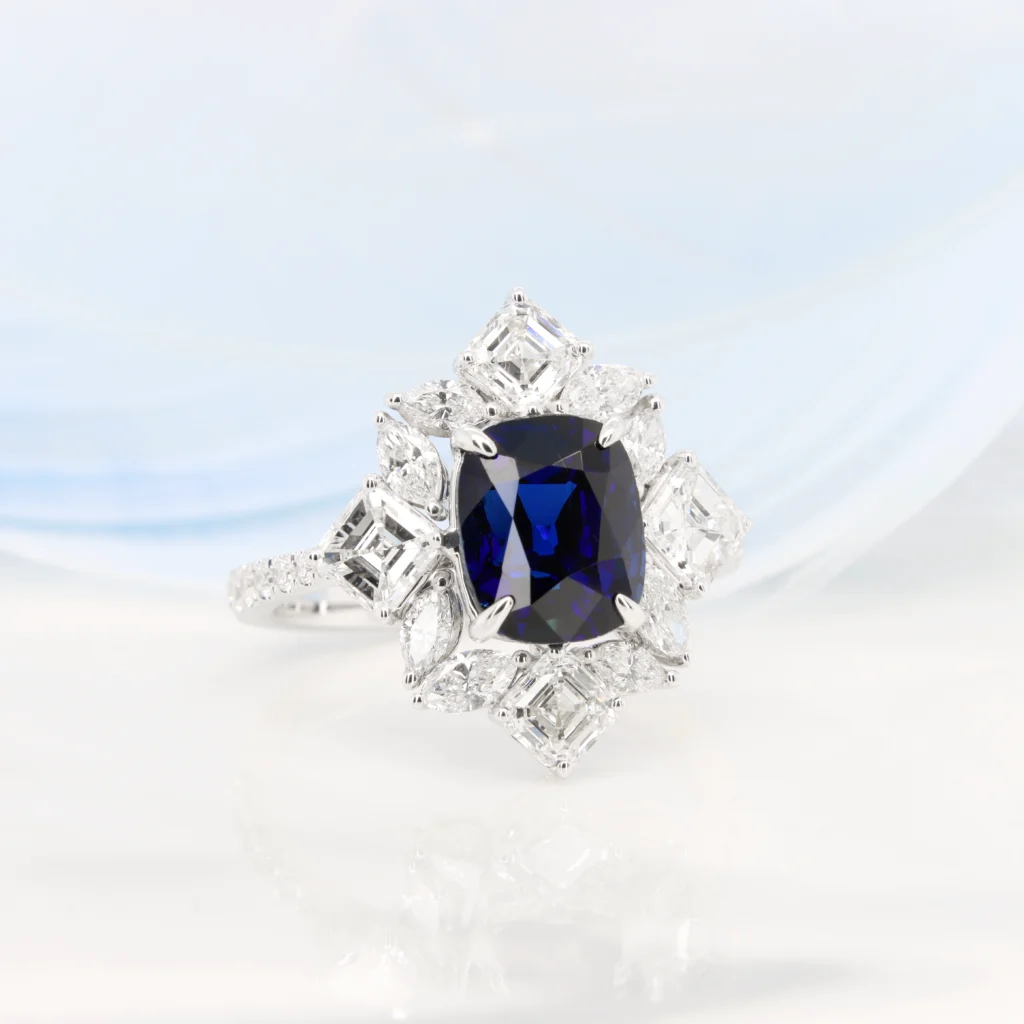
Royal blue sits at the deeper, more commanding end of the blue sapphire spectrum. Its saturation is strong enough to hold presence under any lighting condition, including dim candlelight, which is precisely why it became the sapphire of choice for royal collections across centuries. Princess Diana’s ring is the most famous modern example, but Burmese and Ceylonese royal treasuries were built around this shade long before that.
The cut matters enormously with royal blue. Because the colour is so intense, a poorly proportioned stone will absorb too much light and read as flat or inky. A precision-cut stone with the right depth will glow from within instead. That distinction is something photographs struggle to capture, which is one reason we encourage every client to view royal blue sapphires in person before deciding. The difference between a stone that looks alive and one that looks dark is visible the moment you hold it under natural light.
The most coveted royal blue sapphires historically came from Burma’s Mogok Valley, prized for what traders call a “sleepy” blue, a depth that feels almost velvet-like rather than glassy. Fine quality stones are also mined today in Sri Lanka and Madagascar. Finding an unheated royal blue sapphire above two carats with clean clarity is becoming genuinely rare, and that scarcity is reflected in how aggressively prices have moved over the past decade.
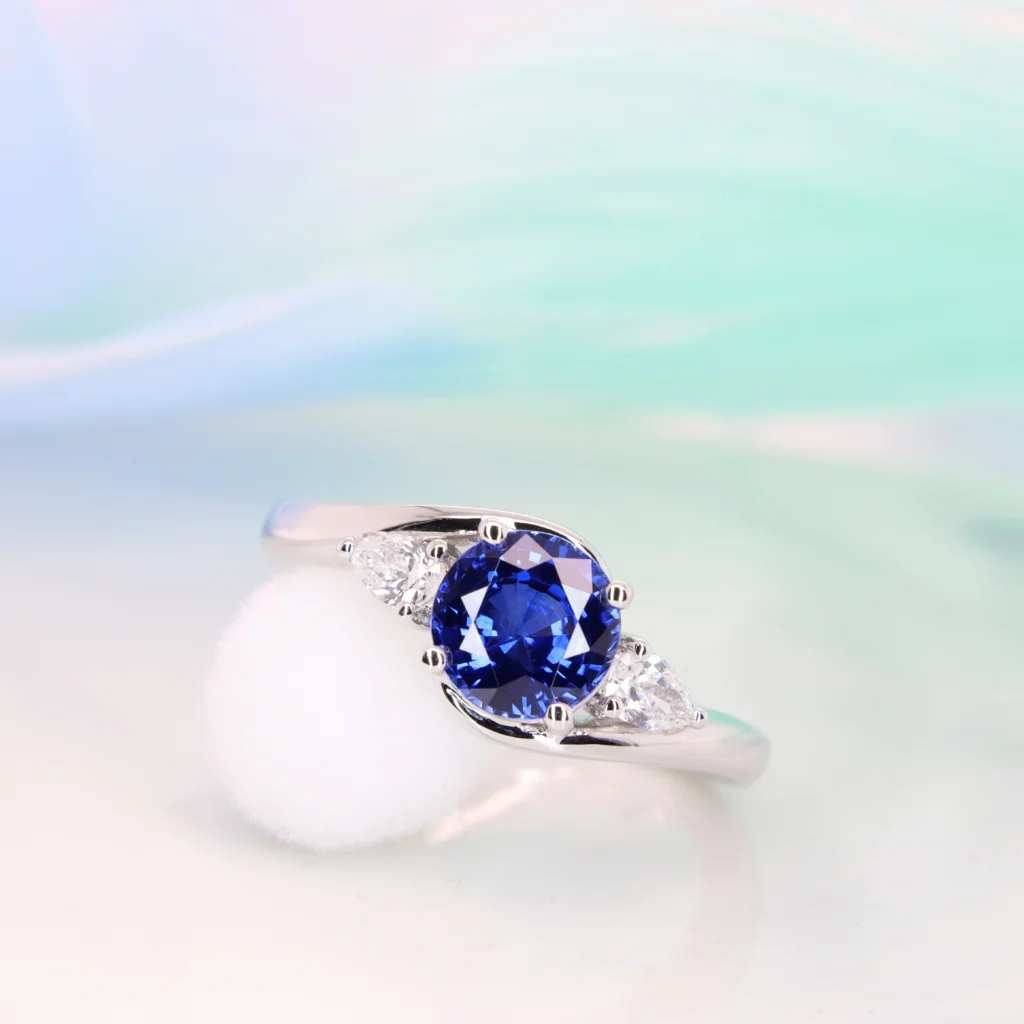
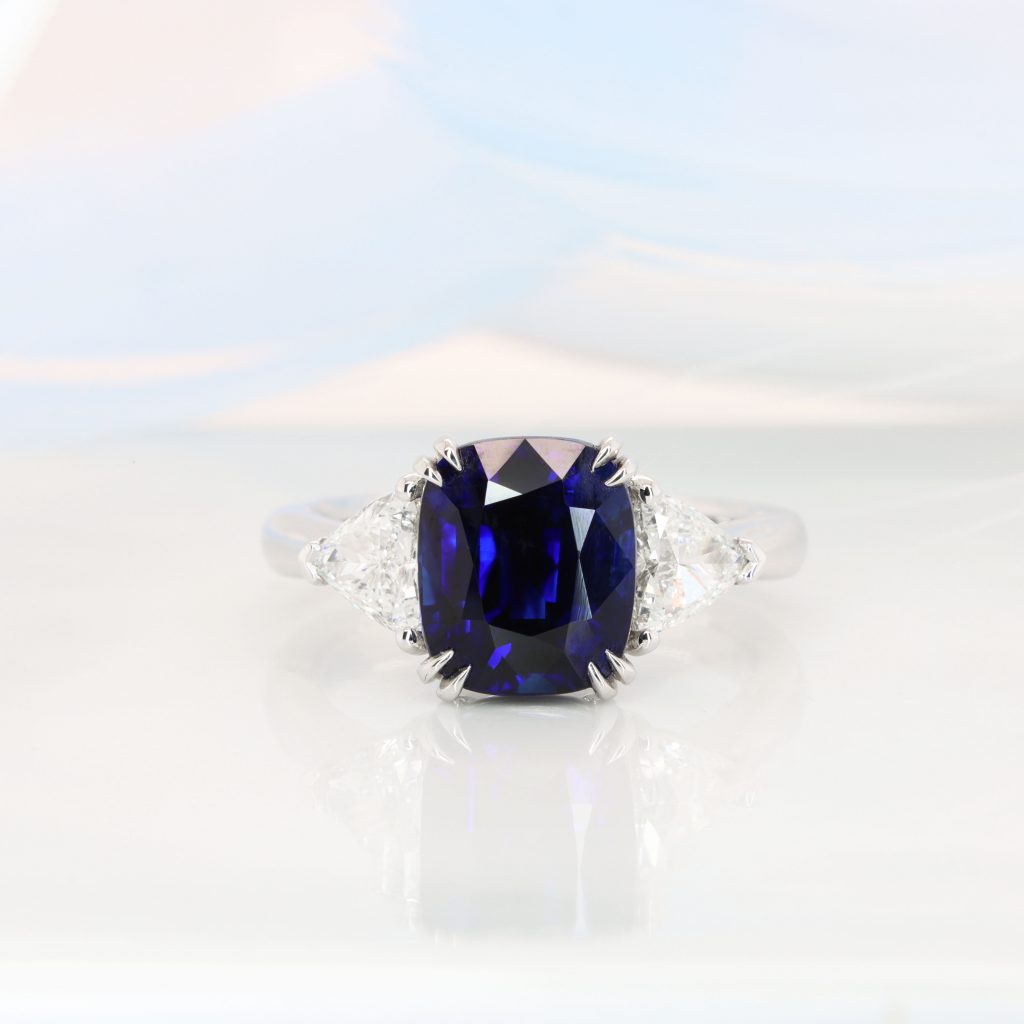
A recent commission built around a 1.29ct unheated stone of this grade is shown in our blue sapphire trilogy ring, set with pear-shape diamonds on either side in platinum.
Note: The legendary Kashmir Sapphires are now largely depleted and found only in heirloom collections at auction. For modern collectors, Burma and Sri Lanka represent the current finest quality available today.
Cornflower Blue Sapphire: The Electric Velvet
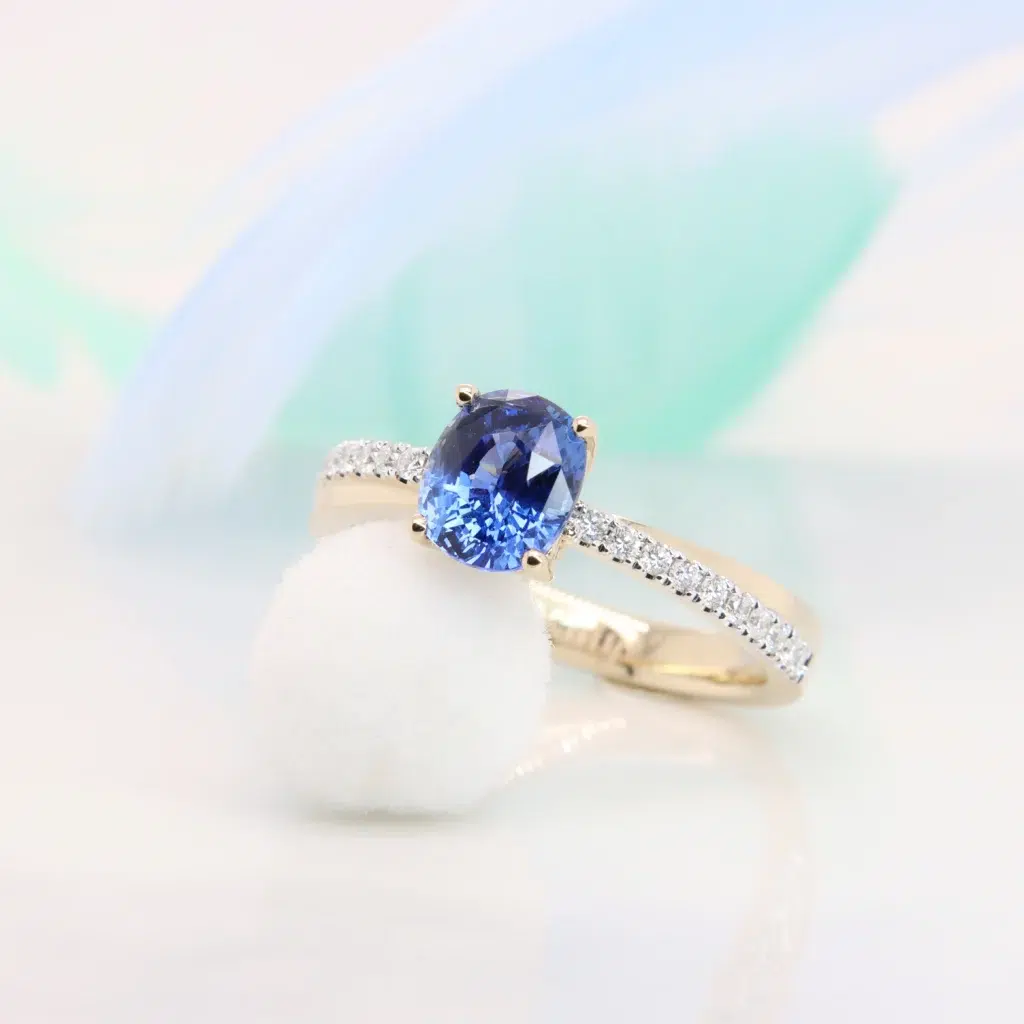
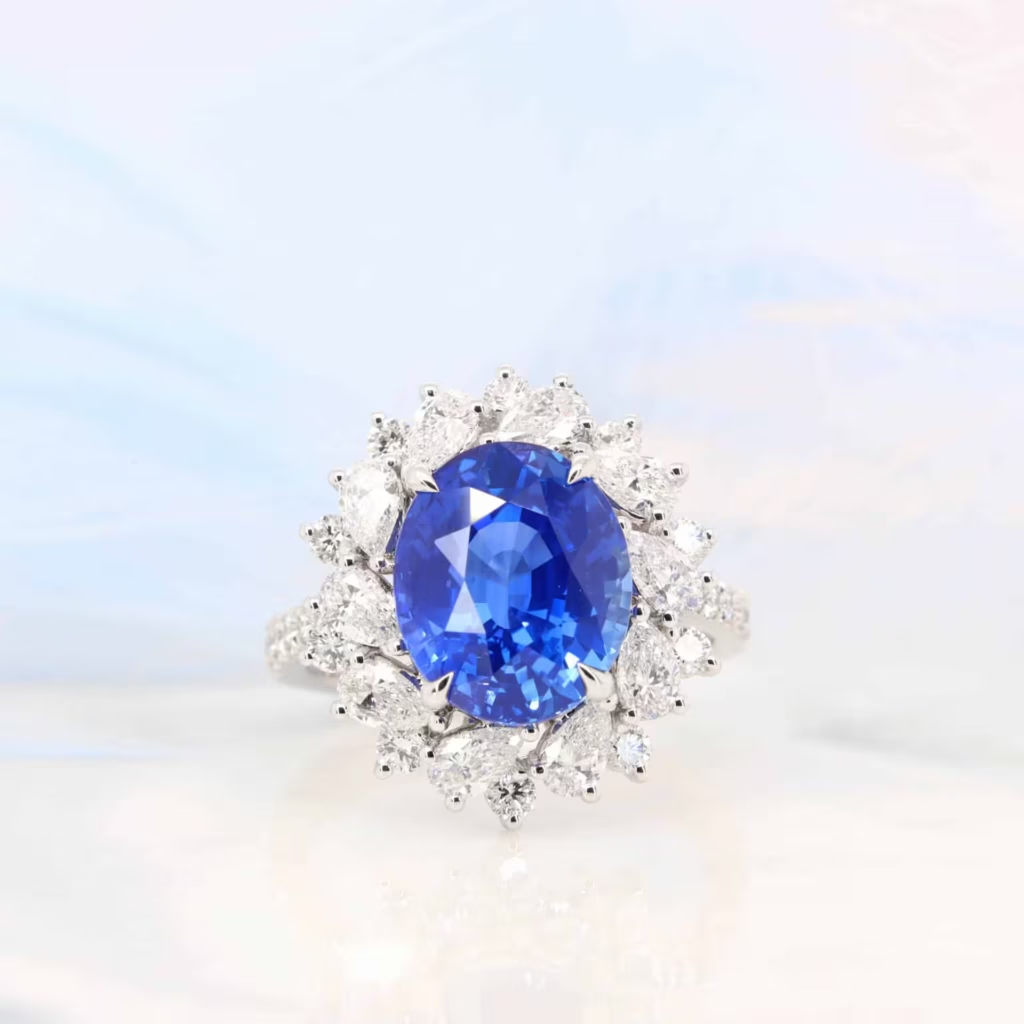
Cornflower blue occupies the lighter, more luminous end of the spectrum, and it is the shade that consistently surprises people when they first see it in person. Named after the Centaurea cyanus flower, it has a velvety, almost neon quality that photographs simply cannot do justice to. There is a slight violet or lavender undertone in the finest specimens, and it is that undertone that separates a true cornflower from a standard light blue.
That soft, scattering quality often comes from fine rutile needles, silky inclusions within the stone that diffuse light rather than allowing it to pass straight through. The effect gives the stone its characteristic velvety texture, and it is the same phenomenon that made Kashmir stones so legendary. Today, the finest Kashmir-like cornflower examples come from Sri Lanka and Madagascar, and they carry that same soft, luminous glow.
One thing worth knowing before you start looking: the word cornflower is used loosely in the market. Plenty of certifications apply it to pale, washed-out stones that have little in common with the genuine article. A real cornflower blue should have medium to strong saturation with that signature soft violet tinge. If it reads as simply light blue with no depth, it is not a cornflower sapphire by any serious gemological standard. At GIOIA, we will not describe a stone that way unless it genuinely meets that bar.
Blue Sapphire Price & Value Guide
Understanding the cost of a blue sapphire ring requires looking beyond the price tag. These stones are not commodities priced by weight alone. The value is driven by a combination of factors that interact with each other, which is why two sapphires of identical carat weight can be priced worlds apart.
Why Do Prices Vary So Much?
Four factors determine value, and each one compounds the others.
- Treatment (Unheated vs. Heated): Treatment history is the most significant. Around 90% of commercial sapphires are heat-treated to improve colour and clarity. An unheated natural sapphire commands a premium of 50% to 300% over a treated stone of identical dimensions, because it is the rarest category in the market. If long-term value matters to you, an unheated report from GRS or GIA is essential.
- The “Exponential” Size Factor: Carat weight does not scale linearly. A 2.0-carat unheated royal blue sapphire is not simply twice the price of a 1.0-carat stone. It can be three or four times the price per carat, because large clean crystals with vivid colour are exponentially harder to find than smaller ones.
- Origin Pedigree adds meaningful value: A certified Burma (Mogok) or Ceylon origin from an independently verified lab carries a premium over stones from commercial sources such as Thailand or Nigeria, reflecting both the quality profile those regions are historically associated with and the declining supply from those mines.
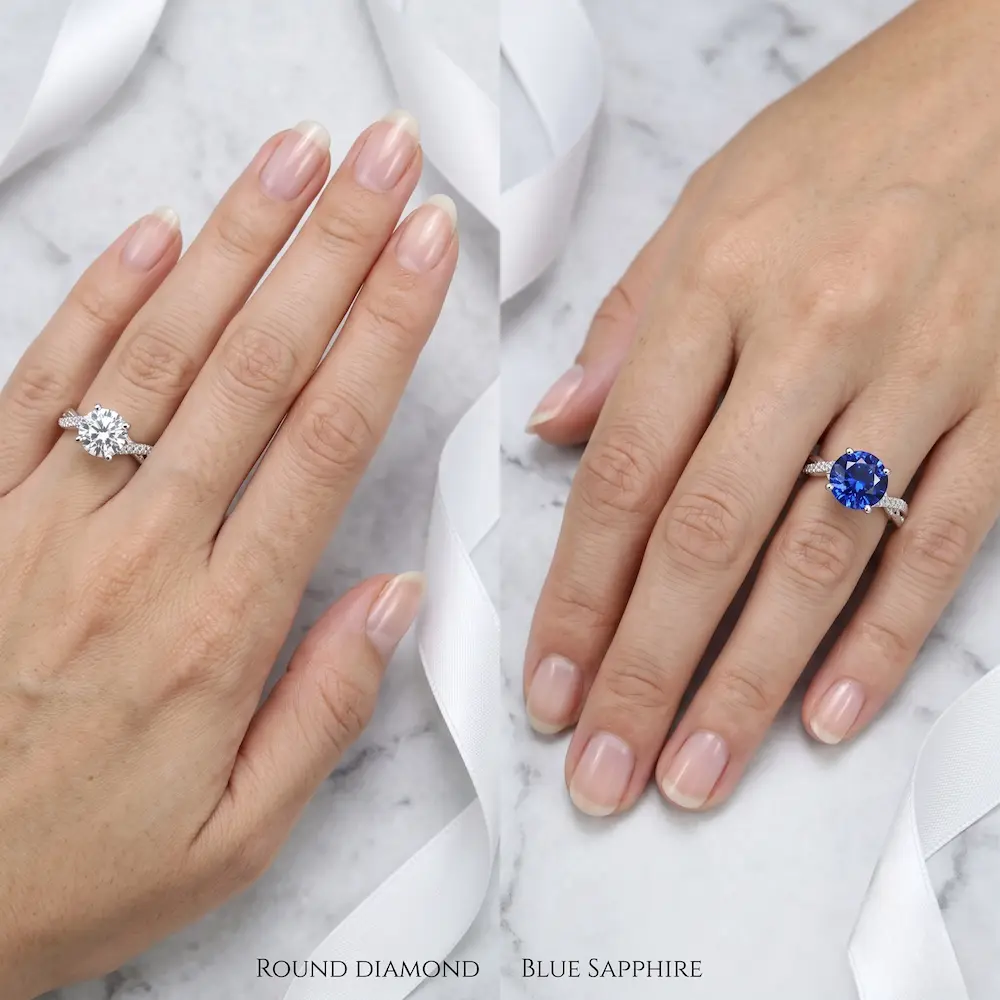
- The “Face-Up” Size (Density): Sapphire is denser than diamond, so a 1.0-carat sapphire looks smaller than a 1.0-carat diamond. At GIOIA, we discuss millimetre dimensions alongside carat weight so clients understand exactly how large the stone will appear in a setting, not just how heavy it is on paper.
A practical note: avoid stones marketed as “parti sapphires” if lasting value is important to you. These are typically lower-quality rough with uneven colour zoning, increasingly promoted as desirable when the reality is that uniform colour distribution is what the serious market values.
Rarity and Value of Blue Sapphire (2026 Market Update)
The supply of unheated royal blue sapphires from Burma and Ceylon has tightened considerably over the past decade. Mogok is producing less consistent rough than it did twenty years ago, and the window of fine material coming out of Sri Lanka at top quality is narrower than most buyers realise. What this means practically is that fine unheated stones above two carats are becoming genuinely difficult to source at any price, not just at an accessible one.
In our experience, fine unheated sapphires bought five years ago would cost noticeably more to replace today, and buyers now find the same quality harder to locate. That is past experience, not a forecast. What we can say with certainty is that a fine unheated blue sapphire works as a wearable piece and an heirloom at the same time.
Bespoke Sapphire Rings for Every Milestone
Blue sapphire is the only coloured gemstone durable enough for daily wear across a lifetime without compromise. That combination of hardness, colour depth, and provenance makes it the natural choice for the moments that matter most, whether that is a proposal, an anniversary, a collector’s acquisition, or a piece intended to pass through generations.
If you are planning a proposal and want to explore the full range of sapphire colours alongside blue, our sapphire engagement ring guide covers every variety.
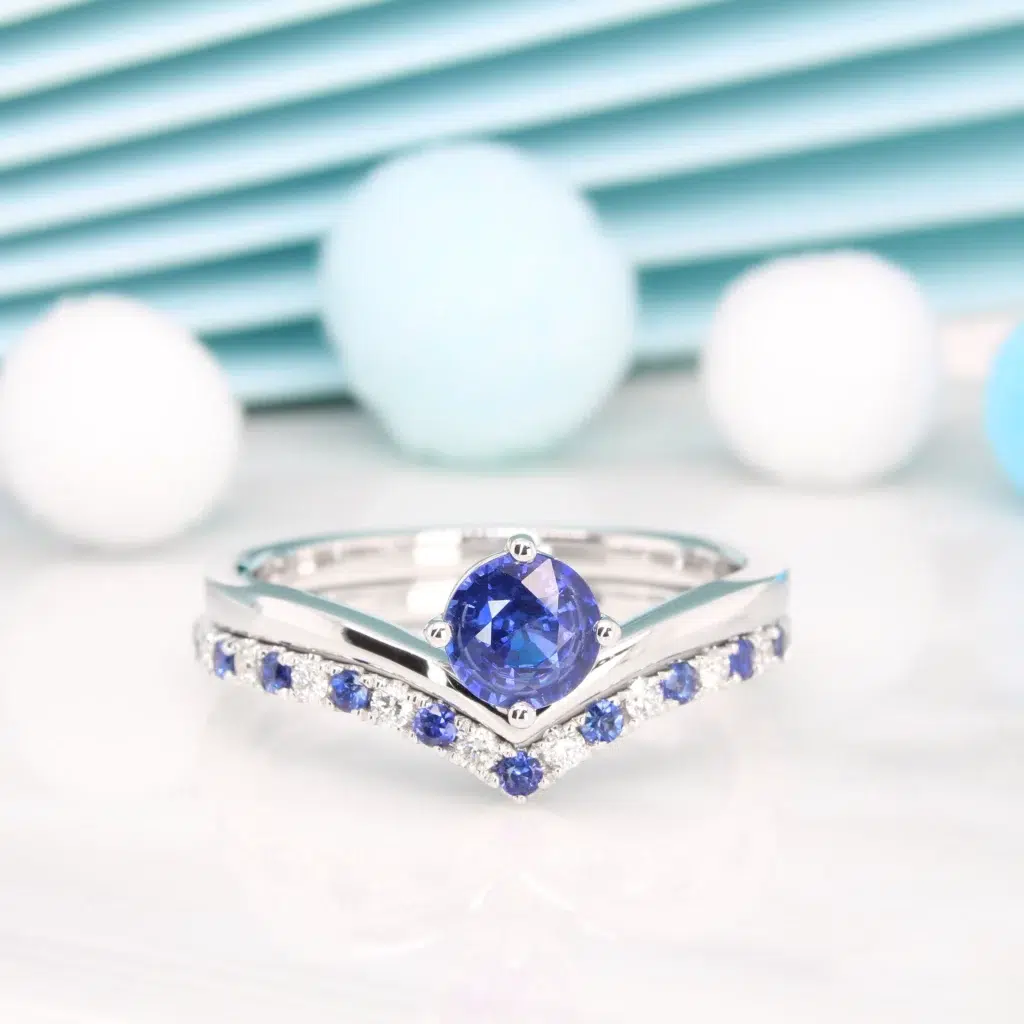
When designing around a deep royal blue, the goal is to allow the saturation to speak for itself. We recommend minimal metal interference, delicate four-prong settings in white gold or platinum that lift the stone and allow maximum light interaction. Adding too much metal around a deeply saturated stone pushes it toward looking dark rather than velvety.
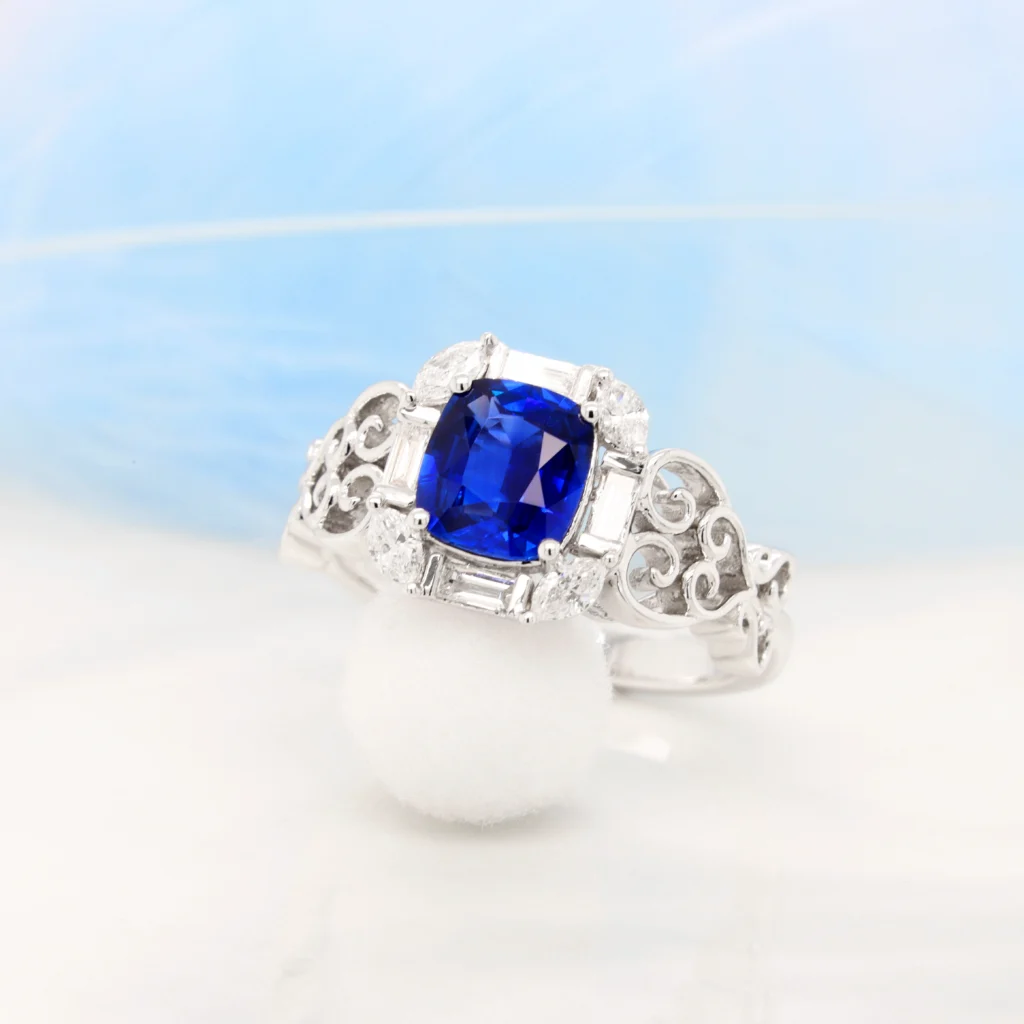
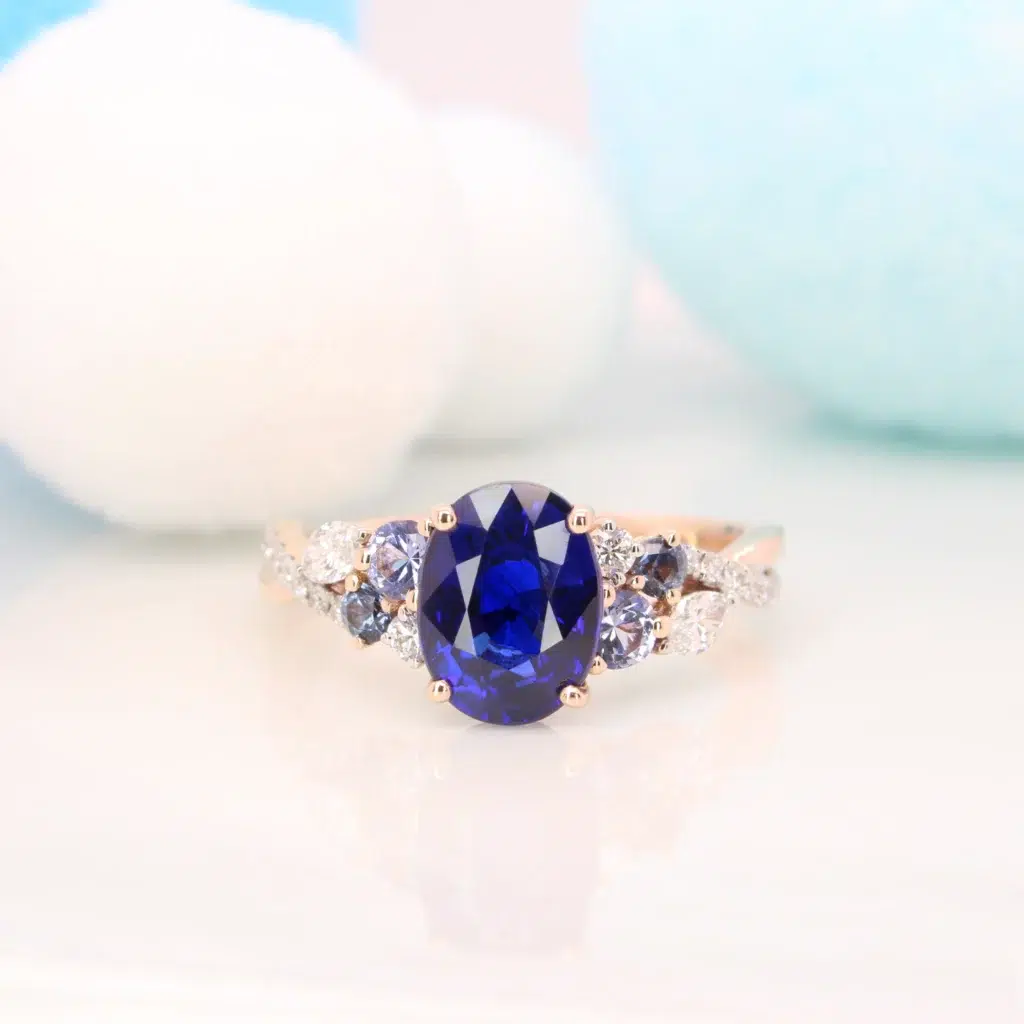
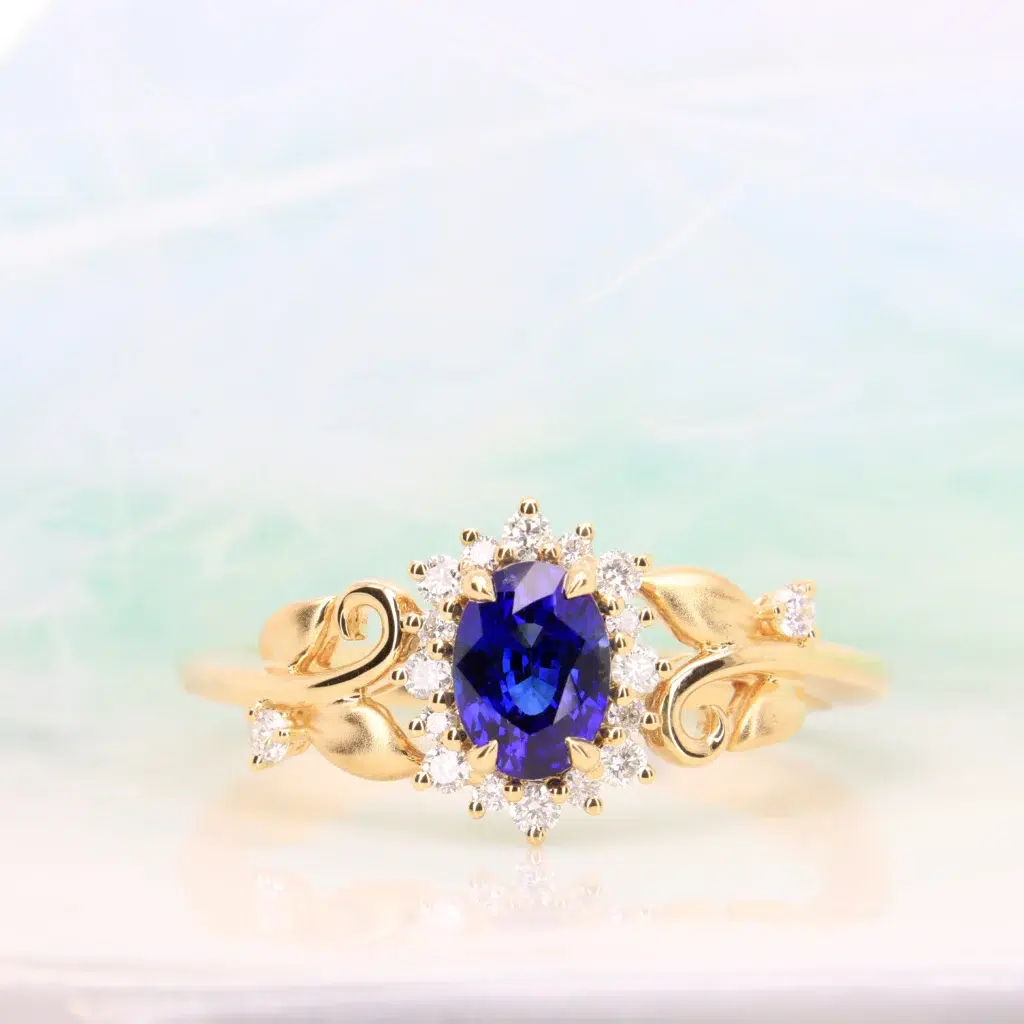
Floral designs are among the most requested at GIOIA for blue sapphire commissions. Using marquise and pear-shaped diamonds as petals around a vivid blue centre creates a frame that feels organic rather than geometric, and the contrast between the diamond brilliance and the velvety blue depth is genuinely striking. Each one is designed specifically around the dimensions of the chosen stone rather than adapted from a template.
Blue sapphires are also the natural heart of Art Deco design. We craft rings featuring geometric step-cut sapphires, emerald or asscher cut, flanked by baguette diamonds or detailed milgrain work. The result is a ring that reads as antique without being a reproduction. Clients who want something that will look at home in a family heirloom collection rather than on a high street display case tend to gravitate toward this direction.

How the Setting Changes Everything
The choice most people overlook when designing a sapphire ring is the one that affects the stone most directly. Before gold colour, diamond arrangement, or band profile, the setting style determines how much light reaches your stone, how secure it is for daily wear, and whether it can realistically be reset in the future. At GIOIA, we work through this with every client before a single sketch is drawn.
The Bezel Setting: Modern, Secure, Considered
A bezel setting encircles the gemstone entirely with a thin rim of precious metal. The result is clean and contemporary, and it provides the strongest physical protection for the stone during daily wear. For clients with active lifestyles or jobs where the ring might encounter impact, a bezel is worth serious consideration.
That said, the tradeoffs are real and worth understanding before committing. Because metal encases the sides of the stone, it restricts the amount of light entering from those angles, which can reduce the colour vibrancy in lighter sapphires. A bezel also applies direct pressure to the gemstone during setting, sapphires are durable enough to handle this, but the process inherently carries more risk than opening a prong. And if you ever want to reset the stone in a different mounting in future, removing a bezel-set stone is a more complex procedure than lifting a prong-set one. These are not reasons to avoid a bezel. They are simply things to decide with full awareness rather than discover after the fact.
The Prong Setting: Light, Brilliance, Flexibility
For maximum colour saturation and brilliance, prong settings are the traditional choice and for good reason. By elevating the stone and leaving the sides open, prongs allow light to enter from every angle, amplify the gem’s natural colour, and give the ring an airy, classic quality that photographs well and reads unmistakably as fine jewellery.
Prong settings also offer more flexibility for personalisation. Depending on the shape of your sapphire, our craftsmen can tailor the claw count and style: three prongs for a trillion cut, four for a cushion or oval, six for a round brilliant. The prong style itself can be rounded, eagle-claw sharp, heart-shaped, or double-pronged, each producing a subtly different overall character in the finished piece. The goal in any prong setting is securing the stone completely without using more metal than necessary. A prong that sits too high or too open is a snagging risk. A prong that crowds the stone overwhelms it. The balance requires experience to read correctly.
For clients interested in tension settings, gypsy settings, or micro-pavé techniques, our customised ring setting guide covers each in detail.
Modern Men’s Sapphire Ring
Demand for men’s sapphire rings in Singapore has grown steadily over the past few years, and the reasons are practical as much as aesthetic. A deep unheated blue sapphire set in platinum or brushed gold carries a quiet authority that most men’s ring options simply do not. There is no showiness to it. Just an exceptional stone, well-set.
Signature Men’s Styles
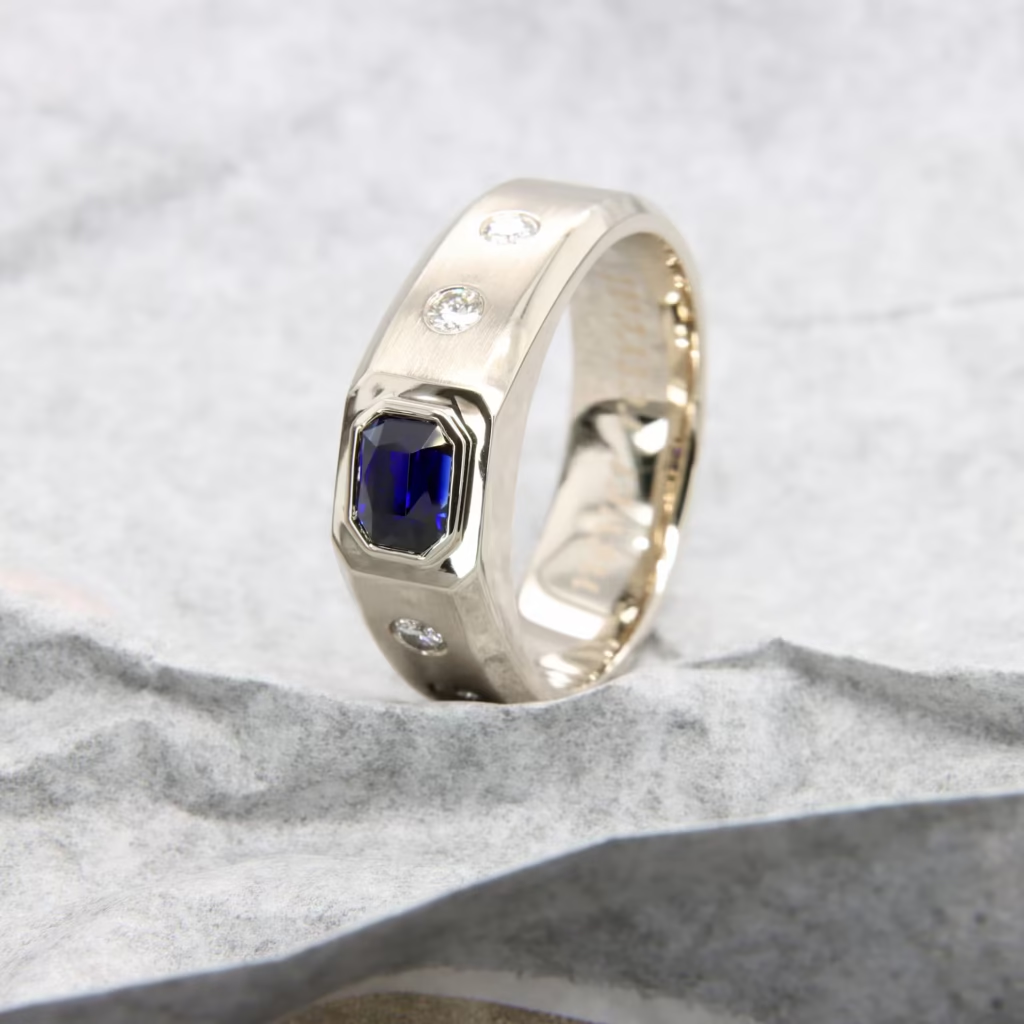
The Signet Revival: We reinterpret the classic signet ring by bezel-setting a geometric step-cut unheated royal blue sapphire into a heavy champagne gold band. The matte finish on the band and the deep velvet of the stone work against each other in a way that reads as understated without being invisible.
Architectural Settings: For a sharper aesthetic, emerald-cut sapphires in step-cut geometric settings produce something that feels architectural rather than decorative. Clean lines, strong shoulders, minimal distraction from the stone.
Astrological Significance (Saturn)
Blue sapphire is the gemstone of Saturn in Vedic astrology, worn traditionally for discipline, focus, and clarity of purpose. For clients commissioning a ring for astrological reasons, we ensure the setting allows the stone to make skin contact if required, without compromising the structural integrity of the mount.
Why Choose a Blue Sapphire Over Other Blue Gemstones?
Clients occasionally ask whether another blue stone could substitute for sapphire. For a ring intended to be worn daily across decades, the answer is almost always no, and the comparison table below explains why.
| Gemstone | Rarity & Prestige | Treatment Reality | Market Positioning |
| Blue Sapphire | High (The King) Historically worn by royalty. A symbol of wealth and power that commands the highest per-carat price. | The “Unheated” Premium Finding an unheated sapphire is rare and prized. It is the only blue gem with a distinct “Collector Grade” category. | Heirloom / Collector Strong value retention in our experience. Suitable for legacy collections. |
| Tanzanite | Moderate Single-source origin (Tanzania), popularized by Tiffany & Co. Beautiful, but lacks the historical pedigree of sapphire. | Routinely Heated Almost 95% of Tanzanite is heated to remove brown tones. Unheated material is not common in the market. | High-End Fashion A stunning accessory, but chosen for wear rather than rarity. |
| Indicolite Tourmaline | Niche / Collector Prized by connoisseurs for its unique teal-blue hues, but less recognised by the general public than sapphire. | Generally Non Treated Commercial grade are usually darker undertone. | Collector’s Gem Valued for its unique colour rather than rarity. |
| Aquamarine | Classic A staple in high jewellery, but generally abundant. Only the deep “Santa Maria” colour commands a rarity premium. | Standard Heat Heating is the industry standard to remove green overtones and achieve a pure blue. | Premium Fashion Excellent for large cocktail rings where size (carat) matters more than rarity. |
Heirloom Quality
Not every sapphire is heirloom quality, and the distinction matters if lasting value is part of your reasoning for buying one. At GIOIA, we specialise in unheated blue sapphires and unheated rubies, stones that are completely natural, thermally unenhanced, and certified by an independent laboratory with no affiliation to us.
- Scarcity: Scarcity is the foundation of value. Less than 10% of the world’s sapphires are of sufficient quality to be sold unheated. As mines in Burma, Sri Lanka, and Madagascar produce less top-grade rough each year, these gemstones that already exist in private hands and certified collections become harder to replace at any price.
- The Heirloom Factor: The heirloom factor is real rather than rhetorical. A certified unheated royal blue sapphire mounted in a custom setting is a piece that can be appraised, insured and passed to a child, and its laboratory report goes with it, so the next generation knows exactly what they hold.
- Independent Certification: Every top grade stone at GIOIA comes with a GRS, GIA or NGI certificate that confirms treatment status, geographic origin, and gemological characteristics. That documentation is not an accessory. It is what makes the stone verifiable for future generations.
Crafting Your Unique Blue Sapphire Ring
The journey begins with the stone itself. In our private boutique at International Plaza, you view our curated selection of loose sapphires under different lighting conditions, daylight, incandescent, and fluorescent, because each reveals a different aspect of the stone’s character. A royal blue that glows under natural light may deepen under a warm bulb. A cornflower that looks almost pastel in artificial light comes alive in sunlight. Seeing them loose, before any setting decision is made, is how you find the stone that is genuinely right.
- Consultation: We discuss your lifestyle, budget, and design preferences.
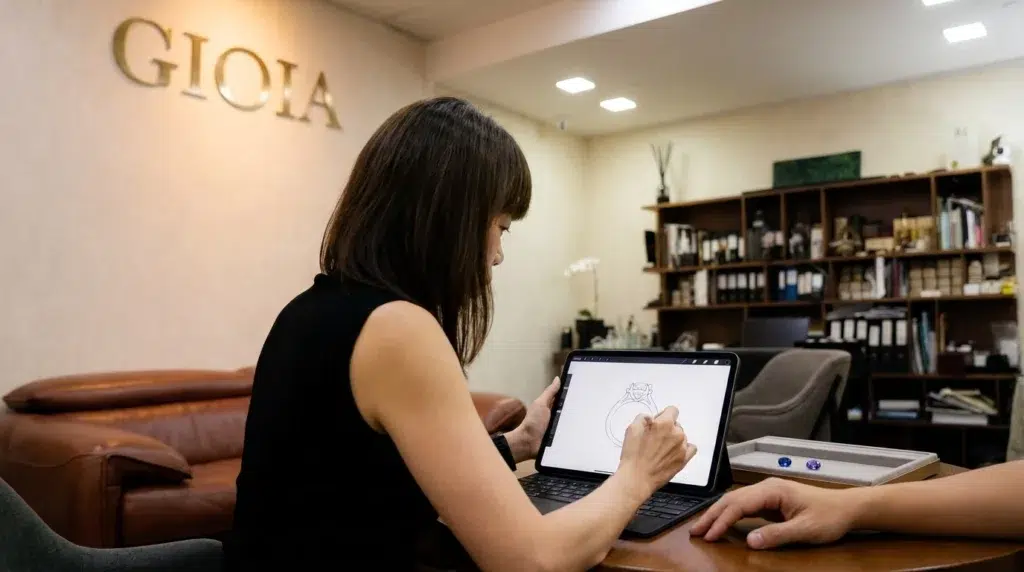
- Sketching: Our designers create hand-drawn sketches, blending your vision with our technical expertise.
- Creation: Our master craftsmen craft your jewellery with dedication, ensuring the setting is secure and comfortable for decades of wear.
Personalise Your Sapphire Ring
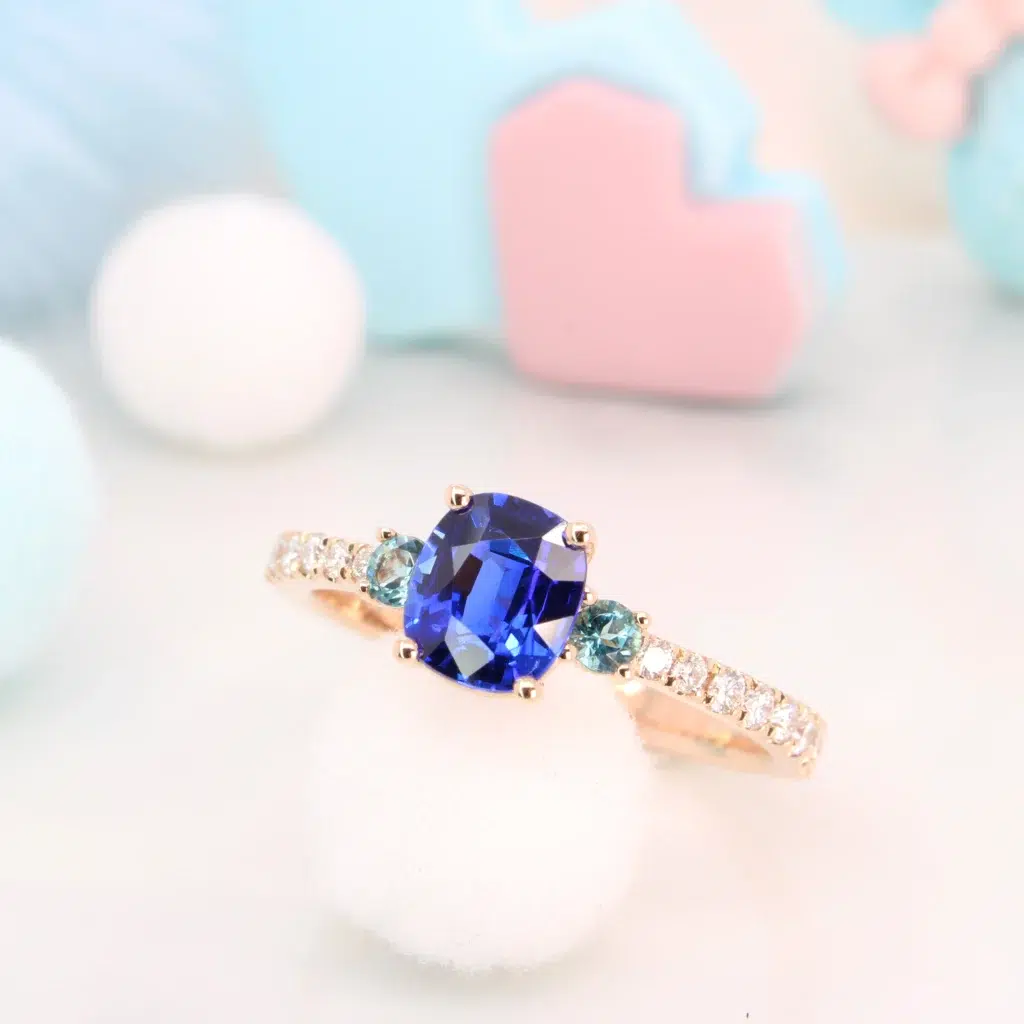
We love adding a personal touch to make your customised ring truly unique, such as incorporating your birthstone. This small but meaningful addition can be elegantly placed alongside the blue sapphire, infusing the piece with personal significance and charm. Every time you glance at this blue sapphire ring, it will serve as a beautiful reminder of your loved one or your anniversary month.
Imagine a design inspired by floral leaves, with a curve of marquise diamond clusters that evoke the delicate shape of leaves. At the same time the round brilliant diamonds add an extra touch of sparkle to the vivid blue sapphire. Each tiny diamond highlights the sapphire’s rich hue, creating a stunning, magical effect.
From the initial design to the final piece, we ensure every step reflects your personal style and preferences. Every commission starts with the stone, not the design. Once you have selected the sapphire, the customised setting follows from its dimensions, colour depth, and how you intend to wear it daily.
Case Study: A Royal Blue Sapphire Proposal
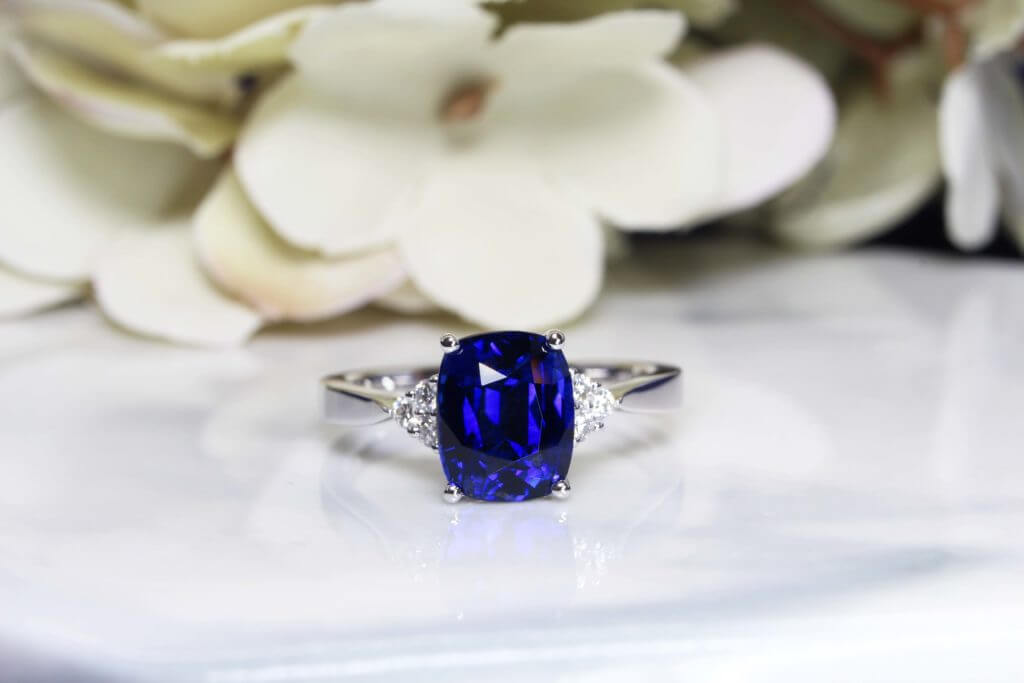
This extraordinary bespoke commission showcases a strikingly rare shade of Vivid Royal Blue Sapphire. The gemstone exhibits a subtle violet undertone, a highly sought-after gemological characteristic that photographs often struggle to fully capture. While Nicholas and Wenlyn chose this unique gem for their proposal, it serves as a clear demonstration of high-jewellery craftsmanship available at GIOIA.
Elegantly engineered, the ring features the vivid blue sapphire at its heart, flanked by sparkling brilliant diamonds and set in a sleek white gold band. The surrounding cluster of round brilliant diamonds is strategically positioned to intensify the depth of the central sapphire’s saturation.
Nicholas, in his pursuit of an exacting proposal piece, carefully sifted through our curated private selection to find the exact hue. He collaborated intimately with our lead designer and Wenlyn to finalise the choice. We worked through every structural detail together, from the shape of the prongs to the precise setting of the accompanying diamonds. The final gold colour was chosen specifically to complement both the sapphire’s natural intensity and Wenlyn’s personal style, resulting in a true symbol of fine jewellery.
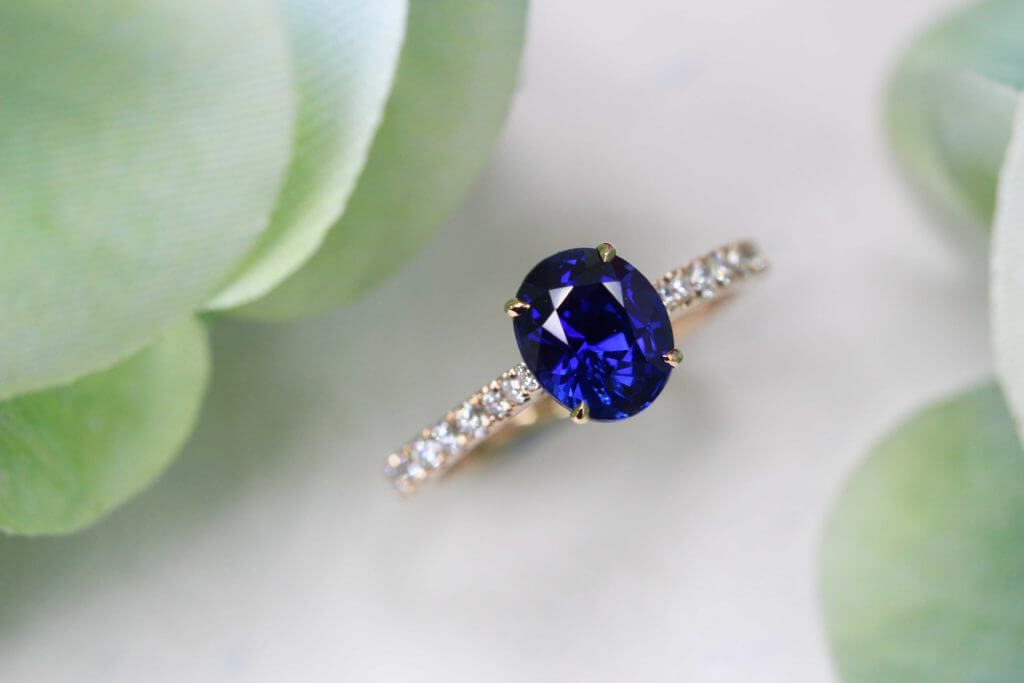
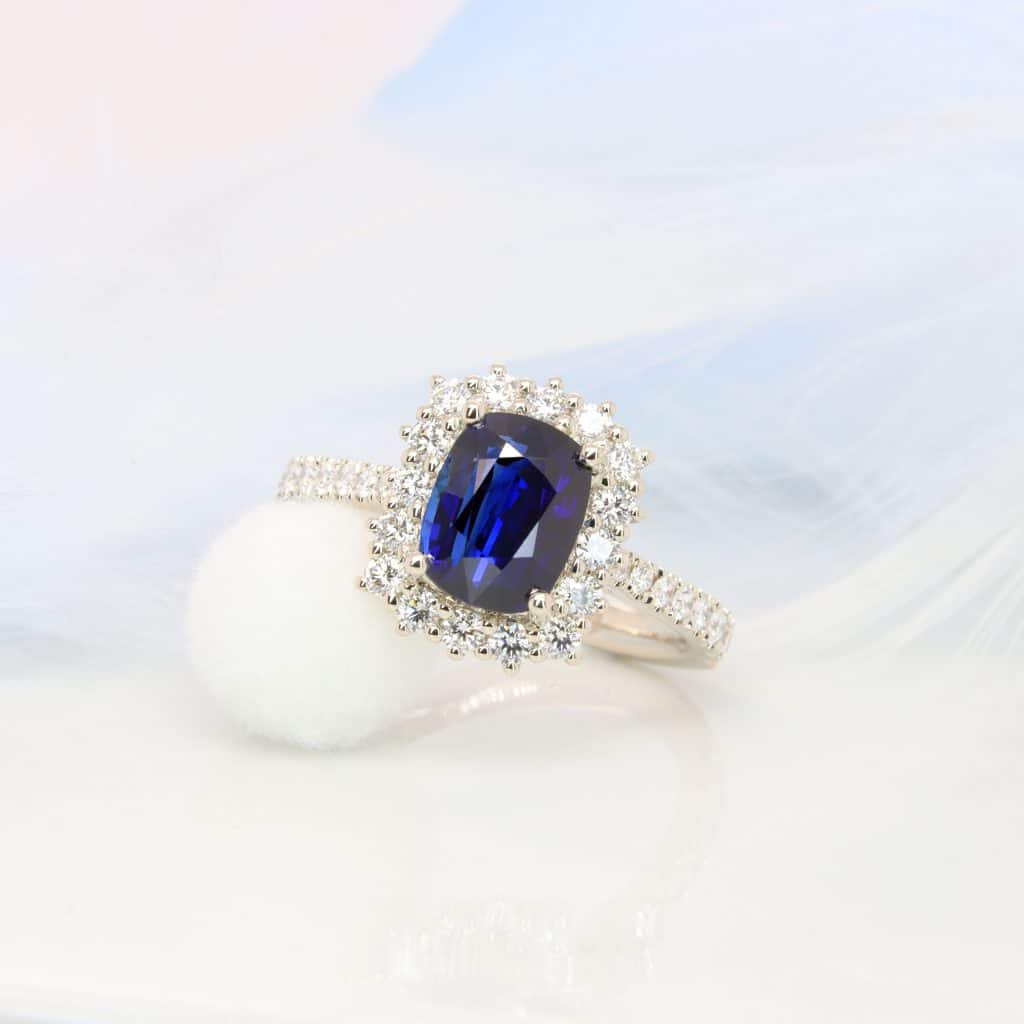
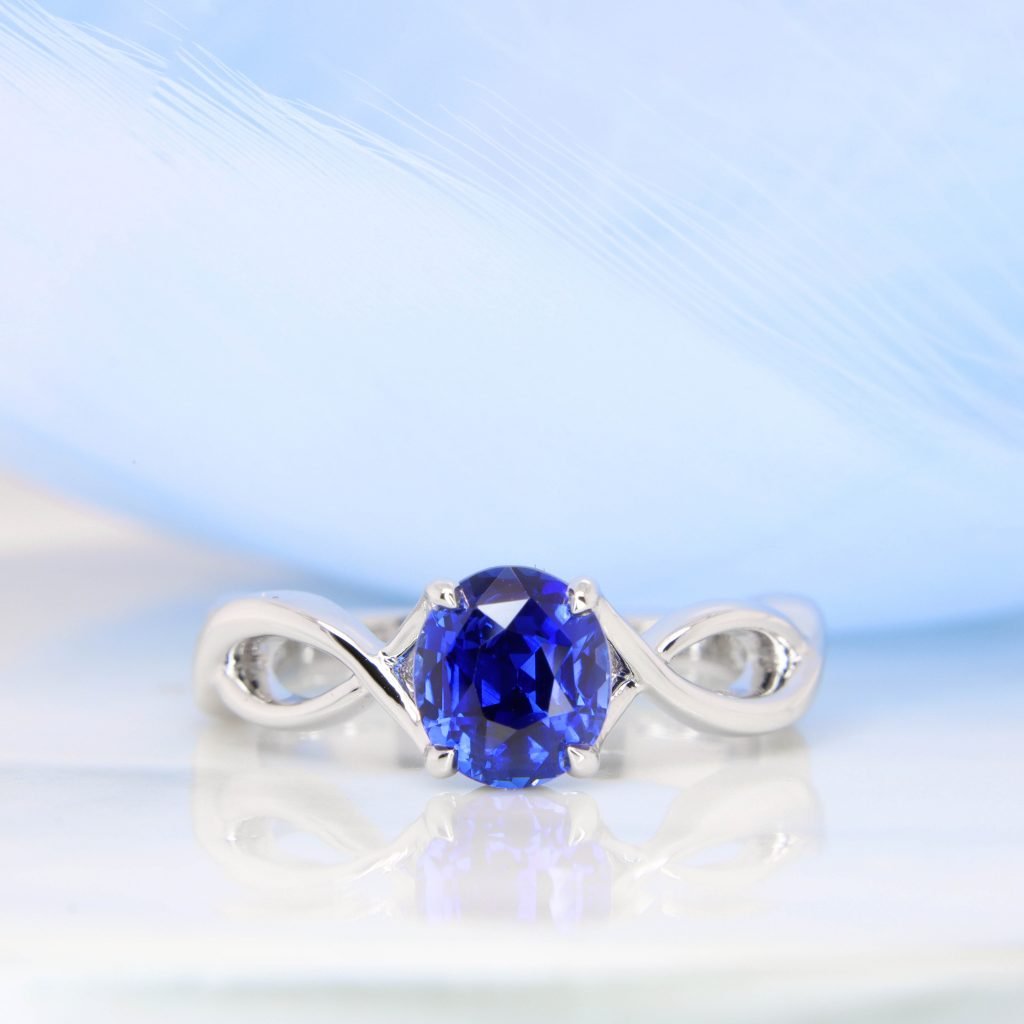

If you like the idea of pairing a sapphire with a fancier cut of diamond instead of the usual round brilliant, we wrote up a real example of that. Our 4.0ct oval royal blue sapphire ring with kite shaped diamonds goes into exactly how that pairing works, plus what a ring like it tends to cost.
GIOIA Commitment
At GIOIA, we have built the collection around a single standard: every blue sapphire we carry must be one we would be comfortable recommending to a client who plans to hold it for twenty years. That means unheated material only, independently certified, with provenance we can trace and stand behind.
Every commission is handled personally by Clarence and Cheryl. Clarence has spent over a decade building direct relationships with rough dealers and auction houses across Sri Lanka, Burma, and Madagascar, which is how we access stones that never reach the open market. Cheryl handles design, translating what a client describes into something that works structurally around the specific stone they have chosen. You are not speaking to a retail consultant. You are sitting down with the two people who will personally source your stone and build your ring from scratch.
Frequently Asked Questions
Find answers to commonly asked questions about blue sapphire ring and how to choose the right one.
Where do the best blue sapphires come from?
Sri Lanka (Ceylon), Myanmar (Burma), and Madagascar are popular origins for sapphire gemstone. Each region offers unique qualities in colour and clarity. Sri Lanka sapphires are typically lighter in shade compared to Myanmar, and Madagascar are more intense on colour saturation.
How can I tell if my blue sapphire ring is treated?
It is nearly impossible to tell with the naked eye. A gemologist examines the stone under magnification to look for intact ‘silk’ inclusions (rutile needles), which prove the stone has not been cooked. We strongly recommend ensuring your sapphire ring is certified by a reputable independent lab.
What is the starting price for a custom blue sapphire ring?
A bespoke blue sapphire ring at GIOIA typically starts from $3,900. The final price varies significantly based on the gemstone’s rarity (Unheated vs. Heated), and whether it is made in gold or platinum setting. Men’s rings or intricate cocktail rings will naturally command a higher price due to the metal weight and complexity in work.
Are there different blue coloured gemstones instead of blue sapphire?
Certainly! If you are looking for a unique blue hue, we also craft rings using Blue Spinel (a steel-blue brilliance), Indicolite Tourmaline, and Aquamarine. Each offers a distinct personality different from the classic sapphire.
Can men wear blue sapphire rings for daily wear?
Absolutely. The Blue Sapphire is one of the toughest gemstones (Mohs 9), making it ideal for men’s rings which often endure more impact than women’s jewellery. We recommend bezel or flush settings for maximum protection and a sleek, masculine profile.
What is the difference between a “Commercial” and “Heirloom” sapphire?
A commercial sapphire is often dark (inky), heat-treated, or cut to save weight rather than maximise brilliance. An heirloom sapphire from GIOIA is typically Unheated, has a vivid “open” colour (not too dark), and comes with a lab report confirming its natural origin.
What sapphire shapes have the most brilliance?
If sparkle is your priority, a Round Brilliant Cut offers the highest light return. However, finding large round sapphires is rare due to crystal wastage. Oval and Cushion cuts are the most popular as they maximise the retention of colour saturation, giving you that deep, intense blue look.
Is a blue sapphire suitable for all skin tones?
Yes, because the blue spectrum is so vast. For lighter skin tones, the deep contrast of a Vivid Royal Blue creates a stunning ‘pop.’ For warmer or olive skin tones, the electric vibrancy of a Cornflower Blue or a velvety deep blue complements the skin beautifully without looking dark.
Have a question on blue sapphire ring?
If you have any other queries, feel free to reach out to us. Our GIOIA team is here to help!